December 22, 2015 at 17:06
The underground market of carders. Translation of KingPIN. Chapter 23. “Anglerphish”
Chapter 23 will deal with a cunningly elusive (almost like in the movie "Catch Me If You Can") criminal who drove the FBI around his finger, while he managed to do things while knocking on the security services, but in the end he got burned because of a woman, but managed to get out and escape. And in the best traditions of Chichikov, he also used “dead souls” to cash out stolen credit cards.
 Kevin Poulsen, editor of WIRED magazine, and a blackhat hacker Dark Dante as a child, wrote a book about " one of his acquaintances ."
The book shows the path from a teenage geek (but at the same time pitching), to a seasoned cyberpowder, as well as some methods of work of special services to capture hackers and carders.
The quest to translate the book began in the summer in an IT camp for high school students - “ Shkvoren: schoolchildren translate a book about hackers, ” then Habrausers and even a little editors joined in the translation.
Fish Angler
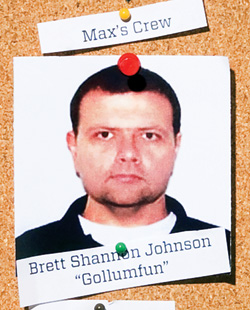
Max collected information on Brett Johnson . He began by checking the access logs and private messages of the CardersMarket admin. In order to test himself, Max hacked Johnson’s account on the website of the International Association for the Advancement of Criminal Activity (IAACA) and looked for traces of his activity. However, there were no smoking pistols or other evidence.
Could he really lead the informant into the narrow circle of his new site? The problem is that there is no specific method to determine if Johnson, or someone else works for the government. Max wanted to use the security hole in law as a buffer overflow in BIND, which he could use over and over against anyone he suspected.
If (is_snitch (Go llumfun)) ban (Go llumfun);
He trusted David Thomas, not imagining that Thomas had already placed Aisman on his kilometer-long list of enemies.
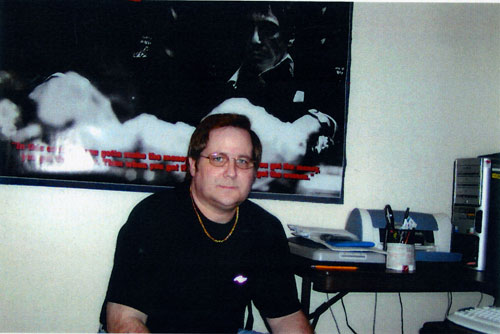
David thomas
Of course, Brett Johnson was head over heels in the mud. However, contrary to suspicions, his return to crime in the post-firewall era did not begin with squealing. It all started with a girl.
Johnson's crimes and his cocaine habits for nine years expelled his wife. On the way to the door, she broke his MSR206, so he had to look for a psychologist to deal with the loss. Johnson then met Elizabeth at the North Carolina Bar. She was a 24-year-old dancer in a local strip bar, and for Johnson she became love at first sight. He burned his savings, giving her gifts: a wallet for $ 1,500, a pair of new shoes for $ 600. Five months later, she moved to him. However, when they made love for the first time, Elizabeth did not allow him to kiss herself.
Johnson’s dark guesses were confirmed when he found Elizabeth on a site where men shared reviews of strippers and prostitutes. He read line by line about how his girlfriend provides services in exchange for money and cocaine. Johnson presented her with what she had found, to which, with tears in her eyes, she promised to commit drugs and prostitution.
Hoping to get Elizabeth out of her usual old way of life, Johnson began showering her with even more expensive gifts and taking her to expensive restaurants. This was the real reason for his return; he really needed money. The luck that selected him during Operation Firewall turned his back on him on February 8, 2005, when Charleston police in North Carolina arrested him for using counterfeit Bank of America checks to buy Krugerrands (gold coins in South Africa) and watches won on eBay who were awaiting cash on delivery in his hut. After a week at Charleston County Detention Center, yearning for Elizabeth, Johnson knocked out a date. After convincing them that he was Gollumfun, the admin who escaped when the cops covered ShadowCrew, they agreed to help him if he worked for them.
The Secret Service lowered Johnson's bail to $ 10,000. When he was released, agents moved him from Charleston to Columbia, South Carolina, where they rented him a house and paid $ 50 per day. He was now a daily visitor to a field office in Colombia, checking in at 4pm and working until nine, dedicating the Secret Service in the depths of CardersMarket and other forums. Everything that happened on Johnson's monitor was duplicated on a 42-inch plasma that hung on the office wall. They called it Operation Anglerphish, and Johnson thought one day it would make a cool book. That's why he registered the Anglerphish.com domain and began negotiations with a New York Times journalist. When Manus Day hacked into his mailbox and provided data on his activity online, Secret Service agents were enraged. They responded promptly, blocking his access to computers outside the office and ordering him to break contact with the journalist. Elizabeth left him - her name and occupation were exposed as a violation.
Aisman then stripped him of his privileged position at CardersMarket, and the scammers he had known since the Counterfeit Library began to refuse to deal with him. Johnson went out of confidence, and the Secret Service was running out of patience.
At the end of March 2006, the agents decided to act using only one of the catch of the operation, a California scammer who stole at least $ 200,000 through tax fraud. Johnson, as a specialist in this field, talked to a rogue online, and the Secret Service tracked their chat at the C&C Internet cafe in Hollywood. At this time, in Los Angeles, an agent came to a cafe and sat down at two tables from a man who filled out his false declarations.
When local police and Secret Service agents ransacked the suspect’s apartment in Hollywood, they found that everything had been cleaned up: no computers, no other evidence. The suspect just did not repaint the walls and did not clean the carpet. Johnson's employers in Colombia already suspected that information about their informant became known after what happened on CardersMarket. Now they had every reason to believe that he had warned the target of an impending search.
They decided to test Johnson on a lie detector. The line on the polygraph remained motionless when Johnson was asked two questions: “Did you get in touch with the suspect?” “Did anyone else get in touch with the suspect?” Johnson replied, “No.” "Not". The last question was more detailed: “Have you had any unauthorized contacts with anyone?” Johnson again answered: “No,” but his skin reacted with a sharp jump on the diagram. Despite the prohibitions of the agents, Johnson continued to talk with the correspondent from the New York Times, he confirmed that he was seriously planning to write a book. The feds interrogated him until two at night, and then gave him a signature paper with an agreement to search his apartment rented by the agency.
Searching the apartment was like searching for "Easter eggs." Agents found a work credit card in the bedroom closet. A note book hidden in a closet, in which credit card numbers, PIN codes and customer data were stored. Sixty-three credit cards were hidden in a sock, which Johnson put in one of the shoes. The breakfast box, hidden at the bottom of the laundry basket, kept fresh two thousand dollars in cash. And finally, Kinko payment cards were stored there, which Johnson paid for using a computer at a local copy shop.
He led a triple life from the very beginning of recruitment by the agency, posing as a fraudster at the Columbia office, continuing to lead his life in the remaining time. Johnson's specialty was that fraud that was the purpose of the Los Angeles raid. He used social security numbers from online databases, including the California death index of recently deceased citizens, then filled out tax returns on their behalf and received refunds on a pre-created card that he could cash out at any ATM. On these frauds under forty-one names, he raised more than 130,000 dollars, and all this under the nose of the Secret Service.
The agents phoned Johnson's guarantor and convinced him to withdraw the $ 10,000 bail that released Johnson from custody. Then the agents again placed Johnson in the county jail. Three days later, his employer came to Johnson with a junior agent, who was not pleased with the informant. “Before we begin, Brett, I just want to say that you either tell us everything that you have done over the past six years, or I will do everything to fuck you and your whole family.” The agent growled. “And I'm not just talking about the current situation. As soon as you leave, I will pursue you and your family for the rest of your days. ”Johnson refused to cooperate, so the agents had no choice but to start preparing the charge. The US Attorney's Office has begun work on a federal conviction. However, the fraudster had another ace up his sleeve.
Operation Anglerphish failed. After 1,500 hours of work, the government was left with a runaway informant and tens of thousands of dollars in a new scam. There was only one ray of hope: the first batch of twenty-nine Johnson dumps, which he bought in May for six hundred dollars. The Secret Service tracked down a few credit cards at Vancouver's pizzeria, but it was a dead end. However, the Bank of America corporate account used to pay belonged to a certain 21-year-old John Gianoni , who lives in Rockville Center on Long Island.
To be continued
Kevin Poulsen, editor of WIRED magazine, and a blackhat hacker Dark Dante as a child, wrote a book about " one of his acquaintances ." The book shows the path from a teenage geek (but at the same time pitching), to a seasoned cyberpowder, as well as some methods of work of special services to capture hackers and carders.
The quest to translate the book began in the summer in an IT camp for high school students - “ Shkvoren: schoolchildren translate a book about hackers, ” then Habrausers and even a little editors joined in the translation.
Chapter 23. Anglerphish
(Thanks for the translation Find_The_Truth )Fish Angler
Max collected information on Brett Johnson . He began by checking the access logs and private messages of the CardersMarket admin. In order to test himself, Max hacked Johnson’s account on the website of the International Association for the Advancement of Criminal Activity (IAACA) and looked for traces of his activity. However, there were no smoking pistols or other evidence.
Could he really lead the informant into the narrow circle of his new site? The problem is that there is no specific method to determine if Johnson, or someone else works for the government. Max wanted to use the security hole in law as a buffer overflow in BIND, which he could use over and over against anyone he suspected.
If (is_snitch (Go llumfun)) ban (Go llumfun);
He trusted David Thomas, not imagining that Thomas had already placed Aisman on his kilometer-long list of enemies.
David thomas
Somehow during his verification, he sent us some PayPal data that were correct, but I marked them as illegal. I thought, okay, this guy is not federal and not at their errands. It was very important for me, because it depended on me whether I would trust him or not. We took note of this and decided to contact the lawyer so that he would give us a final answer, my friend said that he would do it. Although I doubted that we would get a concrete answer, because lawyers like to receive money for various kinds of assumptions, rather than for specific facts. Maybe I came across bad lawyers.
I would really like to know if I can find something that the cops or snitch can't find. Something that will make their plans fail 100% if they do. What a Grail. All this time I live with the expectation that my activity will give them out. Like a man who smokes a joint with someone to make sure he is not a cop. Or like a prostitute who asks her client: “Are you a cop? If you are a cop, you must tell me about it. ”
Of course, Brett Johnson was head over heels in the mud. However, contrary to suspicions, his return to crime in the post-firewall era did not begin with squealing. It all started with a girl.
Johnson's crimes and his cocaine habits for nine years expelled his wife. On the way to the door, she broke his MSR206, so he had to look for a psychologist to deal with the loss. Johnson then met Elizabeth at the North Carolina Bar. She was a 24-year-old dancer in a local strip bar, and for Johnson she became love at first sight. He burned his savings, giving her gifts: a wallet for $ 1,500, a pair of new shoes for $ 600. Five months later, she moved to him. However, when they made love for the first time, Elizabeth did not allow him to kiss herself.
Johnson’s dark guesses were confirmed when he found Elizabeth on a site where men shared reviews of strippers and prostitutes. He read line by line about how his girlfriend provides services in exchange for money and cocaine. Johnson presented her with what she had found, to which, with tears in her eyes, she promised to commit drugs and prostitution.
Hoping to get Elizabeth out of her usual old way of life, Johnson began showering her with even more expensive gifts and taking her to expensive restaurants. This was the real reason for his return; he really needed money. The luck that selected him during Operation Firewall turned his back on him on February 8, 2005, when Charleston police in North Carolina arrested him for using counterfeit Bank of America checks to buy Krugerrands (gold coins in South Africa) and watches won on eBay who were awaiting cash on delivery in his hut. After a week at Charleston County Detention Center, yearning for Elizabeth, Johnson knocked out a date. After convincing them that he was Gollumfun, the admin who escaped when the cops covered ShadowCrew, they agreed to help him if he worked for them.
The Secret Service lowered Johnson's bail to $ 10,000. When he was released, agents moved him from Charleston to Columbia, South Carolina, where they rented him a house and paid $ 50 per day. He was now a daily visitor to a field office in Colombia, checking in at 4pm and working until nine, dedicating the Secret Service in the depths of CardersMarket and other forums. Everything that happened on Johnson's monitor was duplicated on a 42-inch plasma that hung on the office wall. They called it Operation Anglerphish, and Johnson thought one day it would make a cool book. That's why he registered the Anglerphish.com domain and began negotiations with a New York Times journalist. When Manus Day hacked into his mailbox and provided data on his activity online, Secret Service agents were enraged. They responded promptly, blocking his access to computers outside the office and ordering him to break contact with the journalist. Elizabeth left him - her name and occupation were exposed as a violation.
Aisman then stripped him of his privileged position at CardersMarket, and the scammers he had known since the Counterfeit Library began to refuse to deal with him. Johnson went out of confidence, and the Secret Service was running out of patience.
At the end of March 2006, the agents decided to act using only one of the catch of the operation, a California scammer who stole at least $ 200,000 through tax fraud. Johnson, as a specialist in this field, talked to a rogue online, and the Secret Service tracked their chat at the C&C Internet cafe in Hollywood. At this time, in Los Angeles, an agent came to a cafe and sat down at two tables from a man who filled out his false declarations.
When local police and Secret Service agents ransacked the suspect’s apartment in Hollywood, they found that everything had been cleaned up: no computers, no other evidence. The suspect just did not repaint the walls and did not clean the carpet. Johnson's employers in Colombia already suspected that information about their informant became known after what happened on CardersMarket. Now they had every reason to believe that he had warned the target of an impending search.
They decided to test Johnson on a lie detector. The line on the polygraph remained motionless when Johnson was asked two questions: “Did you get in touch with the suspect?” “Did anyone else get in touch with the suspect?” Johnson replied, “No.” "Not". The last question was more detailed: “Have you had any unauthorized contacts with anyone?” Johnson again answered: “No,” but his skin reacted with a sharp jump on the diagram. Despite the prohibitions of the agents, Johnson continued to talk with the correspondent from the New York Times, he confirmed that he was seriously planning to write a book. The feds interrogated him until two at night, and then gave him a signature paper with an agreement to search his apartment rented by the agency.
Searching the apartment was like searching for "Easter eggs." Agents found a work credit card in the bedroom closet. A note book hidden in a closet, in which credit card numbers, PIN codes and customer data were stored. Sixty-three credit cards were hidden in a sock, which Johnson put in one of the shoes. The breakfast box, hidden at the bottom of the laundry basket, kept fresh two thousand dollars in cash. And finally, Kinko payment cards were stored there, which Johnson paid for using a computer at a local copy shop.
He led a triple life from the very beginning of recruitment by the agency, posing as a fraudster at the Columbia office, continuing to lead his life in the remaining time. Johnson's specialty was that fraud that was the purpose of the Los Angeles raid. He used social security numbers from online databases, including the California death index of recently deceased citizens, then filled out tax returns on their behalf and received refunds on a pre-created card that he could cash out at any ATM. On these frauds under forty-one names, he raised more than 130,000 dollars, and all this under the nose of the Secret Service.
The agents phoned Johnson's guarantor and convinced him to withdraw the $ 10,000 bail that released Johnson from custody. Then the agents again placed Johnson in the county jail. Three days later, his employer came to Johnson with a junior agent, who was not pleased with the informant. “Before we begin, Brett, I just want to say that you either tell us everything that you have done over the past six years, or I will do everything to fuck you and your whole family.” The agent growled. “And I'm not just talking about the current situation. As soon as you leave, I will pursue you and your family for the rest of your days. ”Johnson refused to cooperate, so the agents had no choice but to start preparing the charge. The US Attorney's Office has begun work on a federal conviction. However, the fraudster had another ace up his sleeve.
Operation Anglerphish failed. After 1,500 hours of work, the government was left with a runaway informant and tens of thousands of dollars in a new scam. There was only one ray of hope: the first batch of twenty-nine Johnson dumps, which he bought in May for six hundred dollars. The Secret Service tracked down a few credit cards at Vancouver's pizzeria, but it was a dead end. However, the Bank of America corporate account used to pay belonged to a certain 21-year-old John Gianoni , who lives in Rockville Center on Long Island.
To be continued
Published translations and publication plan (as of December 22)
PROLOGUE (GoTo camp students)
1. The Key (Grisha, Sasha, Katya, Alena, Sonya)
2. Deadly Weapons (Young programmers of the FSB RF, Aug 23)
3. The Hungry Programmers (Young programmers of the FSB RF)
4. The White Hat (Sasha K, ShiawasenaHoshi )
5. Cyberwar! ( ShiawasenaHoshi )
6. I Miss Crime (Valentine)
7. Max Vision (Valentine, Aug 14)
8. Welcome to America (Alexander Ivanov, Aug 16)
9. Opportunities (jellyprol)
10.Chris Aragon (Timur Usmanov)
11. Script's Twenty-Dollar Dumps (George)
12. Free Amex! ( Social Technology Greenhouse )
13. Villa Siena (Lorian_Grace)
14. The Raid (George)
15. UBuyWeRush (Ungswar)
16. Operation Firewall (George)
17. Pizza and Plastic (done)
18. The Briefing (George)
19. Carders Market (Ungswar)
20. The Starlight Room (???)
21. Master Splyntr (Ungswar)
22. Enemies(Alexander Ivanov)
23. Anglerphish (Georges)
24. Exposure (+)
25. Hostile Takeover (fantom)
26. What's in Your Wallet? (done)
27. Web War One (Lorian_Grace?)
28. Carder Court (drak0sha)
29. One Plat and Six Classics (+)
30. Maksik (+)
31. The Trial (+)
32. The Mall (Shuflin +)
33 .Exit Strateg y (done)
34. DarkMarket (Valera aka Dima)
35. Sentencing (comodohacker +)
36. Aftermath (ex-er-sis?)
EPILOGUE
1. The Key (Grisha, Sasha, Katya, Alena, Sonya)
2. Deadly Weapons (Young programmers of the FSB RF, Aug 23)
3. The Hungry Programmers (Young programmers of the FSB RF)
4. The White Hat (Sasha K, ShiawasenaHoshi )
5. Cyberwar! ( ShiawasenaHoshi )
6. I Miss Crime (Valentine)
7. Max Vision (Valentine, Aug 14)
8. Welcome to America (Alexander Ivanov, Aug 16)
9. Opportunities (jellyprol)
10.Chris Aragon (Timur Usmanov)
11. Script's Twenty-Dollar Dumps (George)
12. Free Amex! ( Social Technology Greenhouse )
13. Villa Siena (Lorian_Grace)
14. The Raid (George)
15. UBuyWeRush (Ungswar)
16. Operation Firewall (George)
17. Pizza and Plastic (done)
18. The Briefing (George)
19. Carders Market (Ungswar)
20. The Starlight Room (???)
21. Master Splyntr (Ungswar)
22. Enemies(Alexander Ivanov)
23. Anglerphish (Georges)
24. Exposure (+)
25. Hostile Takeover (fantom)
26. What's in Your Wallet? (done)
27. Web War One (Lorian_Grace?)
28. Carder Court (drak0sha)
29. One Plat and Six Classics (+)
30. Maksik (+)
31. The Trial (+)
32. The Mall (Shuflin +)
33 .Exit Strateg y (done)
34. DarkMarket (Valera aka Dima)
35. Sentencing (comodohacker +)
36. Aftermath (ex-er-sis?)
EPILOGUE