
French Startup Alice & Bob Unveils First Upgradable Quantum Computer
Alice & Bob has released its first full quantum computing system, capable of creating a logical qubit from just 18 physical qubits. This achievement could significantly accelerate the path to fault-tolerant quantum computers.
Technological Determinism, French Style: Why Helium from Alice & Bob Is Not Just a Quantum Computer, but the First Blow Against US Infrastructure Monopoly
Insider Analysis from a Quantum Race Observer
[The Gist]: What's Really Happening
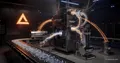
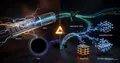
On June 11, 2026, French startup Alice & Bob did what industry insiders called "impossible before 2028" — released a full hardware platform, the Helium Quantum System, with on-premises deployment capability. Formally, the news: a system with 18 "cat qubits" can create the first logical qubit while consuming only 40 kW of power — 5-10 times less than comparable competitor systems. But that's just the tip of the iceberg.
The real story here isn't about technical specs. This is the first time a European quantum project has not just caught up with American giants in the lab, but surpassed them in engineering pragmatics. While IBM and Google chase the number of physical qubits (IBM has 433 in Osprey, Google has 105 in Willow), the French took a different path: they designed a machine that, with 18 qubits, does what competitors need 200-300 for. This isn't incremental improvement — it's a paradigm shift.
Why is this critical? Because on May 15, 2026 — just a month before this announcement — the US government announced $2 billion in funding to nine quantum companies through the CHIPS Act. Recipients include IBM ($1 billion), Quantinuum, PsiQuantum, and Atom Computing. France's entire national quantum program, Plan Quantique, has a 2026 budget of €1 billion. So one IBM receives as much from the US government as all of France spends on quantum in total. And despite this, it's a French startup, not an American giant, that first releases an "upgradable" system with a transparent architecture and a real path to fault tolerance.
The official launch date for Helium is June 10, 2026. But insiders know: the first successful coherent operation of 18 cat qubits was recorded back in April, during the closing of a Series B round involving NVentures (Nvidia's venture arm) for a total of €100 million. Jensen Huang, who publicly expressed skepticism about quantum computers back in 2023 ("useful quantum computers in 20 years"), is now investing in a French cat qubit manufacturer. This isn't just a deal — it's an admission that the classic GPU giant can no longer ignore the quantum threat and prefers to "lead" it by buying a stake in the most promising architecture.
Timeline and Context
To understand why Helium is a ticking time bomb for US dominance, we need to look at the background of the last 60 days. 2026 has been a turning point for the quantum industry, with events piling up like a snowball.
| Date | Event | Participants | Industry Significance |
|---|---|---|---|
| March 2026 | Google opens early access to 105-qubit Willow | Google Quantum AI | First time a major player gives external researchers access to a real quantum processor |
| May 15, 2026 | US allocates $2 billion for quantum technologies via CHIPS Act | IBM ($1B), Quantinuum, PsiQuantum, Atom Computing, others | Government enters quantum company equity — unprecedented act of "techno-nationalism" |
| May 21, 2026 | NVentures (Nvidia) invests in Alice & Bob, closing Series B at €100M | Nvidia, Alice & Bob | First major Nvidia investment in European quantum hardware — signal of shifting priorities |
| June 10-11, 2026 | Launch of Helium Quantum System and Hello Tomorrow Global Summit in Amsterdam | Alice & Bob, research partners | First commercially available upgradable quantum computer for HPC centers |
| June 16, 2026 (planned) | France Quantum 2026 in Paris, Station F | Alice & Bob, Pasqal, Quandela, French government | Presentation of national quantum strategy with Alice & Bob CEO |
| June 16-17, 2026 (planned) | Commercialising Quantum Global in London | IQM, Oxford Quantum Circuits, Photonic Inc. | Assessment of economic viability of quantum projects |
| June 22-24, 2026 (planned) | IQT Nordics in Oslo | IQM, KTH, Nordic Innovation | Focus on quantum sensors and communications — less visible but more mature markets |
Key takeaway from the timeline: 2026 is the year the quantum industry shifted from a "qubit race" to a "race for fault tolerance." The US invested $2 billion in scaling existing architectures; France (via Alice & Bob) invested €100 million in private money in a fundamentally different architecture. And while American giants struggle with exponential error growth as qubit count increases, the French show that 18 well-designed qubits can be more useful than 100 "raw" ones. It's "efficiency vs. brute force" — and it's unclear who will win, but bets are placed.
Who Wins and Who Loses
Winner #1: France and the European Union. Alice & Bob is not just a startup, but the flagship of the French Plan Quantique. The company participates in the PROQCIMA program of the French Ministry of Defense, which aims to create two prototypes of universal quantum computers of French design by 2032. Helium's success gives Paris a bargaining chip in negotiations with Brussels over funding for a pan-European quantum infrastructure. If the French can offer a "European stack" (hardware from Alice & Bob + software from Pasqal or Quandela), it would create a real alternative to US dominance. Europe has long sought its "own path" in technology — perhaps quantum will be that path.
Winner #2: Nvidia. NVentures' investment in Alice & Bob is a classic hedge. If quantum computers become a reality, classic GPUs won't disappear — they'll work in tandem with quantum accelerators. Helium is already compatible with Slurm, the open-source QRMI library, and supports integration with classic HPC centers. Nvidia, through CUDA-Q, cuQuantum, and NVQLink, secures its place in this hybrid future. Even if a quantum breakthrough happens, Nvidia will supply the "classical part" of the system. This is a masterclass in strategic investing: $10-20 million (Nvidia's presumed share in the round) is a pittance for a company with a $3 trillion market cap, but it gives a seat at the table for the next 10 years.
Loser #1: IBM. Big Blue received $1 billion from the US government but has yet to offer the market anything comparable to Helium in engineering elegance. IBM has the 433-qubit Osprey, but creating one logical qubit with traditional transmon qubits requires 200-300 physical qubits. Alice & Bob does the same with 18. Of course, IBM's 433 qubits are more than the French 18. But for real computation, what matters is not "dirty" power but the quality of logical qubits. If the French can present a 48-qubit chip with multiple logical qubits in 2027, IBM will find itself in Intel's position during the Cannon Lake era — when you have more cores, but each core performs worse.
Loser #2: China. China's quantum program (estimated $15 billion in government investment since 2017) has traditionally focused on photonic and superconducting architectures, close to the American school. The emergence of cat qubits as a practically realized, scalable alternative caught Chinese planners off guard. They have no equivalent to Alice & Bob — neither in research institutes nor in the private sector. Now, to catch up, they'll either have to copy (difficult, as cat qubits rely on patents from 2020-2024) or develop an alternative topological architecture (which will take years). France has just created a technological barrier that China cannot overcome quickly.
What the Media Isn't Saying
Insight #1: Helium's main innovation isn't the qubits — it's Starboard. Yes, 18 cat qubits are a breakthrough. But the real "feature" that's overlooked is the Starboard monitoring system. This is the first quantum dashboard in history that shows not just "is the qubit alive" but individual performance of each cat qubit in real time, allowing visualization of system behavior and load planning. In the world of classic HPC centers, this is routine (think Grafana or Prometheus). In the quantum world, it's a revolution. Until now, researchers worked with quantum systems as "black boxes": submit a task, get a result, no idea what happened inside. Starboard ushers in the era of "debuggable" quantum computers. It's like moving from assembly language to an integrated development environment. And this was done not by Google or IBM, but by a French startup with 200 employees.
Insight #2: Helium is a "Trojan horse" for the French defense complex. Note the context: Alice & Bob participates in the PROQCIMA program of the French Ministry of Defense, which aims to create two French universal quantum computers by 2032. Helium is the first step toward that goal. But why is the company selling the system to "open research partners" worldwide? Because they need real workloads from external users to debug the architecture. Every researcher who runs their algorithm on Helium will, for free, test the French quantum system for vulnerabilities, errors, and unexpected behavior. It's "crowdsourcing a defense project." And researchers not only don't get paid for it but also pay for access (or share results). A brilliant business model: make the world test your weapon.
Insight #3: 40 kW is not just energy efficiency — it's a political statement. Helium consumes 40 kW — about as much as two rack servers with H100 GPUs. For comparison, IBM and Google quantum systems require cryogenic cooling to 15 millikelvins, consuming megawatts. 40 kW means Helium can be installed in a standard data center without building separate cryogenic infrastructure. This lowers the entry barrier for universities, research labs, and small companies. The French deliberately bet on democratizing access to quantum computing. And this is a political move: "American quantum computers are for the elite (IBM, Google, US government). Ours are for everyone." This could attract the entire global academic and research establishment to Europe's side.
Forecast: Next 30 Days and 90 Days
Next 30 Days (by mid-July 2026)
Three key events will occur in the next two weeks. First: June 16 — France Quantum 2026 in Paris, where Theau Peronnin (CEO of Alice & Bob) will speak alongside the Minister of Defense and representatives from Pasqal and Quandela. Expect an announcement of an additional €200-300 million for the PROQCIMA program — possibly through reallocation of unused funds from the European Innovation Council. Paris will want to "strike while the iron is hot."
Second: June 16-17 — Commercialising Quantum Global in London. There, a "roadmap" for integrating Helium into commercial HPC centers will be unveiled. Watch for announcements from UK centers (e.g., Hartree Centre) about purchasing the first systems. If such news appears, it will set a precedent — and German and Dutch centers will follow suit.
Third: official recognition from Nvidia. While NVentures announced the investment, Nvidia as a corporation has not made loud statements. Within 30 days, a press release or blog post from Jensen Huang is likely, where he will call quantum computing "the next frontier" for CUDA. This will boost Alice & Bob's stock for the next funding round.
90-Day Horizon (by September 2026)
By September, we will see the first scientific publication using Helium to solve a real problem inaccessible to classical computers. Most likely in quantum chemistry or materials science — these are the "lowest hanging fruit" for an 18-qubit system. If such a publication appears in Nature or Science, it will be the moment when the academic community officially recognizes: the NISQ (Noisy Intermediate-Scale Quantum) era is over, and the FTT (Fault-Tolerant Transition) era has begun.
Also by September, expect an announcement of Alice & Bob's next funding round — Series C at $200-300 million. Participants: NVentures (additional stake), possibly a new strategic investor from Europe (e.g., SAP or Volkswagen Group, interested in quantum optimization), and sovereign wealth funds (Mubadala or Temasek). The French government may enter directly through Bpifrance.
Geopolitical scenario: The European Commission will announce the creation of a unified quantum cloud infrastructure, EuroQCI (Euro Quantum Communication Infrastructure), using hardware accelerators from Alice & Bob as "quantum coprocessors" for European supercomputing centers. This will be a direct response to the US initiative. Competition will shift from the technological to the infrastructural-political plane. The winner will be the one who first creates a "quantum internet" — a network where quantum computers exchange information via quantum cryptography. Europe has a geographic advantage (multiple member states), the US has a technological one. France, through Alice & Bob, could become the "quantum bridge" between these worlds.
Final assessment: Helium is not the best quantum computer in the world by raw specs. But it is the smartest quantum computer ever built. The French understood what American giants overlook: in the quantum race, the winner is not the one with the most qubits, but the one with the lowest cost per logical qubit and the highest system transparency. With 18 qubits and Starboard, they created a platform for experiments that researchers can actually use. IBM, with 433 qubits, created a monster that no one can tame. In the long term (5-7 years), the pragmatic approach will win. And this is the first time a European startup, not an American giant, sets the agenda in quantum computing. Europe has just had its "Nvidia moment" — the question is whether it can seize it, as it once missed the era of classical processors.
— Editorial Team








No comments yet.