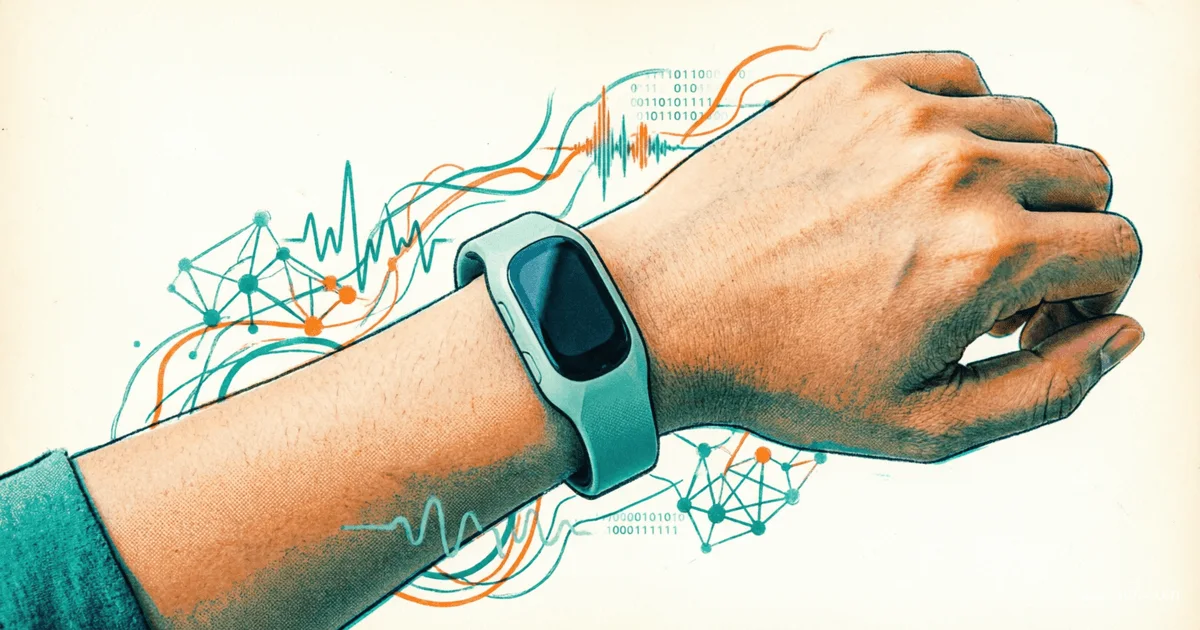
Google Announces Fitbit Air — A Screenless Wearable for AI Health Tracking
The new device launches on May 26 and features an unusual screenless design. It focuses on comfort and simplicity, offering AI-driven physical activity analysis without the traditional smartwatch display.
Fitbit Air: Google isn't making a tracker — Google is reshaping the health market for $99
[The Gist]: What's Really Happening
On May 6, 2026, Google announced Fitbit Air — a screenless wearable tracker for $99.99, shipping from May 26. Media outlets are calling it a "Whoop killer," a "return of fitness bands," and an "AI coach." All true, but just the tip of the iceberg.
Here's what's really happening: Google is turning Fitbit from a "smartwatch" brand into a platform for collecting biometric data with an AI analytics subscription. Fitbit Air isn't just a device — it's a "Trojan horse" for bringing Google Health Premium to the masses. And that fundamentally changes the game for everyone making money on health-tech subscriptions.
Why does this matter? Because Google did what Whoop hasn't been able to afford for 10 years: separated the cost of hardware from the cost of the subscription. You pay $99 for the device once, and then you decide whether you need the AI coach for $9.99 a month or if the forever-free basic features are enough.
Whoop, by contrast, locks users into an annual subscription from $199 to $359, with the device itself being a "free add-on to the subscription." Fitbit Air offers users freedom of choice. And this isn't philanthropy — it's a strategic strike at the heart of a competitor's business model.
Timeline and Context
- 2019: Google announces the acquisition of Fitbit for $2.1 billion. The deal closes in 2021 after EU antitrust investigations.
- March 2026: Whoop closes a Series G round at a $101 billion valuation. Yes, you heard that right — one hundred one billion. Oura is valued at $110 billion. The screenless wearable market has exploded.
- May 6, 2026: Google announces Fitbit Air, simultaneously renaming the Fitbit app to Google Health.
- May 26, 2026: Global sales launch in 21 countries.
Key detail almost no one noticed: Google Health Coach (Gemini on steroids) exits public preview on May 19 — exactly one week before sales launch. Everything is perfectly synchronized.
Who Wins and Who Loses
Winners:
- Google. Fitbit Air is a "gateway" device into the Google Health Premium ecosystem. $100 for hardware is the entry point. Google then makes money on the subscription ($10/month or $100/year). If even 15% of Air owners upgrade to Premium, that's an additional $150 million in annual recurring revenue from the first wave alone.
- Consumers who want tracking without a subscription. Finally, an alternative to Whoop where you don't have to pay $200+ a year just to see your heart rate.
- Pixel Watch 4 owners. Google allows simultaneous connection of both the watch and Fitbit Air to the same Google Health account. The watch for daytime notifications, Air for nighttime sleep tracking. Brilliantly simple.
Losers:
- Whoop (biggest loser). Whoop's share of the fitness tracker market is only 2%, but the company is valued at $101 billion. Fitbit (now Google Health) has 6% market share. Google bought Fitbit for $2.1 billion. Whoop is worth 48 times more with a third of the market share. That's a bubble that will burst as soon as Google aggressively pushes Air. Whoop is already panicking — a week after the Air announcement, they introduced video consultations with doctors as a paid option. A desperate attempt to hold onto the premium segment.
- Garmin (partially). Garmin has an expensive ($169) and lackluster Index Band for sleep. Functionally, it doesn't even come close to Fitbit Air. Garmin either slashes the price or exits this segment.
- Amazfit Helio Strap. Also $99, also screenless, but with a "mediocre" app. Against Google Health with Gemini, Amazfit has no chance.
What the Media Isn't Saying
Insight #1: Fitbit Air is a "spy" in the bedroom, and data flows into a large language model.
Google Health Coach, powered by Gemini, analyzes your heart rate, HRV, temperature, sleep stages, and activity. But the privacy agreement (which 99% of users don't read) allows Google to use this data to train its AI models. Not in "anonymized" form — in the kind that can be deanonymized with a few lines of code.
Why can't Whoop sell subscriptions so cheaply? Because they don't have their own LLM. They buy APIs from OpenAI or Anthropic, adding a middleman markup. Google uses Gemini, already paid for from other budgets. The marginal cost of the AI coach for Google is near zero. For Whoop, it's $5-7 per user. Unfair competition, but that's reality.
Insight #2: Fitbit Air is a "wolf in sheep's clothing" for the medical insurance industry.
In the US, the employer-sponsored wellness program market is valued at $8 billion annually. Insurance companies (UnitedHealth, Cigna, Aetna) pay employers to have their employees wear trackers and "lead healthy lifestyles." The $99 Fitbit Air is the perfect device for corporate giveaways. And crucially, Google Health Premium provides "clinically validated" data (FDA certification for Afib is already in place).
Imagine: an employer gives an employee a Fitbit Air, subscribes to a $100/year Health Premium plan (bulk pricing even cheaper), and the insurer cuts the company's premiums by 5-10%. Everyone is happy. Google in this scheme is the platform operator sitting on the data stream. And that's 100 times more profitable than selling trackers themselves.
Insight #3: Fitbit Air is an experiment in "seamless" data collection for medical research.
Google already has access to millions of electronic health records through partnerships with HCA Healthcare and Ascension. Add continuous biometric streams from Fitbit Air (24/7 heart rate, temperature, SpO2, HRV), and you get the largest dataset in the history of predictive medicine. Google will be able to predict heart attacks, COVID-19, depressive episodes, and even early dementia with accuracy unmatched by any university or pharma company.
And this isn't a "conspiracy theory." In May 2026 (this month!), Google announced that Google Health Coach is exiting preview precisely because it's trained enough for widespread use. Trained on what? Real Fitbit user data from the past 3 years. Who gave consent? You, when you clicked "Accept" after the last privacy policy update in February 2026.
Forecast: Next 30 Days and 90 Days
Next 30 days (June 2026):
- Fitbit Air sells 2-3 million units in the first two weeks. Google isn't disclosing numbers, but UBS analysts are already projecting 4 million by end of quarter.
- Whoop urgently cuts its annual subscription price to $149 (currently minimum $199) and offers 3 months free for Fitbit defectors. It won't help.
- Amazon and Samsung announce their own "screenless trackers" — Amazon Halo died in 2023 but will be resurrected. Samsung is already working on a screenless Galaxy Fit 3.
Next 90 days (August 2026):
- Google Health Premium integrates with Google Calendar and Gmail. Your AI coach will automatically suggest workouts in "windows" between meetings and reschedule them when your calendar changes. The feature will cost $14.99/month (premium tier within the premium tier).
- Fitbit Air Special Edition with basketball player Stephen Curry sells 500,000 units, not because of Curry but because of the exclusive "Obsidian" color and early access to Health Coach beta features.
- Chinese companies (Xiaomi, Huawei) release Fitbit Air clones for $39. But their AI coaches will be orders of magnitude worse — they lack a Gemini-level LLM and access to medical datasets. The quality gap in analysis will be catastrophic.
Main risk to the long-term forecast: EU antitrust investigations. If Google Health Premium dominates the fitness subscription market and Google Health data is "by default" open to all other Google apps, the European Commission may demand a breakup or impose a fine of 10% of turnover. But that's a 3-5 year process. By then, Google will have collected enough data to make it "impossible to recall."
Conclusion: Fitbit Air is not a fitness tracker. It's a sensor for training Gemini on human bodies in real time. Google doesn't want to compete with Whoop in the "smart band" market. Google wants to bury Whoop, copy their business model, add an LLM, and sell the result to medical insurers for tens of billions of dollars. $99 for the device is just the price of admission to this ride. And the ticket pays for itself in 4 months of subscription — but not for you, for Google's ad-insurance machine.
— Editorial Team










No comments yet.