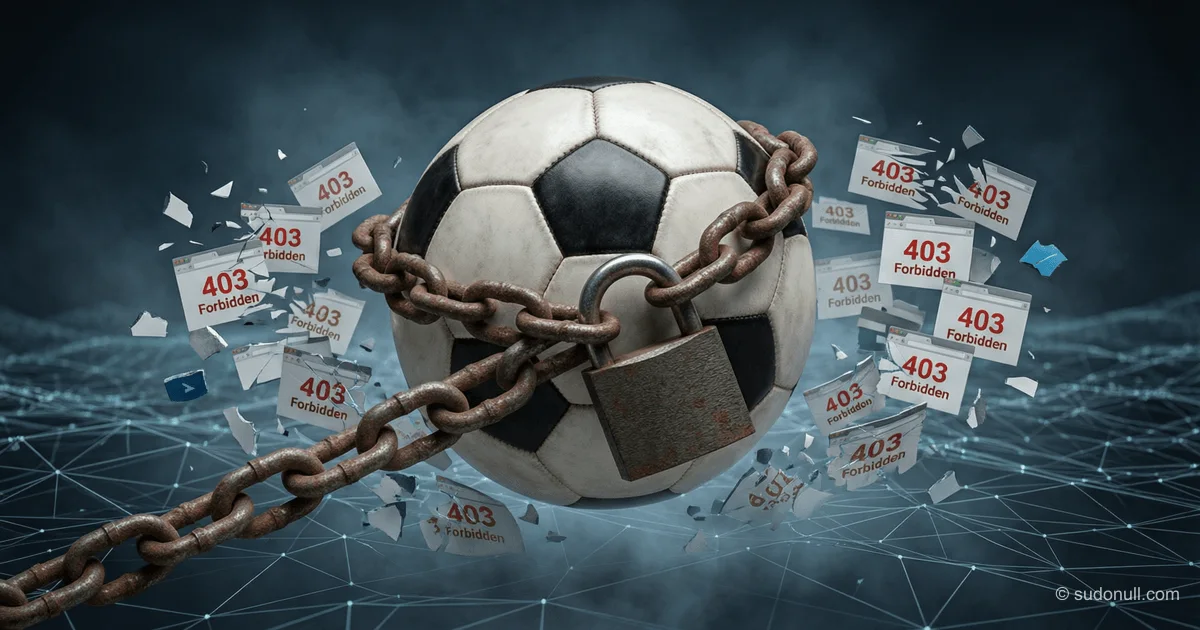
Mass IP Address Blocking in Fight Against Pirate Streams Harms Legitimate Sites
European regulators and sports leagues are stepping up measures against the illegal distribution of football matches. However, the methods used—blocking entire IP ranges—lead to unintended consequences: thousands of legitimate internet resources sharing common infrastructure are caught in the crossfire.
How Blocking Works and Why Legitimate Sites Suffer
Modern network technologies, such as cloud platforms and content delivery networks (CDNs), allow many websites to use the same IP addresses. When a court or regulator orders a specific IP address belonging to a pirate service to be blocked, telecom operators and hosting providers are forced to restrict access to the entire range. As a result, dozens or hundreds of legitimate projects—from news portals to online stores—are taken offline along with the illegal content.
Specific Cases: France and Spain
In France, a court ordered more than 30 companies—including telecom operators, hosting providers, CDN services, and VPN providers—to restrict access to 35 websites that streamed matches without a license. The initiative was led by Spain's La Liga. The ruling is in effect until June 21, 2026, and allows for the list of blocked resources to be expanded. The court also ordered Cloudflare to take measures at the infrastructure level, which in practice means blocking not individual sites but entire network segments.
In Spain, La Liga's demands are sent to telecom operators almost weekly. Each order covers about 3,000 IP addresses. Due to how CDNs and cloud services work, such blocks inevitably affect third-party projects. The highest number of outages is recorded on match days, when the flow of blocks intensifies. Users see an access error, while site owners experience a sharp drop in traffic with no explanation.
Key Points
- IP-based blocking affects not only pirate sites but also thousands of legitimate resources using shared infrastructure.
- La Liga has initiated legal proceedings in France and Spain, demanding mass blocks. In France, 35 sites were targeted; in Spain, about 3,000 IP addresses at a time.
- Outages for legitimate services occur on match days when blocking is most intense.
- Analytical centers note "collateral damage" to digital infrastructure.
- The problem lies in the mismatch between blocking methods and the architecture of the modern internet.
Consequences for Internet Infrastructure
The situation highlights a long-standing contradiction: the tougher the blocking measures at the network level, the higher the risk of harming innocent parties. In an environment where thousands of sites can share the same IP addresses, targeted sanctions become mass-scale. This causes discontent among businesses and the internet community, who point to the need for more precise methods, such as DNS-based blocking or traffic analysis technologies.
Context and Prospects
The fight against piracy in sports streaming is a global problem. Rights holders lose billions of dollars annually due to illegal content distribution. However, the current approach based on mass IP address blocking may undermine trust in legitimate services and harm the openness of the internet. Experts call for a balance between copyright protection and maintaining network stability.
— Editorial Team










No comments yet.