Tasks of the domestic sequencer
More recently, in 2016, the undisputed leadership in the genomic sequencing market belonged to the United States. More precisely - the American company Illumina , which developed a model range of fluorescent sequencers.
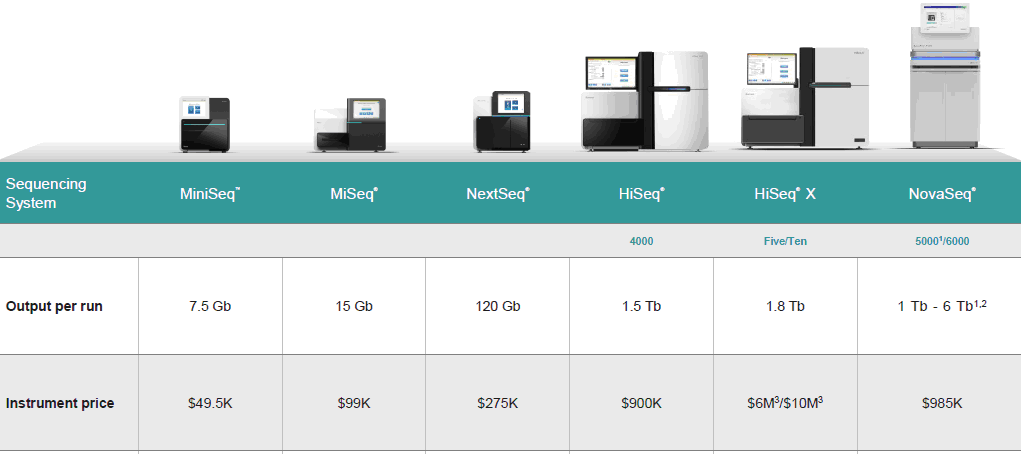
Fig. 1. Fluorescent sequencers from Illumina
( Illumina Investor Presentation, August 18, 2017 )
Improvement of these devices and the fluorescent technology they use allowed reducing the cost of sequencing of the human genome to $ 1000 by mid-2016.
The second place in 2016 was occupied by the American company Thermo Fisher Scientific , which develops semiconductor DNA sequencing technology. Their sequencer Ion S5, despite its relatively modest performance (up to 12 Gb), quite adequately competed with desktop Illumina sequencers in a niche of targeted (clinical) sequencing.
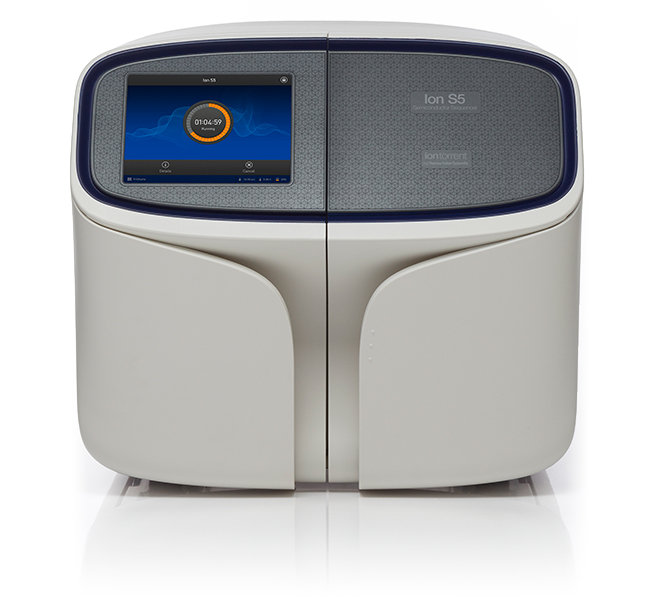
Fig. 2. Semiconductor Sequencer Ion S5
In September 2017, BGI announced the start of accepting applications for genome sequencing at $ 600, which immediately put China in the lead of genome races. This breakthrough was made possible by the creation of CNGB (China National GeneBank), a large center with 150 fluorescent Chinese sequencers BGISEQ-500.
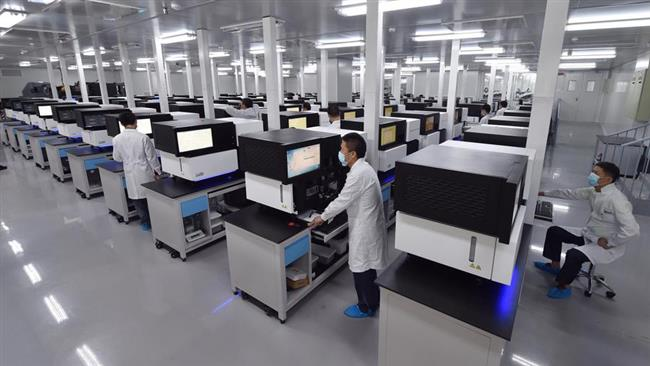
Fig. 3. In the "machine room" CNGB
http://www.presstv.com/Detail/2016/09/22/485893/China-national-gene-bank
True, the performance of one American NovaSeq 6000 is equal to the performance of 50 ... 60 Chinese BGISEQ-500. Therefore, the largest sequencing center today can be considered the Chinese company Novogene , which acquired 25 NovaSeq 6000 at the beginning of this year. Their total productivity is about a quarter of a million genomes per year. The figure is impressive, but if we sequenced annually by 0.3 million genomes (~ 0.05 million in CNGB plus ~ 0.25 million in Novоgene), then the sequencing of 100 million genomes in the framework of the China Precision Medicine Initiative program launched last year (2016 ... 2030, $ 9.2 billion) will take more than 300 years. And in order to meet the deadlines (until the end of 2030), the Chinese will have to build and equip several more similar centers with sequencers.
In early 2017, MinION miniature nanoporous sequencers appeared on sale, and in May - GridION X5, developed by Oxford Nanopore Technologies (ONT, UK). The most productive model (PrometION) is in beta testing at several genomic centers and should be available in the coming months.
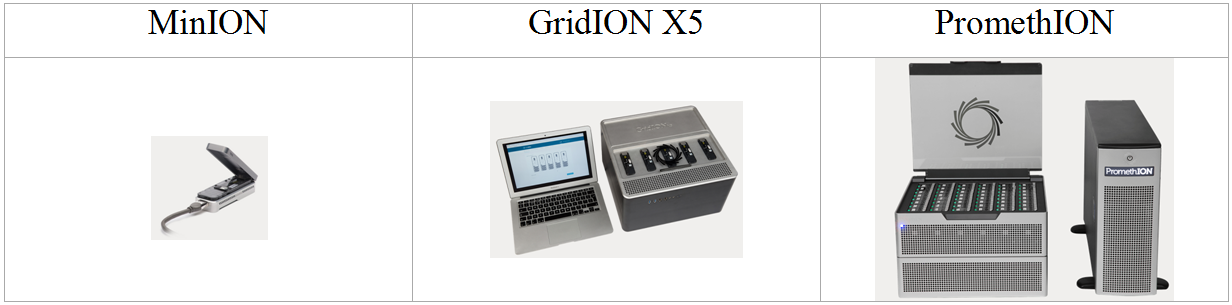
Fig. 4. Nanoporovye sequencers company ONT
The relatively low accuracy of nanoporus sequencing (~ 90% with a single reading) does not allow these devices to compete with fluorescent sequencing machines (accuracy ~ 99.9% with a single reading) in determining single point mutations (Single Nucleotide Polymorphisms, SNPs), but a longer reading length (> 10,000 bp) makes them indispensable when mapping Copy Number Variations polymorphisms (CNVs). In addition, nanoporous sequencers do a good job of identifying viruses and bacteria, evaluating their drug resistance, analyzing transcriptomes, HLA typing, paternity determination and many other objectives of sequencing that allow them to successfully fight for these niches of the NGS market (Next Generation Sequencing) .
Intervention in the genomic races of China and the UK has sharpened the competition. This has not yet affected the pricing of targeted sequencing, but the cost of sequencing the human genome over the past year has decreased by 40% (from $ 1,000 to $ 600).
Should Russia participate in genomic races, or is it easier to wait for the appearance of cheap Chinese, English, or American sequencers? But such an expectation can be very long. Yes, and for the power offensively. This determines the relevance of considering the possibility of developing a domestic sequencer and providing it with consumables and reagents.
The main purpose of this development is to “catch up and overtake America” (as well as China, the UK, South Korea, Australia, Saudi Arabia, etc.). Or at least just catch up. Or even not to catch up, but just try to make sequencing in Russia more accessible. In the first place - to achieve import substitution at least part of consumables and reagents. It will be harder to copy sequencers. But you can not just copy foreign developments, but try to improve them. And if not improved, then at least cheapen. The task is not too ambitious, but doable.
One of the projects of this kind was worked out by four institutes of the Siberian Branch of the Russian Academy of Sciences (2012 ... 2014), which unsuccessfully tried to master the technology of sequencing SMRT ( Pacific Bioscience , USA). We can also mention two attempts to develop a monomolecular sequencing technology based on Raman spectroscopy - in Chernogolovka ( InSpektr LLC , 2010 ... 2012) and in Zelenograd ( Nano Vision LLC , 2013 ... 2014) - and about the Zelenograd project RuSeq, aimed at improving tSMS technology ( Helicos , USA).
It is clear that the choice of mastered (copied / improved / "perediraemye") NGS technologies must take into account the prospects for their development. And, given the extremely limited possibilities, to evaluate these prospects only for the three most advanced technologies - fluorescent, semiconductor and nanopor.
Fluorescent technology
The sequencers in this case are precision scanning epifluorescent microscopes equipped with a system for feeding reagents to flow cells. A characteristic feature of the latest models is the orderliness of the location of submicron DNA clusters ( Illumina , NovaSeq 6000) or DNA nanobolls ( BGI , BGISEQ-500) in disposable flow cells.
Collecting similar microscopes in Russia will have mainly from imported components, so they will cost no less than their Chinese counterparts. True, these analogues are not sold yet, but in 2 ... 3 years, most likely, they will also be available here. Therefore, it is better not to focus on the development of fluorescent sequencers, but on mastering the production of their consumable components and reagents - flow cells and labeled nucleotides. Unless, of course, fluorescent technology in a few years will not be replaced by fluorescent. Especially since such a replacement can begin as early as 2018.
Luminescence has already been used in NGS - in the technology of pyrosequencing, which allowed 454 Life Sciences to read the first individual human genome (“Project Jim”, 2005… 2007). This technology, built on bioluminescent (luciferase) registration of pyrophosphate formation, is now outdated. But to determine the luminescence is easier than fluorescence. Therefore, Illumina has long been developing a technology for luminescent sequencing (the “Firefly” project).
The fluorescent sequencer may not be worse, but it is much cheaper than the MiniSeq and MiSeq fluorescent desktop sequencers, which is why its development is progressing very slowly. Nevertheless, at the ASHG 2017 exhibition (17 ... 10.21.2017), a ready-made Firefly sequencer was demonstrated, as well as flow cells (chips) and reagent cartridges necessary for its operation.
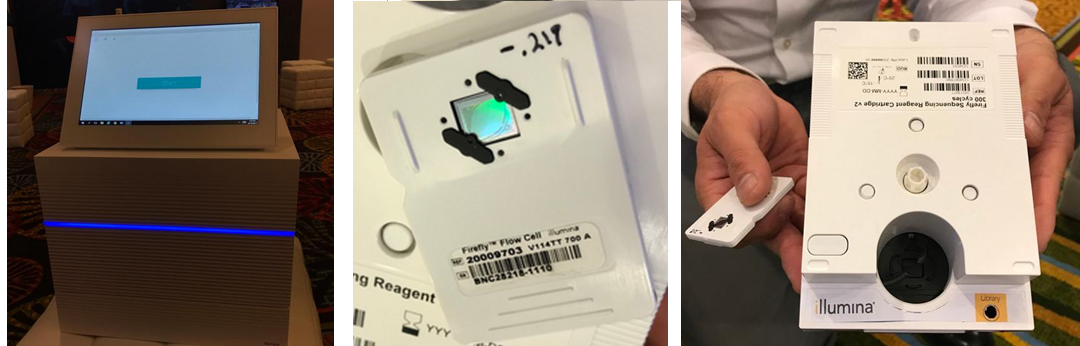
Fig. 5. Illumina Firefly Fluorescent Sequencer
https://twitter.com/illumina
The main problem in the case of orientation to the luminescent technology will be not so much the development of the device, as the development of the synthesis of consumable reagents necessary for its operation - deoxynucleoside triphosphates (dNTP) with labels capable of generating photons. Moreover, these labels must be connected to nucleosides by easily cleavable linkers containing azidomethyl groups.
An important feature of azidomethyl dNTP derivatives, the synthesis of which was developed by Russian scientists (IBCh RAS) in the early 90s of the last century, is their relatively high stability, combined with the simplicity and speed of deblocking when processing DNA clusters (or DNA nanobolls) with a tris solution (2-carboxyethyl) phosphine (TCEP). It was the complexity of the synthesis of such reagents that until recently defended Illumina from competitors, and mastering their production allowed China to overtake and overtake America.
Are Russian chemists able to master the synthesis of such reagents? Judging by the links in the patents of the company Illumina, in the 90s of the last century it was not in doubt. And now in Russia there are 3 ... 4 groups of chemists who are able to cope with this task (ICBFM SB RAS, LLC Syntol, IBC RAS, IMB RAS).
Semiconductor technology
The company Thermo Fisher Scientific has spent on the purchase of the semiconductor sequencing technology of billions of dollars. Now the intensification of competition requires a sharp decline in prices, and it is unlikely that she will be able to return the billions spent, especially with a profit. Third-party developers do not care about such problems, so the semiconductor technology still retains its appeal. Especially if you manage to use ready-made pH-sensor chips, the development of which was spent millions of dollars.
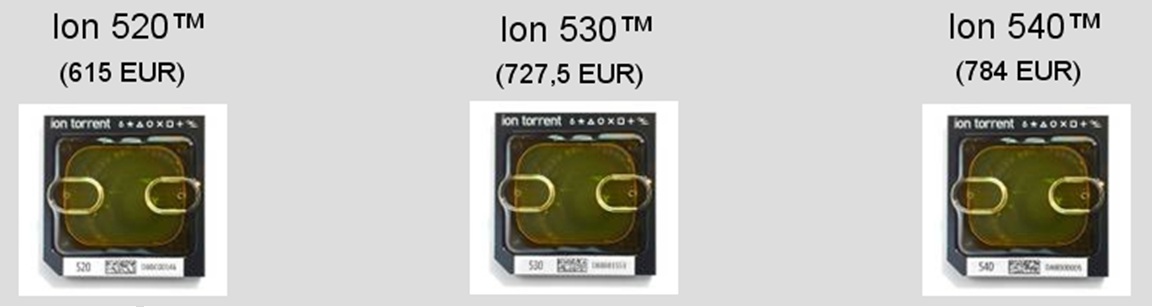
Fig. 6. pH sensor chips semiconductor sequencer S5
The cost of these chips is too high, at least an order of magnitude. And you can use them (as claimed by the developers) only once. Nevertheless, some craftsmen managed to use them more than ten times, and this is clearly not the limit. Therefore, the primary task for improving (cheapening) semiconductor sequencing technology is to master the regeneration of used pH-sensing chips.
The prototype required for such a regeneration device has already been developed. More precisely, an electronic system has been developed that reads information from pH-sensor chips and allows them to control their quality.
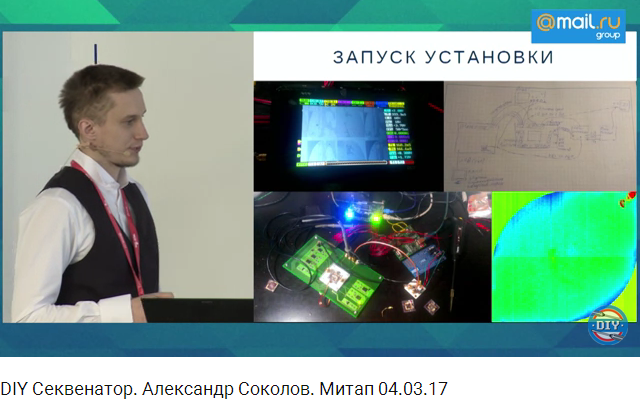
Fig. 7. Homemade semiconductor sequencer
https://www.youtube.com/watch?v=eojg02AUAxw
If you increase the speed and capacity of the ADC, then such a reader can be used as an electronic subsystem of the domestic semiconductor sequencer. True, it will still need to be equipped with a reagent supply system. And master the production of these same reagents. With a strong desire (and good funding), there will be no particular problems with this.
The problem is that all such developments and their development will take 2 ... 3 years, and during this time a lot can change. For example, the accuracy and performance of nanoporous sequencing may increase. As a result, all the efforts of "semiconductor" competitors will be in vain.
Nanopor technology
The first Minion nanoporifier sequencer is similar to the first pancake - it is already “edible”, but the following ones should turn out much better. His reading accuracy is no more than satisfactory, and even then not for all applications. As for productivity, it is obviously not enough for sequencing genomes, since at least five disposable cells cost from $ 500 to $ 900 must be spent for each genome (depending on their number in the order).
The MinION cells have embedded chips that amplify and digitize signals (picoampere currents) from 512 nanopores. GridION X5 works simultaneously with five of the same cells, but in the cells to PromethION the number of analyzed nanopores is increased 6 times (up to three thousand). This will allow sequencing of the human genome in a single cell. True, with low quality, but with long reads, which facilitates their accurate assembly. And it complements well the short (2x150 or 2x100), but accurate (> Q30) reads obtained by fluorescent sequencers. Therefore, nanoporous sequencing on PomethION can complement the fluorescent, but cannot compete with it. Although if the cells of the next generation will contain not thousands, but tens or hundreds of thousands of nanopores, their use will increase the frequency of reading DNA,
For most of the tasks of targeted sequencing, the performance of the MinION (5 ... 10 Gb) is clearly excessive. Therefore, ONT plans to launch MinION Dx (or FLONGLE) on the market - a MinION modification with an adapter insert for cells with 128 or 256 pores.
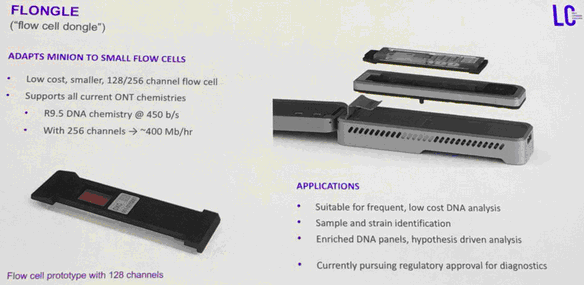
Fig. 8. FLONGLE sequencer
Disposable cells for FLONGLE can be much cheaper, since their electronics are moved to a reusable adapter box, with which they are joined by a contact pad such as LGA (Land Greed Array).
Another compact nanopor sequencer (SmidgION) connected to a smartphone (iPhone 7 ... X) should be available in the coming months.
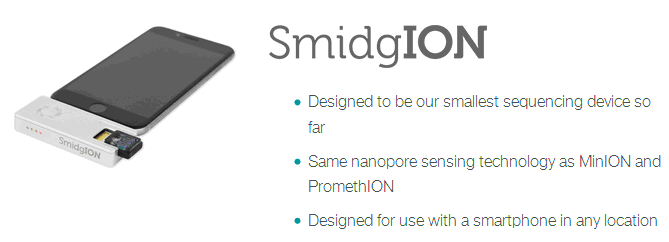
Fig. 9. The first "gadget" sequencer SmidgION
Cheap and affordable for all nanopore sequencing can change the entire NGS market (and the whole world). But this ability will manifest itself in full only after the appearance of worthy competitors. One of such competitors may be the company Roche Sequencing , which has been developing its own technology of nanoporous sequencing since 2014. Judging by some publications and messages on the Internet, other competitors may appear soon.
It would be nice to acquire similar competitors in Russia, but the development of sequencers, especially nanoporus, was not included in the list of “Priority areas for the development of science, technology and technology in the Russian Federation”, approved by Decree of the President of the Russian Federation No. 899 of July 7, 2011. Therefore, we can only hope for geeks who are developing semiconductor sequencers in their own kitchen or electronic microscopes in private garages . You can not do without hackers who can hack software to MinION. The fact is that this sequencer can only work if you have an Internet connection. And each autonomous launch must be coordinated with the developers. But there are more strange "troubles." For example:
• Each device and each flow cell is tied to a specific user, followed by the actual address of the laboratory, where he works and conducts research. At the same time, Oxford Nanopore Technologies can obtain information on the location of each device.
• Sanctions policy: Before delivering products, Oxford Nanopore Technologies conducts an audit of each organization and new end users.
• In order to avoid entering into the List of laboratories prohibited to shipments, it is prohibited to transfer Oxford Nanopore Technologies products to third parties.
Interestingly, in accordance with the aforementioned “List of laboratories banned for shipment,” ONT recently refused to sell MinION to such “militarized” organizations as Moscow State University and St. Petersburg State University.
In this regard, the top priority for Russia in the field of nanoporous sequencing is hacking the software used by the MinION sequencer.
The next task is reverse engineering of the cells of this device. And finally, the development of the formation of bilayer lipid membranes in them with built-in ion channels suitable for nanoporous DNA sequencing. It is better to search for biohackers (biophysicists, molecular biologists, genetic engineers, etc.) for such work elsewhere, and here at Geektimes, I would like to discuss the problems of software hacking and reverse engineering with hackers and geeks who are well-versed in electronics.
I would appreciate any questions, comments and suggestions.
Yours sincerely, genseq