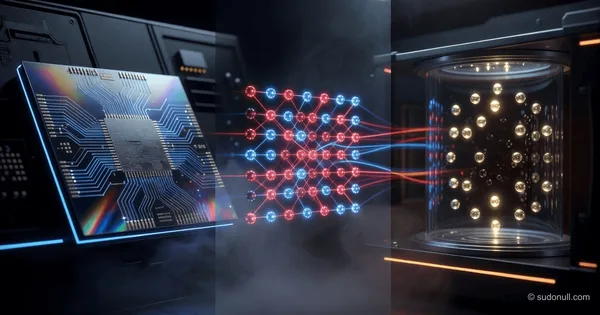
Chinese researchers have created a DNA cassette of 36 petabytes. We analyze the technology, advantages, who needs it and when it will replace hard drives. Read the details.
Johns Hopkins scientists have created an intranasal DNA vaccine against tuberculosis. Learn how it makes the immune system attack 'sleeping' bacteria and speeds up recovery even in resistant forms.
Biocomputing in 2026: Living Neurons, DNA Chips, and Cloud Biodata Centers. Learn how cells replace silicon and where you can already rent capacity for $500/month.
Learn how does biotechnology use genetic engineering with CRISPR, gene therapy, and more. Explore breakthroughs in medicine, agriculture, and the future of DNA editing.
FDA approved phase 3 trials of iSCIB1+ DNA vaccine against melanoma. Survival increase of 24%. Find out when the drug will be available and who it will help.
TransCODE scientists discovered over 1700 microproteins in non-coding DNA. Silencing the OLMALINC gene reduces cancer cell survival by 85%. Learn how peptideins are changing oncology and immunotherapy.
A chimeric DNA structure has been discovered in ALT cancer cells — a new diagnostic marker and target for therapy of aggressive tumors, including pediatric gliomas. Learn more.
Scientists have discovered over 1700 microproteins in non-coding DNA, becoming new targets for cancer. Learn how peptideins change immunotherapy and oncovaccines. Read breakthrough details!
Scientists have found 1700+ microproteins in 'junk' DNA. Disabling 6 of them kills up to 85% of cancer cells. Find out how this will change cancer therapy.
Learn how PDRN from cosmetology is moving into shampoos and serums for hair. Analysis of the trend, risks, and forecasts from trichologists. Read the article!
Neural network Pythia from scientists in Zurich and Ghent predicts DNA repair after CRISPR, enabling precise gene insertion into non-dividing cells. Learn how AI is changing gene therapy.
Japanese geneticists used CRISPR-Cas3 to delete long DNA segments in Duchenne muscular dystrophy. The method is suitable for 60% of patients. Details in the article.
From the web
DNA - Wikipedia
https://en.wikipedia.org/wiki/DNA
DNA and ribonucleic acid (RNA) are nucleic acids. Alongside proteins, lipids and complex carbohydrates (polysaccharides), nucleic acids are one of the four major types of macromolecules that are essential for all known forms of life.
DNA | Definition, Discovery, Function, Bases, Facts ...
https://www.britannica.com/science/DNA
Oct 26, 2026 · DNA is an organic chemical of complex molecular structure found in all prokaryotic and eukaryotic cells. It codes genetic information for the transmission of inherited traits.
DNA - Simple English Wikipedia, the free encyclopedia
https://simple.wikipedia.org/wiki/DNA
DNA, short for deoxyribonucleic acid, is the molecule that contains the genetic code of living organisms. This includes animals, plants, protists, archaea and bacteria. It is made up of two polynucleotide chains in a double helix. [1]
DNA , or deoxyribonucleic acid, is the hereditary material in humans and almost all other organisms. Nearly every cell in a person’s body has the same DNA . Most DNA is located in the cell nucleus (where it is called nuclear DNA ), but a small amount of DNA can also be found in the mitochondria (where it is called mitochondrial DNA or mtDNA).
Deoxyribonucleic Acid (DNA) - National Human Genome Research ...
2 days ago · Deoxyribonucleic acid (abbreviated DNA ) is the molecule that carries genetic information for the development and functioning of an organism. DNA is made of two linked strands that wind around each other to resemble a twisted ladder — a shape known as a double helix.
DNA: Types, Functions, and Its Role in Health | Grifols
https://www.grifols.com/en/dna
What does DNA stand for? DNA stands for deoxyribonucleic acid and is a long, double-stranded molecule that carries the genetic instructions essential for the development, function, growth, and reproduction of many living organisms.
DNA - Latest research and news | Nature
https://www.nature.com/subjects/dna
DNA (deoxyribonucleic acid) is the nucleic acid polymer that forms the genetic code for a cell or virus.