
 January 22, 2017 at 23:32
Vulnerable Highways and Energy Infrastructure: Recent Cases of Major Failures
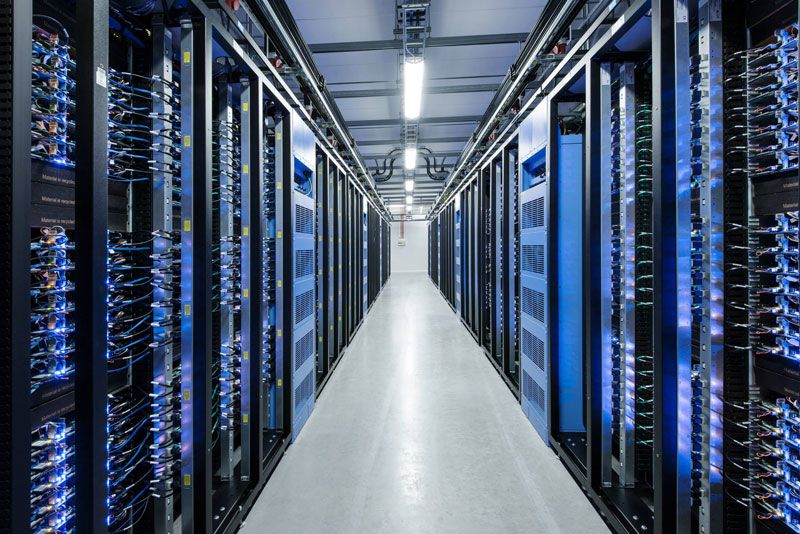
Reliable operation of data centers is extremely important both for customers of DC operators and for owners of such facilities. As previously reported, just a few minutes of data center downtime as a result of an accident can cost owners and customers many millions of US dollars. Moreover, after an emergency downtime as a result of an accident, customers often charge large amounts from the operator of the data center. A similar situation develops when the data center is owned by a large telecommunications company, which needs to ensure the reliable operation of its services and services.
And this raises the question of infrastructure security. And not only cooling systems, mains, server and other equipment. It is also about the main telecommunication channels, where, sometimes, nothing depends on the operators of the DC, since the length of the trunk lines is thousands of kilometers. But damage to such a channel can lead to disconnection of the network or certain services in a single country or even several countries. In addition to telecommunications, a similar situation develops with the external energy infrastructure of a certain region, where nothing depends on the DC operator either. Damage to the grid or a successful cyberattack on the grid causes the data center to stop due to a lack of sufficient energy.
And this is really important. It is so important that the US Department of Energy recently announced the results of a study whose purpose is to study the vulnerability of the country's energy networks. Representatives of this organization believe that the threat of cyber attacks on the American electricity distribution system is becoming more real. Moreover, individual attacks are already underway and in some cases become successful.
How thorough and voluminous the study of the Ministry was can be judged by the size of the report: it contains 494 pages. The report is called the Landmark Quadrennial Energy Review. In it, in particular, it is said that in order to eliminate the described threat, it is necessary to modernize the energy infrastructure of the whole country or, at least, of certain regions where critical elements of the energy network are located.
In general, this refers to data centers in the sense that with a large-scale outage of electricity (really large-scale), data centers will not be able to work normally. More precisely, only those data centers where there are diesel generators of sufficient power capable of ensuring the smooth operation of the entire facility for a long time or any other reliable autonomous sources of electricity will be able to.
What interruptions in electricity can lead to, many know. The pages of Habrahabr have repeatedly published information on various accidents related to energy. One of them is the problem of the Telecity colocation provider, whose data center was damaged due to interruptions in the region’s energy infrastructure. In one of the cases, after the power supply was turned off, the local power system simply did not have time to switch to work from standby generators. A second failure happened a bit later, but the data center operator decided to carry out the UPS system repair at that time, as a result of which a significant failure occurred again. Of course, the provider suffered losses.
It is difficult to imagine what will happen to the data centers of a particular region or country if there is a major accident in the energy infrastructure (for example, a successful cyber attack on the energy network, as in the case of Ukraine, is only larger). Even the most reliable data centers can have weak points that no one will know about before the accident. And even if the power structure is quickly put in order, it can cost data center operators and their customers hundreds of millions, if not billions, of dollars.
But problems can be, and not only if the power systems begin to fail. The reason may be simpler - damage to the Internet backbone. Relatively small communication channels are damaged very often - animals, people, natural factors. If you damage a major highway, then the Internet can disappear from an entire island or country. The most recent cases include, for example, a significant slowdown in the Internet on December 31 of last year. As it turned out, the trunk cable connecting the island to Canada was damaged . To solve the problem, traffic had to be redirected through Iceland.

Recently, the cable connecting the Channel Islands to the "mainland" was also damaged. The Internet there did not disappear completely, but network bandwidth was significantly reduced. As it turned out, the problem happened after the ship unsuccessfully dropped anchor on the underwater telecommunications line. The anchor damaged the channel, and traffic had to be redirected through France. The anchor fell so unsuccessfully that three out of four communication channels were damaged at once. At first, one of the cables was damaged by the anchor, but subsequently it damaged two more, as the ship shifted slightly and the anchor dragged along it along the bottom.