September 4, 2016 at 20:04
Cable Management: Some Tips from Your Own Experience
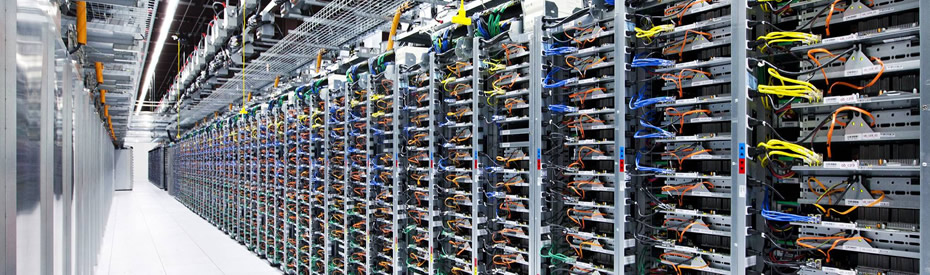
In any computer center of any company, a lot of wires. They are everywhere and everywhere, and if you do not see them, then this does not mean that they are not. They just hid them well. At the same time, they do not always work with cables as required. But they connect everything with everything, and damage to a pair of cables in the data center can lead to a partial or complete halt in its operation.
And without damage there are a lot of situations when the wrong cable management leads to sad consequences, or simply negatively affects the overall efficiency of the data center. We, KingServers , have been working with networking equipment for many years. And during this time we formed a number of rules for working with cables. They are not a revelation, we just use them. Perhaps someone these tips come in handy.
Marking is holy
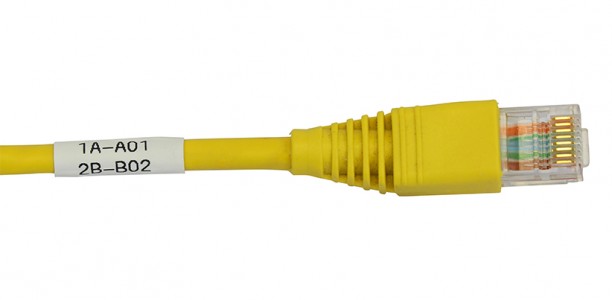
If you do not mark the cables, or do it wrong, then nothing good will come of it. Even if there are 3-4 wires, then there may be a problem without marking. And if there are hundreds and thousands? In this case, if the person who was responsible for the cable management leaves, the newcomer can take months to understand.
We advise not just labeling cables, but using special heat-shrinkable materials. There are many different tools for working with them. You can learn to work with them very quickly - there are no problems here.

Labeling label is usually made of elastic plastic. Labeling is carried out by heating - for this we need a special device. It is best to work with circular heat-shrinkable labels.
There are many advantages of heat-shrinkable materials for marking cables. This is practicality, and durability, and resistance to external influences. Plus, cables labeled in this way look aesthetically pleasing. All this is much better than tape and markers - the latter method is suitable for a home-grown small data center, but not for a large data center, where a small problem can result in millions of losses.
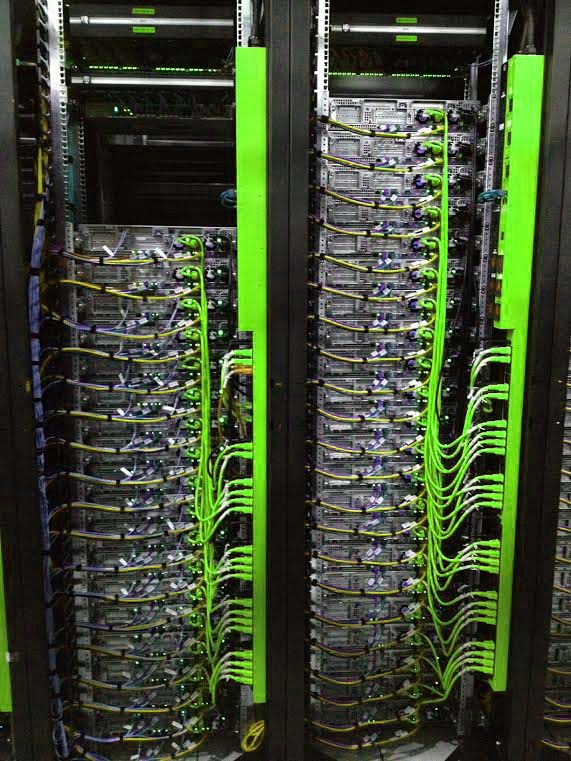
We also recommend using color coding - for individual cable groups or for individual cables. True, the use of color coding must follow certain logic, random work with color is not suitable. It is necessary to determine in advance which color should be used in each particular case, and in the future to use this particular color.
Accuracy of measurements
Here the proverb “Seven times measure - one cut” fits perfectly. The fact is that if you do everything by sight, then the created infrastructure will work in approximately the same way. Plus, if you work with cables without careful measurements, then frequent errors are possible. In this case, a large amount of waste is created, but cables can be very expensive. Therefore, peephole work can be one of the inconspicuous holes where money flows from the budget of a company, for example, a data center operator.
If you make a mistake and the cable is shorter than necessary, you will have to prepare a new one. If, being afraid to make a mistake, the engineer leaves a substantial margin, it can afford the enterprise. And well, if there are not very many wires. And if, as mentioned above, there are thousands of them, and that reserve is left everywhere? Quite a lot of money is spent on this.
In general, you need to measure the wires carefully so that then it will not be excruciatingly painful.
Saving
It must be economical, it is. But stinginess is no longer our option. The fact is that there are two extremes. In some DCs, super-quality cables are bought with almost gold foil as a screen. Manufacturers, chasing a money client, come up with a lot, describing their product. You don’t need to go far for an example, for example, a 3-meter ethernet cable is sold for $ 2194. True, this product is not for data centers, but for lovers of "warm tube sound", but we are sure there is something similar for data centers. And because customers are located, they
buy such cables .
There is another extreme - these are cheap cables that are bought looking only at the price. In this case, problems are possible, and very large. Unreliable connections, poor connection - cheap cables can provide all this joy. Initially, you might think that you are saving time and money, but this is not at all the case. With the increase in low-quality elements in your network infrastructure, the problems will increase like an avalanche.
Checks and Tests
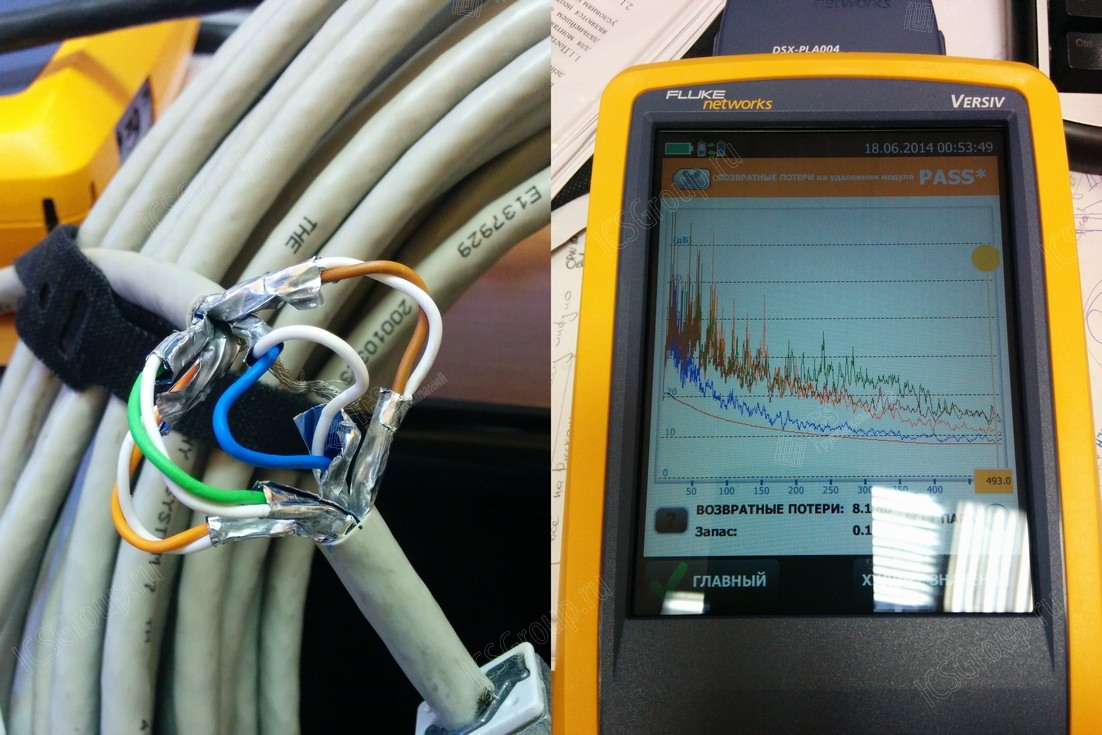
Even if you need to do something very quickly (after all, nobody canceled the emergency calls, right?), You cannot work without checking what has been done. If some test (from the same Star Pass kit) shows that there are problems with the cable, it is better to check the connection several times. If the problem persists after several attempts to correct the situation, discard the cable. And, of course, you should use only high-quality cable testers. One small failure of the tester - and big problems for you and the entire data center are provided.
Conduit
It should be more than what is currently required. You never know what and how will it be added in a few months or a year, and if the conduit is made exactly the size you need now, then all this will have to be rebuilt. It’s better to think over everything in advance so that you don’t get upset and do not spend extra money.
In addition, when designing, it is worth considering where the equipment will stand, to which you need to pull the cables. Otherwise, you can arrange everything, and then it turns out that somewhere the cables are simply impossible to stretch. Or you can, but it’s such a problem that it’s easier to change the project than to worry about laying cables.
And be sure to keep in mind the thought of a possible expansion of the data center. Maybe you should immediately provide additional conduits, outputs, etc.?
Separation of Cat5 and wiring
Power cables, wiring, Cat5 cables need to be separated. This seems obvious, but far from always the obvious is realized. Many companies simply lay everything together, bundling cables of various types into one bundle. And this, of course, affects the operation of network cables. Crosstalk, interference - all this can be a big hindrance, or even cause glitches, the cause of which then will have to look for a very long time.
Wiring, power cables and Cat5 must be shared at all costs.
Keep cables from heating up
This is another problem - you need to cool not only servers and other equipment. Do not allow cables to heat. They can also heat up, and if there are a lot of them, then this can lead to disaster. Design your data center so that everything cools.
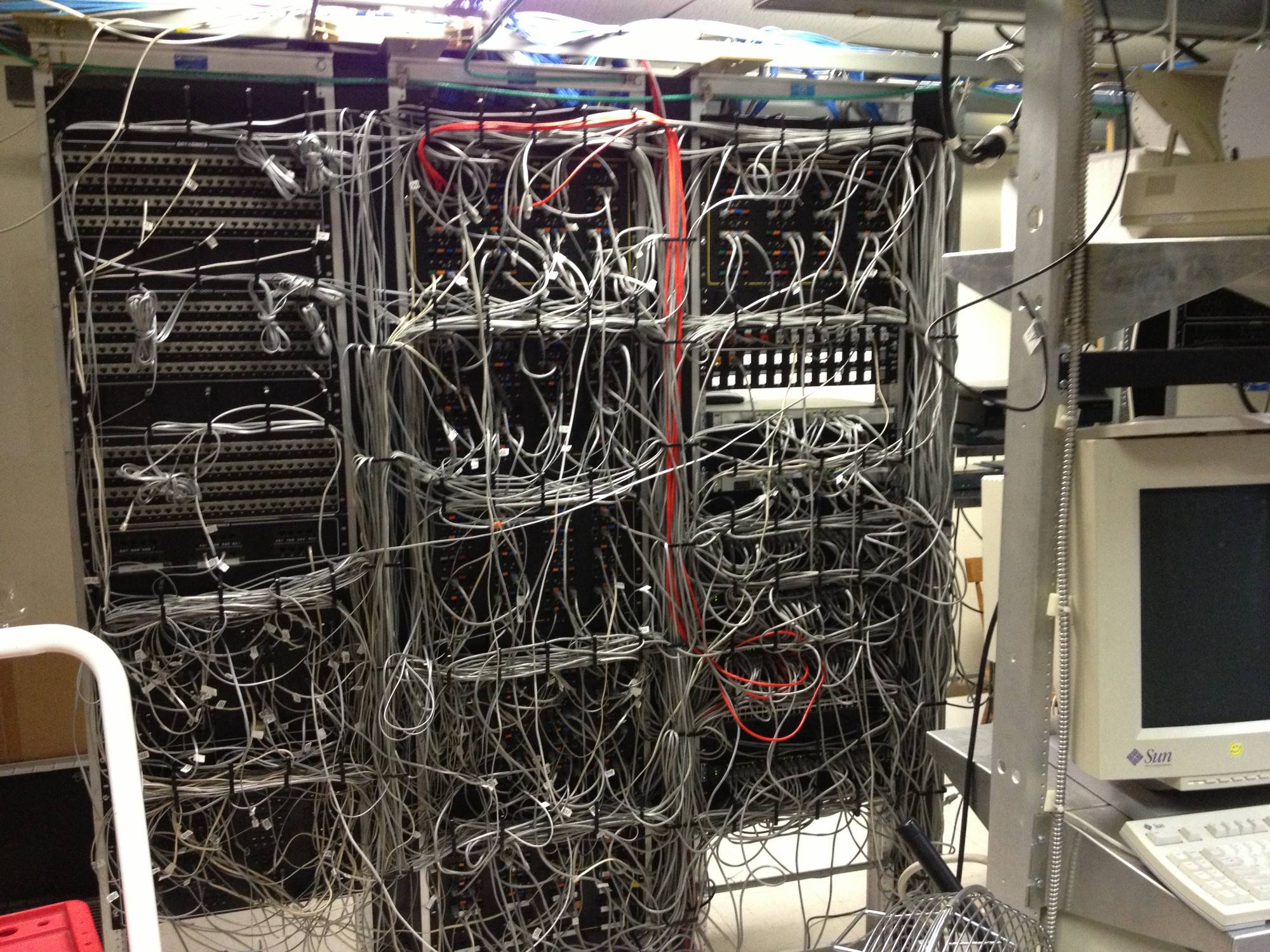
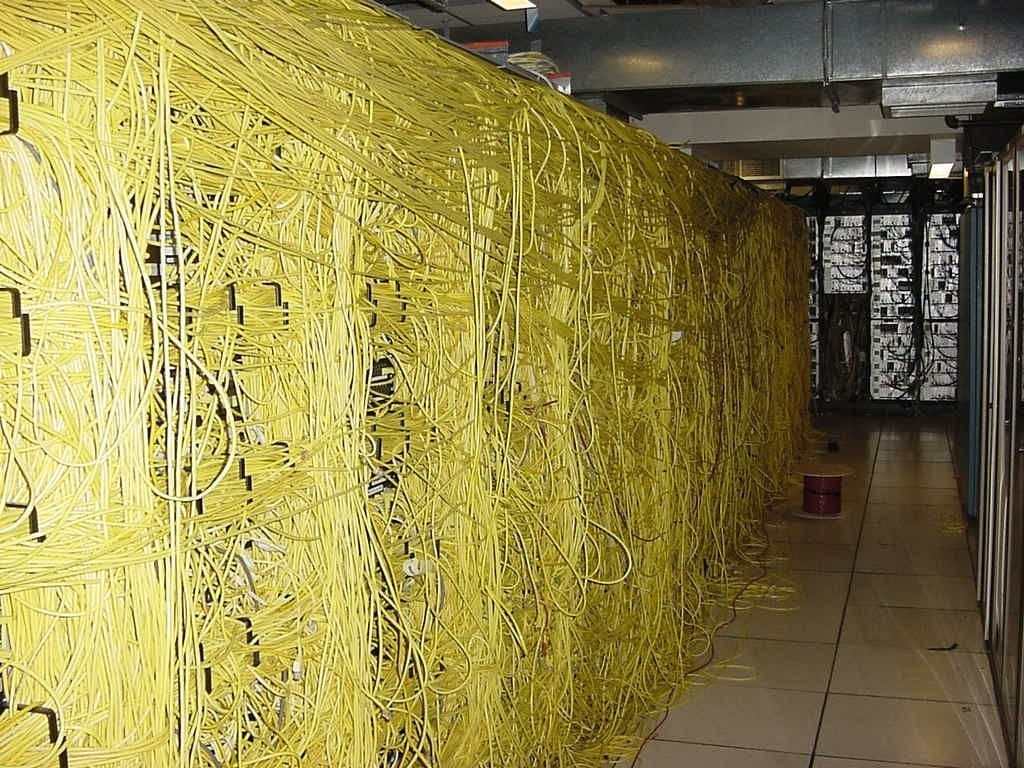
And of course, “noodles” should not be allowed. In this case, the problems will certainly be at some stage. No labeling and all the rest will help if cable management is not given enough attention.
In general, most of the tips are obvious. But once again recalling all this does not interfere, especially since we ourselves always use it as a reminder. There are other points in cable management that I would like to talk about, but about this the next time.