Machine Learning Competitions (Spring-Summer 2016)
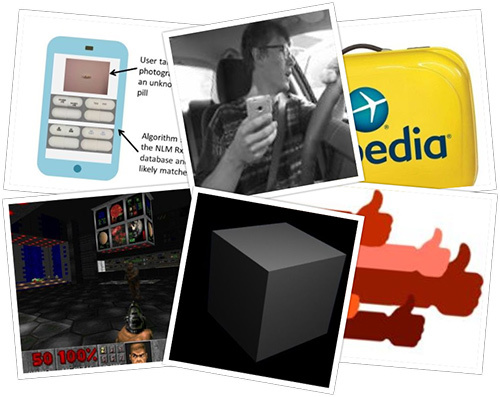
From May to September, lovers of complex machine learning tasks can take part in several contests offering large cash prizes. Contests are held by resources: Kaggle, specializing in competitions of such a plan, DCA, creating services based on Big Data technologies, an artificial intelligence research platform based on the game Doom ViZDoom, and the National Library of Medicine of the USA

Prize fund :
1st place - $ 30,000
2nd place - $ 20,000
3rd place - $ 10,000
Deadline : May 2, 2016
Customer satisfaction is a key success criterion for everyone, from support services to top managers. Dissatisfied customers no longer return and, worse, rarely express their dissatisfaction before leaving. Bank Santander asks Kaggle users to help identify unsatisfied customers early in the relationship. This will enable the bank to take proactive steps to increase customer satisfaction before it is too late. In this competition, you will work with hundreds of anonymous signs to evaluate how satisfied the client is with their experience with the bank.
The competition is coming to an end. The competition is very high. At the moment - more than 5000 participants.
Data: www.kaggle.com/c/santander-customer-satisfaction/data
Description: www.kaggle.com/c/santander-customer-satisfaction
Rating of participants: www.kaggle.com/c/santander-customer-satisfaction/leaderboard

Prize fund :
1st place - $ 12,500
2nd place - $ 7,500
3rd place - $ 5,000
Deadline : June 10, 2016
Planning your dream vacation or even a short weekend getaway can be mind-blowing. Among the hundreds and thousands of hotels to choose from in each direction, it is difficult to determine in advance which one will best suit your personal preferences. Going to a quiet patriarchal hotel with mint pillows that you like so much, or take a chance to move to a new one with a trendy pool bar? Expedia wants to help its users find hotels by providing personalized recommendations. This is not an easy task for a site with hundreds of millions of visitors every month! Now Expedia uses search parameters to refine recommendations of various hotels, but they do not have specific client requests to personalize recommendations for each user.
In this contest, Expedia asks Kaggle users to match customer data and predict the likelihood of which of the 100 different hotel groups the user will stop at. The data in this contest is a random sample of Expedia's real data.
Data: www.kaggle.com/c/expedia-hotel-recommendations/data
Description: www.kaggle.com/c/expedia-hotel-recommendations
User rating: www.kaggle.com/c/expedia-hotel-recommendations/leaderboard
Prize fund :
1st place: 300 thousand rubles
2nd place: 170 thousand rubles
3rd place: 125 thousand rubles
The next five best participants will be presented with Microsoft Xbox One.
Deadline : May 30, 2016
Winners Announcement: June 10, 2016
BlackBox Challenge is an open competition for training and programming a bot with AI (artificial intelligence). In its course, participants must train their agent to play the game with unknown rules in advance. At each stage, the bot recognizes the state of the gaming environment and selects between four possible actions in it. During its moves, the bot receives a reward, but sometimes not immediately, so it can not always evaluate the correctness of its choice. Not only that, there is an element of chance in the awards to get rid of the determinism of the game and make it unpredictable.
To participate, you need to download the game environment simulator and training data, create a model and train the agent to play using any available methods. The solution code is uploaded to the site, the system extremely quickly checks it and reports the result. Participants are ranked by the best result of each. With the unlikely identical result of two participants, the place will be higher for the one who previously downloads the winning solution.
Competition Page: blackboxchallenge.com/home
Participants Rating: blackboxchallenge.com/leaders

Prize fund :
1st place - $ 30,000;
2nd place - $ 20,000;
3rd place - $ 15,000;
Deadline : August 1, 2016.
We all have been in this situation: at the intersection, the green light, and the car in front of us does not move. Or an unremarkable car on the track suddenly slows down and begins to write out a pretzel. When you bypass a troubled driver, what do you expect to see? You will not be surprised if he sends a message from a mobile phone or is in the process of a live conversation on a smartphone that presses one ear to his ear.
According to the United States Disease Control Center (CDC) Vehicle Safety Department, one out of every 5 accidents is caused by a distracted driver. In other words: in the USA, due to the fault of distracted drivers, 425 thousand are injured annually and 3 thousand people die, and more than 8 people die every day and 1,161 are injured.
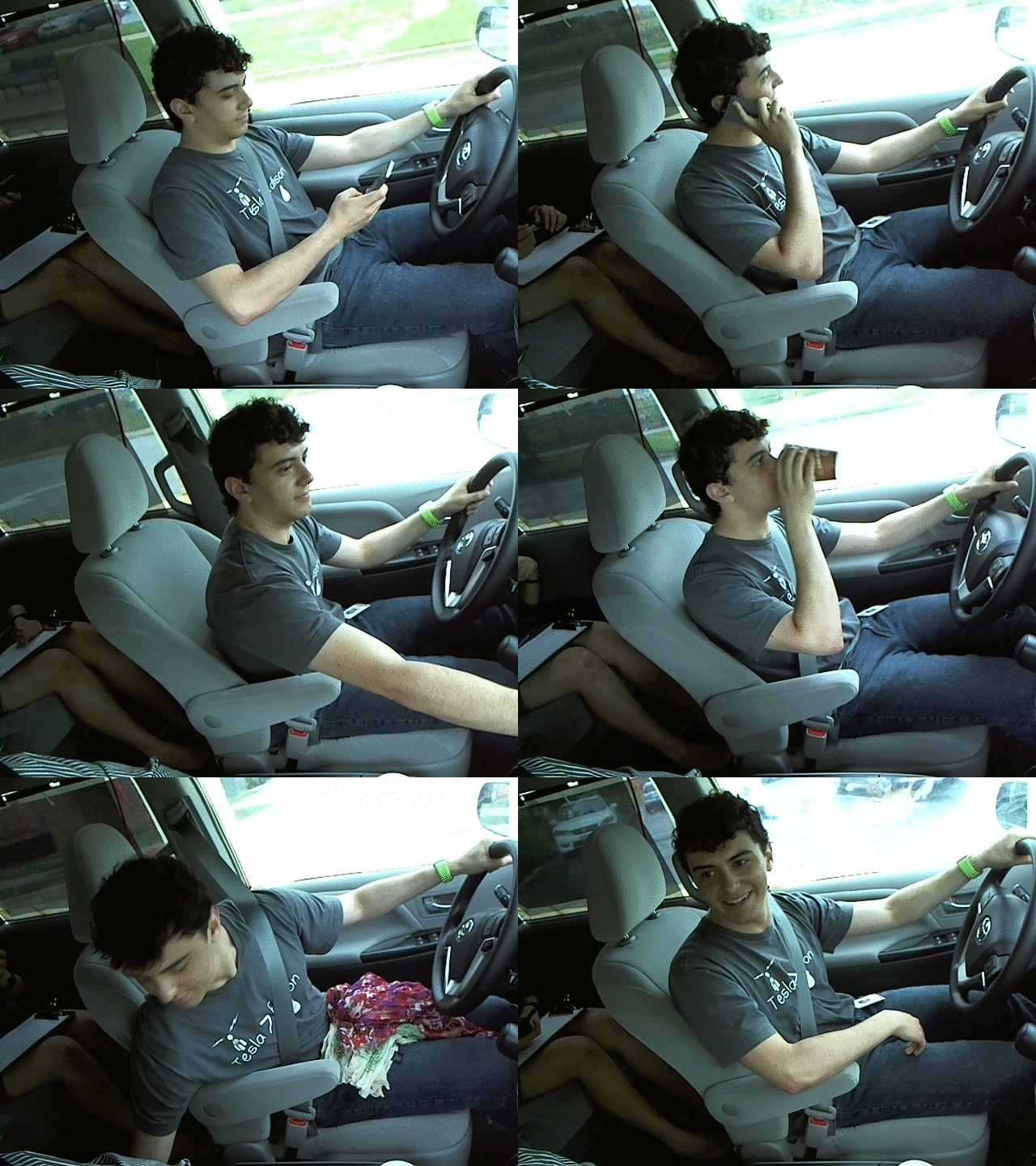
State Farm hopes to improve on these frightening statistics and protect its customers by experimenting with whether DVRs can automatically detect distracted drivers. By providing arrays of images from DVRs, State Farm asks Kaggle users to classify the behavior of each of the drivers. Do they drive the car carefully with a seat belt or take selfies with friends in the back seat? Contestants receive images of drivers directly involved in driving or something outsiders. Their task is to create a program that determines how much the driver is distracted from driving on each of the images presented.
Distractions from management can be divided into 3 main types: visual, when the driver takes his eyes off the road, manual, when he takes his hands off the steering wheel, and mental, when he is distracted by communication.
Occupations that distract the driver include talking on a cell phone, sending messages, eating while driving, talking with neighbors. Using the equipment built into the machine (such as navigation systems or radio) can also be a source of distraction. All these activities can endanger the safety of the driver and other participants in the movement, but typing and sending messages while driving is especially dangerous because it combines all three types of distractions.
Data: www.kaggle.com/c/state-farm-distracted-driver-detection/data
Description:www.kaggle.com/c/state-farm-distracted-driver-detection Participant
Rating: www.kaggle.com/c/state-farm-distracted-driver-detection/leaderboard
Prize fund :
1st place - $ 25,000
2nd place - $ 15,000
3rd place - $ 5,000
Two incentive prizes of $ 2,500 each.
Application Period: April 4 - May 16, 2016
Winners Announcement: August 1, 2016
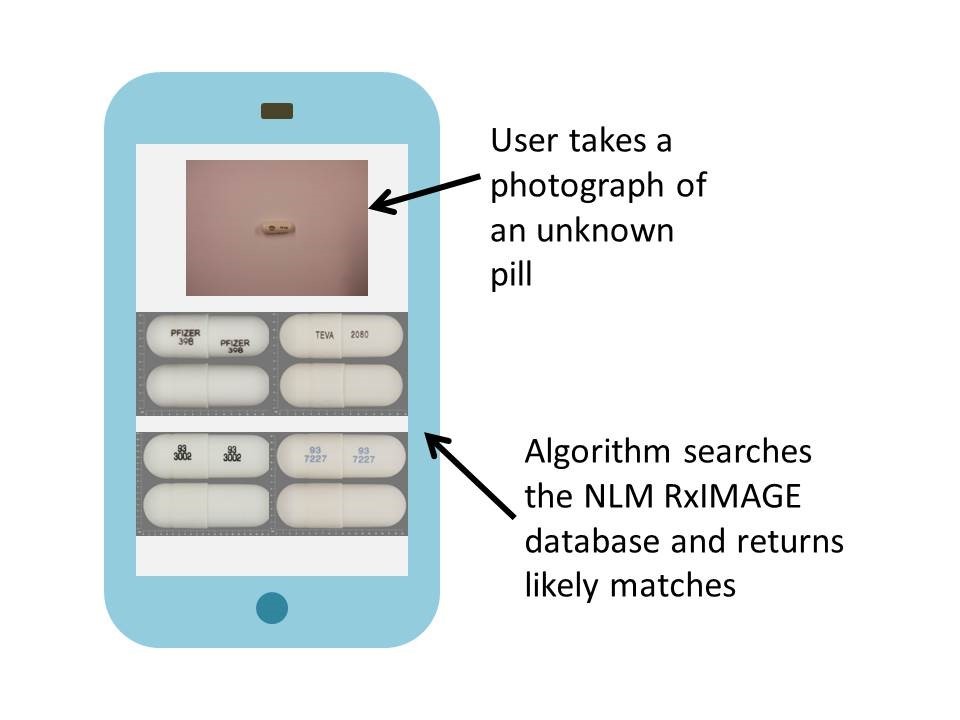
The U.S. National Library of Medicine (NLM) issued a competition notice in January for tablet image recognition programs. Participants are required to contribute to the development of high-quality algorithms and programs that can compare well-known images of tablets used in recipes with images from the RxIMAGE NLM database. NLM plans to use the work of the contest participants to create future software and APIs that will look for the best matches in the RxIMAGE database with pictures of unknown tablets taken on a smartphone.
Instructions for submitting applications for the competition contain:
Links to the data to be used, including file characteristics; Application details, including software specifications, examples, application details, virtual machine specifications, evaluation system; Evaluation and selection criteria for winners; The software code of the software that will be used for evaluation.
The software created by the participants should be able to accept directories containing an arbitrary number of images sent by customers and control images as initial data and rank them in order of how similar they are.
Competition page: pir.nlm.nih.gov/challenge
Deadline for applying for a warm-up tournament: 05/31/2016
Deadline for applying for a final tournament: 08/15/2016
Announcement of results (CIG): 09/20/2016
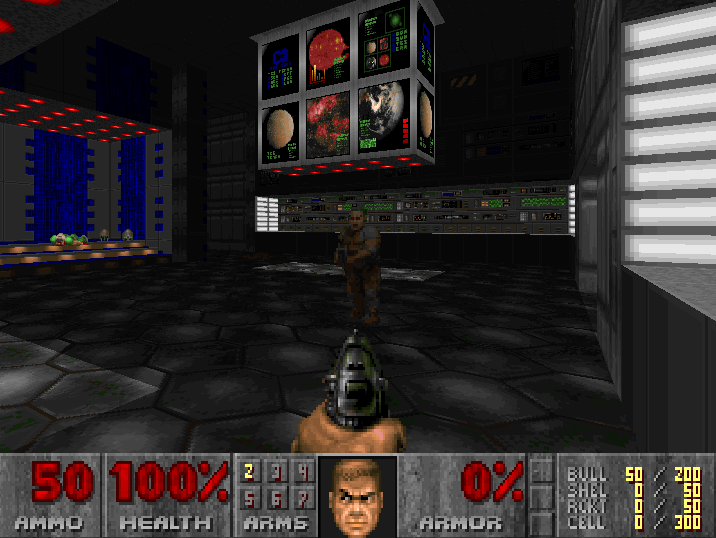
Doom is considered one of the most significant titles in the gaming industry: game authors popularized the first-person shooter genre (FPS) and were pioneers of 3D graphics with the effect of presence. Although more than 20 years have passed since Doom, the methods for developing AI bots in modern shooters have not changed much. In particular, bots still have to cheat, gaining access to the game’s internal data, such as maps, locations and positions. In contrast, human gamers can play FPS using only the computer screen as information. Can AI play Doom effectively using only direct visual information?
Purpose: Participants in the Visual Doom AI competition must submit controllers (in C ++, Python, or Java). The provided software gives real-time access to the screen buffer as the only information on which the bot can base its decisions. The winner of the competition will be determined by the results of the bots elimination tournament.
Although participants are allowed to use any technique to create a controller, the design and effectiveness of the Visual Doom AI environment allows and encourages participants to use machine learning methods, such as reinforcement deep learning.
Course of the competition
1. Limited elimination tournament on a known map.
The only weapon available is a rocket launcher, with which agents start. In addition, they can get medical kits and ammunition.
2. Tournament without restrictions on elimination on an unknown map.
Various weapons and items are available. Two cards are provided for training. The final score will be on three cards previously unknown to the participants.
What will the final match look like?
Your controller will battle against all other controllers for 10 minutes on a simple map. Each game will be repeated 12 times for part 1 and 4 times for part 2, which includes 3 cards. The position of the controllers will be determined by the number of frags.
In the case of multiple applications, there will be several selections.
Technical information
Each controller must operate on a separate computer with one CPU and a GPU at its full disposal. Computer Specification: Intel® Core (TM) i7-4790 CPU @ 3.60GHz + GTX 960 4GB. OS: Windows or Ubuntu Linux 15.04
How to apply?
To apply, you need: the name of the team, its participants and information about them; no more than 2 pages of description of the method used to create the controller (PDF); a list of (reasonable) software requirements for the agent (requested in advance); link to the program code of the controller and additional files (total not more than 1GB); instructions for creating a controller and managing it. The application form will be provided later. In the spirit of open science, all applications will be published on the site after the end of the competition.
Competition page:vizdoom.cs.put.edu.pl/competition-cig-2016
Kaggle: Which customer is a happy customer?
Prize fund :
1st place - $ 30,000
2nd place - $ 20,000
3rd place - $ 10,000
Deadline : May 2, 2016
Customer satisfaction is a key success criterion for everyone, from support services to top managers. Dissatisfied customers no longer return and, worse, rarely express their dissatisfaction before leaving. Bank Santander asks Kaggle users to help identify unsatisfied customers early in the relationship. This will enable the bank to take proactive steps to increase customer satisfaction before it is too late. In this competition, you will work with hundreds of anonymous signs to evaluate how satisfied the client is with their experience with the bank.
The competition is coming to an end. The competition is very high. At the moment - more than 5000 participants.
Data: www.kaggle.com/c/santander-customer-satisfaction/data
Description: www.kaggle.com/c/santander-customer-satisfaction
Rating of participants: www.kaggle.com/c/santander-customer-satisfaction/leaderboard
Kaggle: What type of hotel will an Expedia user book?
Prize fund :
1st place - $ 12,500
2nd place - $ 7,500
3rd place - $ 5,000
Deadline : June 10, 2016
Planning your dream vacation or even a short weekend getaway can be mind-blowing. Among the hundreds and thousands of hotels to choose from in each direction, it is difficult to determine in advance which one will best suit your personal preferences. Going to a quiet patriarchal hotel with mint pillows that you like so much, or take a chance to move to a new one with a trendy pool bar? Expedia wants to help its users find hotels by providing personalized recommendations. This is not an easy task for a site with hundreds of millions of visitors every month! Now Expedia uses search parameters to refine recommendations of various hotels, but they do not have specific client requests to personalize recommendations for each user.
In this contest, Expedia asks Kaggle users to match customer data and predict the likelihood of which of the 100 different hotel groups the user will stop at. The data in this contest is a random sample of Expedia's real data.
Data: www.kaggle.com/c/expedia-hotel-recommendations/data
Description: www.kaggle.com/c/expedia-hotel-recommendations
User rating: www.kaggle.com/c/expedia-hotel-recommendations/leaderboard
BlackBox Challenge - training bots to play games with unknown rules
Prize fund :
1st place: 300 thousand rubles
2nd place: 170 thousand rubles
3rd place: 125 thousand rubles
The next five best participants will be presented with Microsoft Xbox One.
Deadline : May 30, 2016
Winners Announcement: June 10, 2016
BlackBox Challenge is an open competition for training and programming a bot with AI (artificial intelligence). In its course, participants must train their agent to play the game with unknown rules in advance. At each stage, the bot recognizes the state of the gaming environment and selects between four possible actions in it. During its moves, the bot receives a reward, but sometimes not immediately, so it can not always evaluate the correctness of its choice. Not only that, there is an element of chance in the awards to get rid of the determinism of the game and make it unpredictable.
To participate, you need to download the game environment simulator and training data, create a model and train the agent to play using any available methods. The solution code is uploaded to the site, the system extremely quickly checks it and reports the result. Participants are ranked by the best result of each. With the unlikely identical result of two participants, the place will be higher for the one who previously downloads the winning solution.
Competition Page: blackboxchallenge.com/home
Participants Rating: blackboxchallenge.com/leaders
Kaggle: Can a computer detect that a driver is distracted?
Prize fund :
1st place - $ 30,000;
2nd place - $ 20,000;
3rd place - $ 15,000;
Deadline : August 1, 2016.
We all have been in this situation: at the intersection, the green light, and the car in front of us does not move. Or an unremarkable car on the track suddenly slows down and begins to write out a pretzel. When you bypass a troubled driver, what do you expect to see? You will not be surprised if he sends a message from a mobile phone or is in the process of a live conversation on a smartphone that presses one ear to his ear.
According to the United States Disease Control Center (CDC) Vehicle Safety Department, one out of every 5 accidents is caused by a distracted driver. In other words: in the USA, due to the fault of distracted drivers, 425 thousand are injured annually and 3 thousand people die, and more than 8 people die every day and 1,161 are injured.
State Farm hopes to improve on these frightening statistics and protect its customers by experimenting with whether DVRs can automatically detect distracted drivers. By providing arrays of images from DVRs, State Farm asks Kaggle users to classify the behavior of each of the drivers. Do they drive the car carefully with a seat belt or take selfies with friends in the back seat? Contestants receive images of drivers directly involved in driving or something outsiders. Their task is to create a program that determines how much the driver is distracted from driving on each of the images presented.
Distractions from management can be divided into 3 main types: visual, when the driver takes his eyes off the road, manual, when he takes his hands off the steering wheel, and mental, when he is distracted by communication.
Occupations that distract the driver include talking on a cell phone, sending messages, eating while driving, talking with neighbors. Using the equipment built into the machine (such as navigation systems or radio) can also be a source of distraction. All these activities can endanger the safety of the driver and other participants in the movement, but typing and sending messages while driving is especially dangerous because it combines all three types of distractions.
Data: www.kaggle.com/c/state-farm-distracted-driver-detection/data
Description:www.kaggle.com/c/state-farm-distracted-driver-detection Participant
Rating: www.kaggle.com/c/state-farm-distracted-driver-detection/leaderboard
Auto Tablet Image Recognition Competition
Prize fund :
1st place - $ 25,000
2nd place - $ 15,000
3rd place - $ 5,000
Two incentive prizes of $ 2,500 each.
Application Period: April 4 - May 16, 2016
Winners Announcement: August 1, 2016
The U.S. National Library of Medicine (NLM) issued a competition notice in January for tablet image recognition programs. Participants are required to contribute to the development of high-quality algorithms and programs that can compare well-known images of tablets used in recipes with images from the RxIMAGE NLM database. NLM plans to use the work of the contest participants to create future software and APIs that will look for the best matches in the RxIMAGE database with pictures of unknown tablets taken on a smartphone.
Instructions for submitting applications for the competition contain:
Links to the data to be used, including file characteristics; Application details, including software specifications, examples, application details, virtual machine specifications, evaluation system; Evaluation and selection criteria for winners; The software code of the software that will be used for evaluation.
The software created by the participants should be able to accept directories containing an arbitrary number of images sent by customers and control images as initial data and rank them in order of how similar they are.
Competition page: pir.nlm.nih.gov/challenge
ViZDoom: Visual Doom AI Competition @ CIG 2016
Deadline for applying for a warm-up tournament: 05/31/2016
Deadline for applying for a final tournament: 08/15/2016
Announcement of results (CIG): 09/20/2016
Doom is considered one of the most significant titles in the gaming industry: game authors popularized the first-person shooter genre (FPS) and were pioneers of 3D graphics with the effect of presence. Although more than 20 years have passed since Doom, the methods for developing AI bots in modern shooters have not changed much. In particular, bots still have to cheat, gaining access to the game’s internal data, such as maps, locations and positions. In contrast, human gamers can play FPS using only the computer screen as information. Can AI play Doom effectively using only direct visual information?
Purpose: Participants in the Visual Doom AI competition must submit controllers (in C ++, Python, or Java). The provided software gives real-time access to the screen buffer as the only information on which the bot can base its decisions. The winner of the competition will be determined by the results of the bots elimination tournament.
Although participants are allowed to use any technique to create a controller, the design and effectiveness of the Visual Doom AI environment allows and encourages participants to use machine learning methods, such as reinforcement deep learning.
Course of the competition
1. Limited elimination tournament on a known map.
The only weapon available is a rocket launcher, with which agents start. In addition, they can get medical kits and ammunition.
2. Tournament without restrictions on elimination on an unknown map.
Various weapons and items are available. Two cards are provided for training. The final score will be on three cards previously unknown to the participants.
What will the final match look like?
Your controller will battle against all other controllers for 10 minutes on a simple map. Each game will be repeated 12 times for part 1 and 4 times for part 2, which includes 3 cards. The position of the controllers will be determined by the number of frags.
In the case of multiple applications, there will be several selections.
Technical information
Each controller must operate on a separate computer with one CPU and a GPU at its full disposal. Computer Specification: Intel® Core (TM) i7-4790 CPU @ 3.60GHz + GTX 960 4GB. OS: Windows or Ubuntu Linux 15.04
How to apply?
To apply, you need: the name of the team, its participants and information about them; no more than 2 pages of description of the method used to create the controller (PDF); a list of (reasonable) software requirements for the agent (requested in advance); link to the program code of the controller and additional files (total not more than 1GB); instructions for creating a controller and managing it. The application form will be provided later. In the spirit of open science, all applications will be published on the site after the end of the competition.
Competition page:vizdoom.cs.put.edu.pl/competition-cig-2016