
 December 9, 2015 at 21:17
GDG Devfest Krasnoyarsk and Kaliningrad this Saturday
Hello, Habr! A wave of DevFest'ov continues to sweep over more and more new cities of Russia. This weekend, beacons of knowledge about Google technologies will light up in two more: Kaliningrad and Krasnoyarsk. We invite all fans of IT and Google technologies to meet and discuss current issues. What exactly will be discussed at conferences, where they are held and at what time to come - under the cut.
DevFests is a series of large-scale IT events around the world that focus on Google’s technologies for developers, as well as other open mobile and web technologies. At the moment, the geography of DevFest Season includes more than 50 cities around the world.
In Russia, DevFest has been held since 2012. In Kaliningrad and Krasnoyarsk will be held for the first time. If you are a developer, designer, Google enthusiast, are interested in the IT world or just miss communication with good people - come to the conference on December 12!
You can look at the “typical DevFest” (in fact, each of the cities hosting DevFest has its own traditions and features) in one of our photo reports, for example, in Voronezh or Nizhny Novgorod .

Kaliningrad is one of the most unusual cities in Russia. He became a Russian relatively recently, the architecture and culture of the city is very different from everything that can be seen in other cities. Old European and Soviet buildings, two different cultures and two different ideas come into contact in this city. We are glad that Kaliningrad has joined the club of DevFest host cities, and we hope that in 2016 we will be able to meet here again.
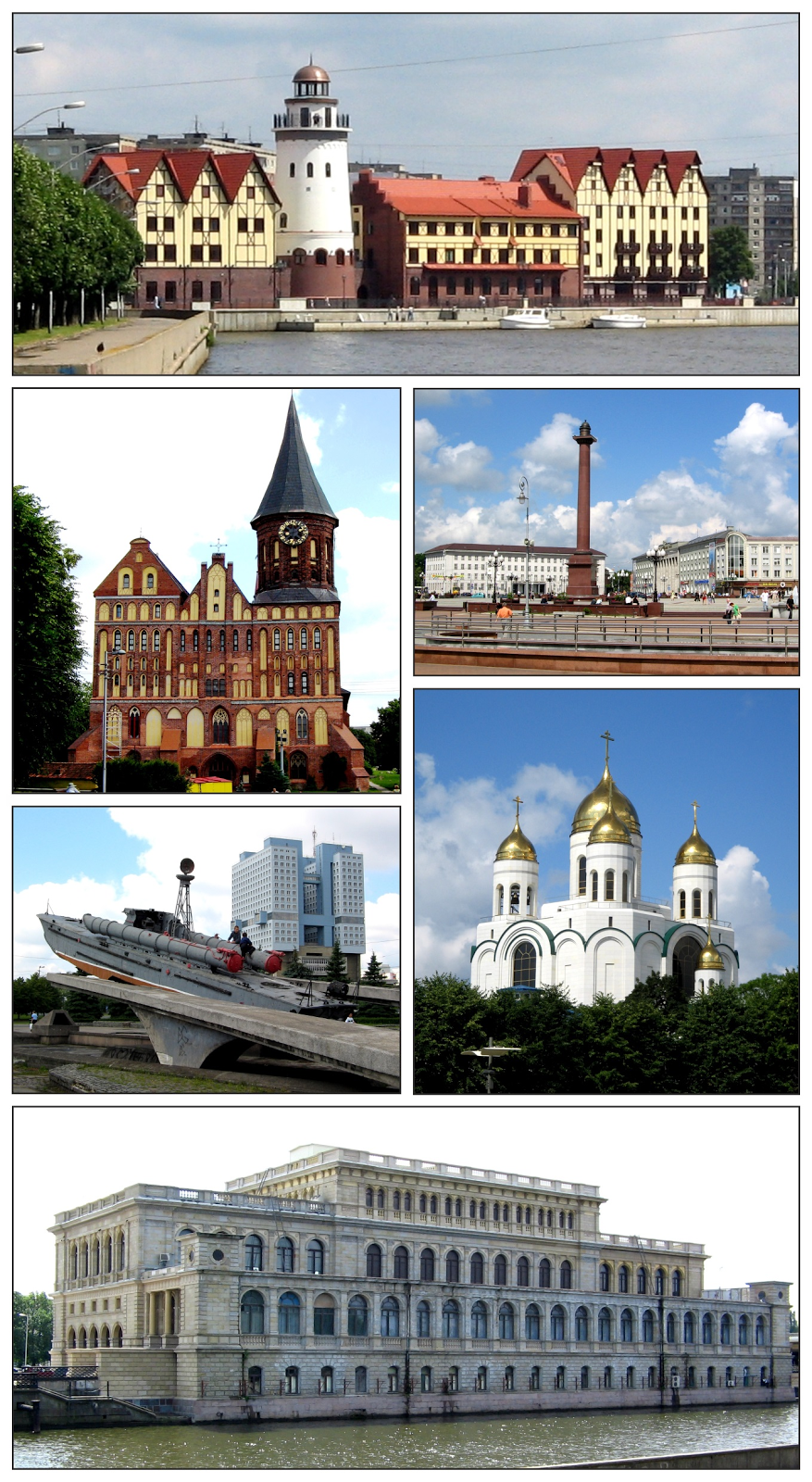
The author of the photos is George Dolgopsky, CC BY-SA 3.0.
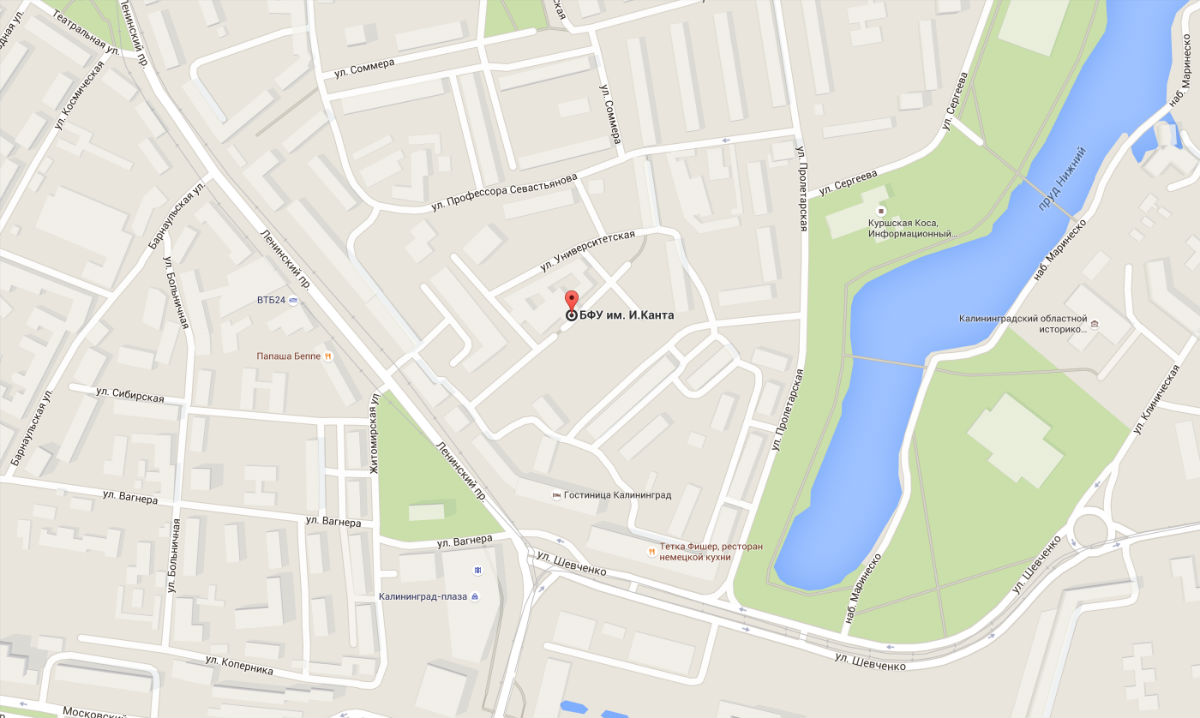
We are going to Kaliningrad on Universitetskaya Street, 2 (BFU Assembly Hall).
10: 00–10: 45 - Registration, welcome coffee.
10: 45–11: 00 - Opening of the conference.
11: 00–11: 40 - Experience in designing UI and UX mobile and web applications using live examples. Kirill Rostovtsev (System Technologies, Kaliningrad)
11: 45–12: 25 - Fitting on Google Play. Sergey Sheleg (Ultimate Guitar, Kaliningrad) 12: 30–13: 10 - Isomorphic code for Android, common code on the server and in the application. Kirill Danilov (Witkit, Moscow)
13: 15-14: 00 - Lunch. Free communication.
14: 05-14: 45 - Using the RxJava, Dagge, Retrofit libraries to build the architecture of the Android application. Dmitry Suzdalev (CODE, Kaliningrad)
14: 50–15: 30 - Mobile Vision API on Google Play Services. Grigory Dzhanelidze (e-Legion, St. Petersburg)
15: 35–16: 05 - coffee break.
16: 10–16: 50 - DeviceHive: IoT on Android. Nikolay Khabarov (DataArt, Voronezh)
16: 55–17: 35 - Google Beacons. Zviad Kardava (RusBITech, Moscow)
17: 40–18: 10 - Closing of the conference.
Participation is free, but pre-registration is required .

Krasnoyarsk is the easternmost million-plus city in Russia, one of the most important cities in Siberia, a major industrial, economic and cultural center of the region. And from December 12, Krasnoyarsk is also a city that takes the baton of Russian DevFest with its own army of fans of Google technologies. :)

Krasnoyarsk DevFest is somewhat different in format from the "classic", held in other cities. Firstly, it begins at an unusual time: guests are received from 11 in the morning, the very beginning of the event at 12:00. Secondly, the meeting is based on the Dev2Dev community . The Krasnoyarsk rally of all who are not indifferent to our technologies will be held at the following address: ul. Airport terminal, d. 10. MTBC “Pilot”. As usual, all that is required of you is to pre- register through the site . The following reports are waiting for you at the meeting:

Probably everyone has already heard something about docker. Someone is already using it, someone is still doubting and thinking whether it will bring more problems than good. After this report, your doubts will be dispelled. You will find out the current status of the docker infrastructure at the moment. Learn which utilities and related tools make working with it easier. How to put all this into practice to improve the process of developing and launching applications in production.
Material Design is a powerful user interface concept introduced by Google last year. In addition to the basic principles, Google has also developed guides that include descriptions and recommendations for using interface components. It seems to read, but do it - but no, it's not so simple. In this report, Anton will reflect on some problems and tell you how to solve them.
Elliptics is a distributed key-value data warehouse without a single point of failure. The guys from 24au.ru use it to store pictures of users. Anatoly will tell about this beast in more detail how 24au.ru got to this and, of course, which rake they encountered.
Code reuse is the holy grail of modern software development. Just imagine - you wrote a library, a class, a component, a kind of abstract brick and use it everywhere, build walls of bricks, erect castles, save hundreds of man-hours. But the web is not so simple, we have a zoo of technologies in the form of CSS, HTML and JavaScript, which were not originally created to build monolithic bricks that can be stacked together and not ruin your application. Here we have a whole heap of problems in the form of the absence of visibility areas, deletion of selectors, cascading, global scope, etc. Someone solves these problems using SASS, css modules, making frankenstein on jQuery: mixing code, markup and styles in one boiler. But there is a solution! Web components. In the report, we will analyze the basic technologies (Shadow DOM, templates, custom elements) on which web components are built, try to create our component on the current technology stack, as well as using the Polymer library from Google. And in the meantime, we will discuss what ideas of web components formed the basis of Angular 2 and how to live with it further.
Programmers have been mocking about isomorphic applications for a long time (this is the case when you write the backend and frontend in the same language), but only two languages really came close to this ideal - JavaScript and Clojure. Moreover, Clojure is a substantially functional language, as well as LISPom. In the report, we will try to open the curtain into the mysterious world of functional programming, understand the nature of LISP and learn how to create practical and topical applications using Clojure.
That's all. We are waiting for you in Krasnoyarsk and Kaliningrad this Saturday. Have a productive end of the week and an interesting weekend!
About DevFest and Past Events
DevFests is a series of large-scale IT events around the world that focus on Google’s technologies for developers, as well as other open mobile and web technologies. At the moment, the geography of DevFest Season includes more than 50 cities around the world.
In Russia, DevFest has been held since 2012. In Kaliningrad and Krasnoyarsk will be held for the first time. If you are a developer, designer, Google enthusiast, are interested in the IT world or just miss communication with good people - come to the conference on December 12!
You can look at the “typical DevFest” (in fact, each of the cities hosting DevFest has its own traditions and features) in one of our photo reports, for example, in Voronezh or Nizhny Novgorod .
GDG DevFest Kaliningrad
Kaliningrad is one of the most unusual cities in Russia. He became a Russian relatively recently, the architecture and culture of the city is very different from everything that can be seen in other cities. Old European and Soviet buildings, two different cultures and two different ideas come into contact in this city. We are glad that Kaliningrad has joined the club of DevFest host cities, and we hope that in 2016 we will be able to meet here again.
The author of the photos is George Dolgopsky, CC BY-SA 3.0.
We are going to Kaliningrad on Universitetskaya Street, 2 (BFU Assembly Hall).
Conference program in Kaliningrad:
10: 00–10: 45 - Registration, welcome coffee.
10: 45–11: 00 - Opening of the conference.
11: 00–11: 40 - Experience in designing UI and UX mobile and web applications using live examples. Kirill Rostovtsev (System Technologies, Kaliningrad)
11: 45–12: 25 - Fitting on Google Play. Sergey Sheleg (Ultimate Guitar, Kaliningrad) 12: 30–13: 10 - Isomorphic code for Android, common code on the server and in the application. Kirill Danilov (Witkit, Moscow)
13: 15-14: 00 - Lunch. Free communication.
14: 05-14: 45 - Using the RxJava, Dagge, Retrofit libraries to build the architecture of the Android application. Dmitry Suzdalev (CODE, Kaliningrad)
14: 50–15: 30 - Mobile Vision API on Google Play Services. Grigory Dzhanelidze (e-Legion, St. Petersburg)
15: 35–16: 05 - coffee break.
16: 10–16: 50 - DeviceHive: IoT on Android. Nikolay Khabarov (DataArt, Voronezh)
16: 55–17: 35 - Google Beacons. Zviad Kardava (RusBITech, Moscow)
17: 40–18: 10 - Closing of the conference.
Participation is free, but pre-registration is required .
GDG DevFest Krasnoyarsk
Krasnoyarsk is the easternmost million-plus city in Russia, one of the most important cities in Siberia, a major industrial, economic and cultural center of the region. And from December 12, Krasnoyarsk is also a city that takes the baton of Russian DevFest with its own army of fans of Google technologies. :)
Krasnoyarsk DevFest is somewhat different in format from the "classic", held in other cities. Firstly, it begins at an unusual time: guests are received from 11 in the morning, the very beginning of the event at 12:00. Secondly, the meeting is based on the Dev2Dev community . The Krasnoyarsk rally of all who are not indifferent to our technologies will be held at the following address: ul. Airport terminal, d. 10. MTBC “Pilot”. As usual, all that is required of you is to pre- register through the site . The following reports are waiting for you at the meeting:
Ilya trouble. Docker for everyone, everyone, everyone
Probably everyone has already heard something about docker. Someone is already using it, someone is still doubting and thinking whether it will bring more problems than good. After this report, your doubts will be dispelled. You will find out the current status of the docker infrastructure at the moment. Learn which utilities and related tools make working with it easier. How to put all this into practice to improve the process of developing and launching applications in production.
Anton Tarasov. Material Design Consistency Issues
Material Design is a powerful user interface concept introduced by Google last year. In addition to the basic principles, Google has also developed guides that include descriptions and recommendations for using interface components. It seems to read, but do it - but no, it's not so simple. In this report, Anton will reflect on some problems and tell you how to solve them.
Anatoly Basov Elliptics at 24au.ru
Elliptics is a distributed key-value data warehouse without a single point of failure. The guys from 24au.ru use it to store pictures of users. Anatoly will tell about this beast in more detail how 24au.ru got to this and, of course, which rake they encountered.
Alexey Syzko. Web components. The future is here
Code reuse is the holy grail of modern software development. Just imagine - you wrote a library, a class, a component, a kind of abstract brick and use it everywhere, build walls of bricks, erect castles, save hundreds of man-hours. But the web is not so simple, we have a zoo of technologies in the form of CSS, HTML and JavaScript, which were not originally created to build monolithic bricks that can be stacked together and not ruin your application. Here we have a whole heap of problems in the form of the absence of visibility areas, deletion of selectors, cascading, global scope, etc. Someone solves these problems using SASS, css modules, making frankenstein on jQuery: mixing code, markup and styles in one boiler. But there is a solution! Web components. In the report, we will analyze the basic technologies (Shadow DOM, templates, custom elements) on which web components are built, try to create our component on the current technology stack, as well as using the Polymer library from Google. And in the meantime, we will discuss what ideas of web components formed the basis of Angular 2 and how to live with it further.
Nikolai Ryzhikov. Isomorphic applications on clojure
Programmers have been mocking about isomorphic applications for a long time (this is the case when you write the backend and frontend in the same language), but only two languages really came close to this ideal - JavaScript and Clojure. Moreover, Clojure is a substantially functional language, as well as LISPom. In the report, we will try to open the curtain into the mysterious world of functional programming, understand the nature of LISP and learn how to create practical and topical applications using Clojure.
That's all. We are waiting for you in Krasnoyarsk and Kaliningrad this Saturday. Have a productive end of the week and an interesting weekend!