
 August 19, 2015 at 12:05
Old new market or how restored servers conquered the USA and Europe
Hello, Habr! After our first article on refurbished servers, we got a huge feedback, lots of interested people and lots of questions. What does it mean? At the very least, this topic is pretty hot. Therefore, we decided to write another post about what the market for restored servers represents today, and how much money this equipment saves. So let's go!
Refurbished servers are one of the fastest growing segments of the Western IT market. Moreover, they are bought by both small companies and large companies, the names of which are well known to everyone. Why?
We will not delve deeply into this topic, since we talked a lot about it in a previous article. Here are just three facts that make the restored technique so popular:
Having studied the experience of Europe and the USA, we went further - we solve warranty cases on the territory of the customer. This is the entire territory of Russia, Kazakhstan and the Republic of Belarus. In the near future, our guarantee will be valid in Kyrgyzstan and Armenia. At the moment we are looking for partners in these countries.
As practice shows, it is warranty service on the territory of the client that is one of the reasons for the purchase of branded equipment. And now the brand restored. The reason is investment protection.
Despite the rather considerable age of the refurbished market (it dates back to the mid-80s), a real leap occurred on it in 2008-2009. Familiar dates? That's right - this is a global economic crisis, which caused a significant blow to the market in many countries and at the same time gave the necessary impetus for the growth of the secondary market, in which server equipment took one of the leading positions.
In difficult times, many companies began to look for a way to save. And here the restored equipment loudly declared itself, and servers are no exception. After all, they are noticeably cheaper than new ones, while they are also reliable. Then why overpay if there is no difference?
Since then, this direction has been growing by leaps and bounds. Ten years ago in the United States, it rested on the shoulders of several enthusiastic companies. Today, hundreds of companies work in this industry. Their total staff is estimated at thousands of employees, and the turnover is billions of dollars. According to IDC analysts for 2013, the US market for used and refurbished IT equipment exceeds $ 70 billion.
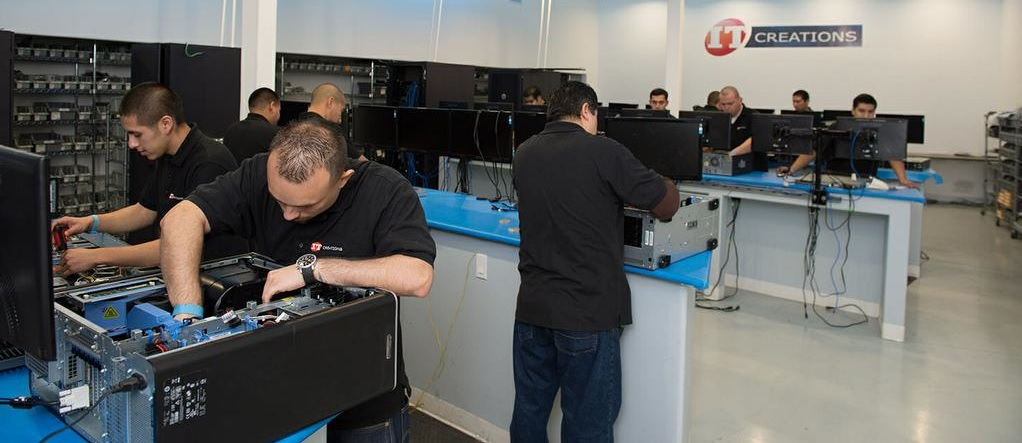
However, it’s better to see for yourself and evaluate the scale. Below are links to the sites of several leading US server recovery companies:
www.itcreations.com
www.servermonkey.com
www.deepdiscountservers.com
Is it worth it to learn from the Americans how to cut costs and not lose quality when the yard is not the best time for the economy?
There is a large company that updates the server park and sells its old equipment. The company, which is engaged in the restoration of equipment, is studying the proposed servers and their condition. If everything suits, then buys them.
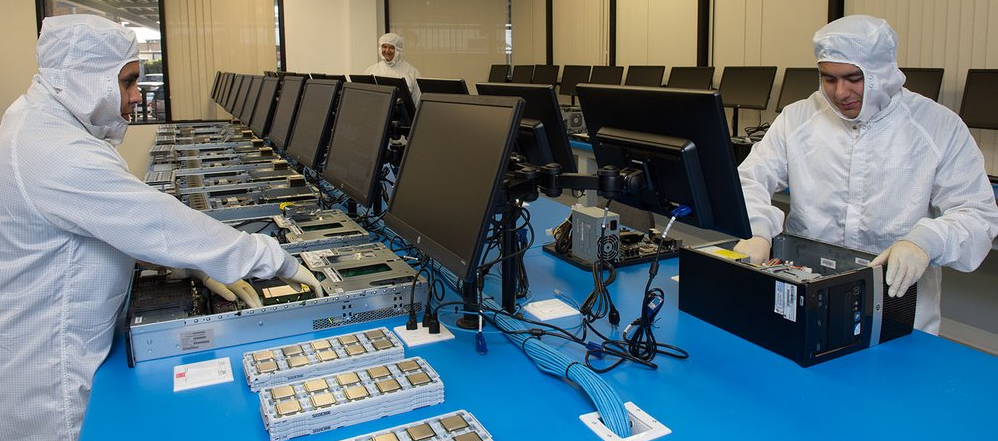
Then the fun begins - the recovery process. It includes both a complete server cleanup and its “addicted” scan. It runs according to a special algorithm, within the framework of which it is checked and tested under a load close to real, “combat” conditions. If weaknesses are identified, then all of them are eliminated, after which the server goes through pre-sale preparation and goes to the new owner.
We will not be tempting - restored servers in 99% of cases are equipment of the previous or earlier generations.
But tell me honestly - can the server of the previous generation not cope with your tasks? In 95% of cases, it will cope effortlessly, even if it does not involve all its resources. We keep available exactly those server models that are relevant today, weekly replenishing the park.
All the charm of restored servers and other equipment was not only known to Americans. Conservative British are here at the forefront! And here is just one small but curious fact.
A few years ago, the Chancellor of the Exchequer of Great Britain, George Osborne, faced the challenge of cutting government spending. And one of the areas where he found a huge resource for savings is government spending on IT. They average about £ 18 billion a year.
In the course of cost analysis, experiments and consultations, it was found that these costs can be easily reduced by about 8 billion! And absolutely without prejudice to national security and data security. How?
In most cases, instead of new servers and powerful computing systems, it was decided to start purchasing restored equipment for government agencies.
Although why go far for an example. Our company has done a great job in promoting and popularizing restored server equipment in Russia. As a result, among our clients: from small startups to large corporations, from entrepreneurs to government agencies.
Since the crisis confused all the cards, the latter found themselves in a difficult situation. Due to the sharp rise in the dollar, government agencies are forced to look for an alternative to the purchase of new equipment. And at that moment they find us. According to our statistics, every eighth server request comes from a government agency, and this is very significant in the current economic conditions.
On this, let's say goodbye.
And what do you personally want to know about restored servers, their pros and cons? Ask questions in the comments!
One of the main trends in Europe
Refurbished servers are one of the fastest growing segments of the Western IT market. Moreover, they are bought by both small companies and large companies, the names of which are well known to everyone. Why?
We will not delve deeply into this topic, since we talked a lot about it in a previous article. Here are just three facts that make the restored technique so popular:
- Low price - a restored server is on average 20-70% cheaper than a new one .;
- High reliability - during restoration, everything is tested under almost extreme conditions, and disputed elements in the system are replaced by new ones;
- Warranty - for restored servers, as a rule, it can have a much longer warranty period. For example, we can guarantee up to five years. Even entry-level servers are given a 3-year warranty, which vendors cannot boast of.
Having studied the experience of Europe and the USA, we went further - we solve warranty cases on the territory of the customer. This is the entire territory of Russia, Kazakhstan and the Republic of Belarus. In the near future, our guarantee will be valid in Kyrgyzstan and Armenia. At the moment we are looking for partners in these countries.
As practice shows, it is warranty service on the territory of the client that is one of the reasons for the purchase of branded equipment. And now the brand restored. The reason is investment protection.
Thanks to the crisis
Despite the rather considerable age of the refurbished market (it dates back to the mid-80s), a real leap occurred on it in 2008-2009. Familiar dates? That's right - this is a global economic crisis, which caused a significant blow to the market in many countries and at the same time gave the necessary impetus for the growth of the secondary market, in which server equipment took one of the leading positions.
In difficult times, many companies began to look for a way to save. And here the restored equipment loudly declared itself, and servers are no exception. After all, they are noticeably cheaper than new ones, while they are also reliable. Then why overpay if there is no difference?
Since then, this direction has been growing by leaps and bounds. Ten years ago in the United States, it rested on the shoulders of several enthusiastic companies. Today, hundreds of companies work in this industry. Their total staff is estimated at thousands of employees, and the turnover is billions of dollars. According to IDC analysts for 2013, the US market for used and refurbished IT equipment exceeds $ 70 billion.
However, it’s better to see for yourself and evaluate the scale. Below are links to the sites of several leading US server recovery companies:
www.itcreations.com
www.servermonkey.com
www.deepdiscountservers.com
Is it worth it to learn from the Americans how to cut costs and not lose quality when the yard is not the best time for the economy?
How does this market work?
There is a large company that updates the server park and sells its old equipment. The company, which is engaged in the restoration of equipment, is studying the proposed servers and their condition. If everything suits, then buys them.
Then the fun begins - the recovery process. It includes both a complete server cleanup and its “addicted” scan. It runs according to a special algorithm, within the framework of which it is checked and tested under a load close to real, “combat” conditions. If weaknesses are identified, then all of them are eliminated, after which the server goes through pre-sale preparation and goes to the new owner.
But this equipment is not the last generation ...
We will not be tempting - restored servers in 99% of cases are equipment of the previous or earlier generations.
But tell me honestly - can the server of the previous generation not cope with your tasks? In 95% of cases, it will cope effortlessly, even if it does not involve all its resources. We keep available exactly those server models that are relevant today, weekly replenishing the park.
Billionth Savings
All the charm of restored servers and other equipment was not only known to Americans. Conservative British are here at the forefront! And here is just one small but curious fact.
A few years ago, the Chancellor of the Exchequer of Great Britain, George Osborne, faced the challenge of cutting government spending. And one of the areas where he found a huge resource for savings is government spending on IT. They average about £ 18 billion a year.
In the course of cost analysis, experiments and consultations, it was found that these costs can be easily reduced by about 8 billion! And absolutely without prejudice to national security and data security. How?
In most cases, instead of new servers and powerful computing systems, it was decided to start purchasing restored equipment for government agencies.
Although why go far for an example. Our company has done a great job in promoting and popularizing restored server equipment in Russia. As a result, among our clients: from small startups to large corporations, from entrepreneurs to government agencies.
Since the crisis confused all the cards, the latter found themselves in a difficult situation. Due to the sharp rise in the dollar, government agencies are forced to look for an alternative to the purchase of new equipment. And at that moment they find us. According to our statistics, every eighth server request comes from a government agency, and this is very significant in the current economic conditions.
On this, let's say goodbye.
And what do you personally want to know about restored servers, their pros and cons? Ask questions in the comments!