Volvo announces integration of Google Gemini into EX60 electric crossover for road analysis
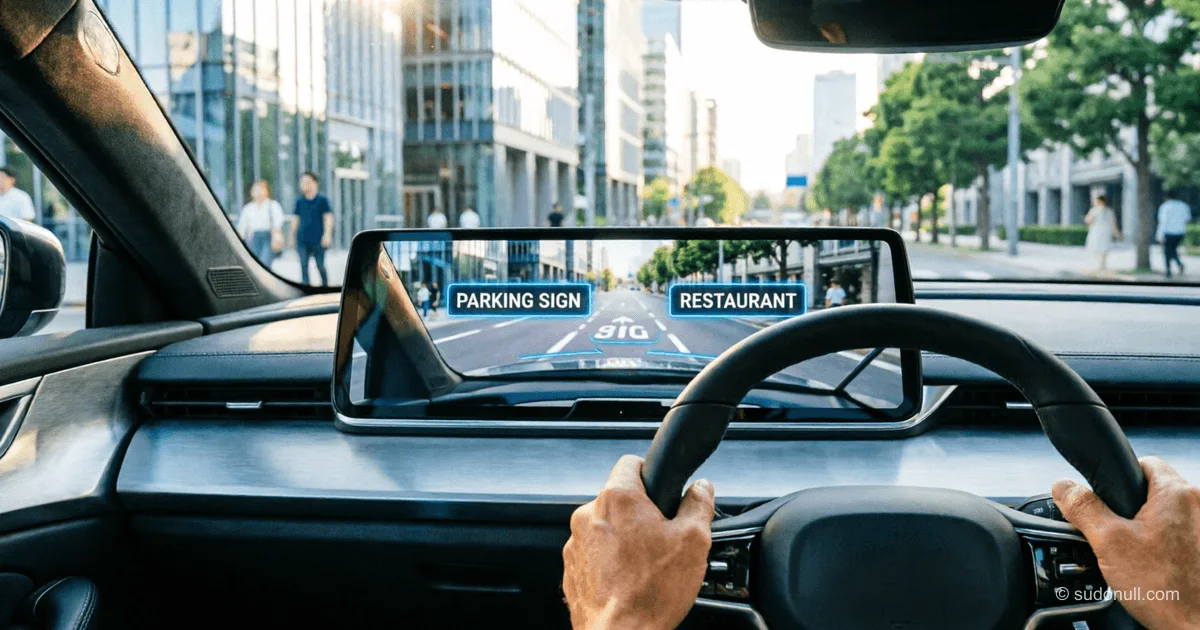
At the Google I/O conference, a system was shown where AI reads signs and road markings in real time through the car's cameras. The technology will allow the driver to ask about parking rules or nearby restaurants by voice.
As someone who closely watches the tectonic shifts at the intersection of the automotive industry and large language models, I see the Volvo and Google announcement as more than just a demonstration of a fancy navigation feature. It is the first real, hardware-confirmed attempt to wrest control of the car's "vision" from ADAS engineers and hand it over to a general-purpose AI interface. And this decision has far-reaching, not always pleasant, consequences for the entire industry.
The Essence: What Is Really Happening
What Volvo and Google presented at I/O 2026 is not just another step in integrating a smartphone into a car. It is a surgical break from the traditional architecture of automotive data. Previously, car cameras were "eyes" rigidly tied to the "brain" of active safety systems (Mobileye, Nvidia Drive, etc.), which operate with clear categories: obstacle, sign, lane marking. Now, in the EX60, the data stream from these same cameras gets a second independent "brain" — Gemini, which works in a paradigm of open interpretation of the world.
The media is charmed by the "ask about a restaurant" or "understand a parking sign" feature, but the real shift is that Volvo is the first to officially create an architectural backdoor for an LLM directly into the sensor stream in a car. Unlike GM, which is injecting Gemini into four million cars for navigation and music, Volvo allows AI to see what the driver sees in real time. This is a huge difference. GM offers a "chatbot on board," while Volvo offers a "co-pilot" that watches the road.
Timeline and Context
This announcement should not be viewed in isolation, but in the context of the data war that erupted back in 2024.
- 2024-2025: The "GM camp" forms. GM strikes a deal with Google, abandoning Apple CarPlay. This decision was perceived as a betrayal of user experience, but in reality it was a data purchase deal: Google gets access to telemetry from millions of cars, and GM gets a cutting-edge voice assistant.
- Late 2025 - Early 2026: Elon Musk bets on Grok from xAI, trying to tie AI to the autopilot. But Grok still lacks deep vertical integration with the safety zone, remaining a "talker."
- May 20, 2026: Volvo and Google blow up the market. The problem is that Volvo is not using the cameras for safety in this specific function. For Gemini, it's just a picture. But an algorithm that can read a sign "No parking on even days from 8 am to 5 pm" will, within 90 days, be able to "read" and record an accident, assess its severity, and transmit data to the insurance company. This transition from "driver assistance" to "driver assessment" is the essence of the maneuver.
Who Wins and Who Loses
Winners:
- Google (Alphabet) — strategically. They get what they've dreamed of for the last five years: the real world through a car. Every driver query about a sign or building is an incredible goldmine of data for training spatial intelligence. While Tesla teaches cars to drive, Google teaches AI to understand the human context of any place on Earth. And Volvo pays for this with its hardware, providing NPU for inference.
- Volvo as a brand. They are moving away from the dreary range race to a software race, where they are perceived as a premium tech company, allowing them to maintain a higher average transaction price (closer to $55,000–65,000 for the EX60) without discounts.
Losers:
- BMW and conservative German premium brands. BMW is only planning to launch Alexa+ in the second half of 2026. The problem is that Alexa is a supermarket (shopping), while Gemini is an explorer (context). In the premium segment, where BMW has long ruled, the technology banner will now be held by a car that "sees" and "reasons," not just executes voice commands.
- Insurance companies (short-term). They will have to urgently rewrite risk assessment models. How do you assess a driver if the car itself tells them how to avoid a parking fine? This changes actuarial calculations, and until insurers figure out how to get this data for themselves, they will lose money.
What the Media Isn't Saying
No one in the press releases talks about what happens to the data when you park. Everyone is thrilled that Gemini reads a "Resident parking only" sign. But run this scenario through GDPR/CCPA: the car continuously records the street to find the sign. The frame captures faces of passersby, other cars' license plates, storefronts.
Google claims that "faces are blurred." But here's the detail: blurring occurs after the NPU has processed the scene to extract semantic information. That is, raw data may not be stored, but the fact that a "red Tesla Model Y" and "three pedestrians" were in front of house No. 15 is already recorded in vector form and sent to the cloud to answer the user's question. This creates an unprecedented level of detail in a dynamic layer of reality for Google, which is not regulated by laws on public panoramas because it is formally a private video stream processed by AI.
Forecast: The Next 30 Days and 90 Days
30 days (by June 19, 2026): Volvo's legal department will face the first request from a European data protection regulator. The case will concern not the very fact of camera operation, but the user's inability to separate "visual analytics for ADAS" from "analytics for Gemini." Since both systems use the same windshield camera, withdrawing consent for Gemini would risk disabling some safety features. This is a legal time bomb.
90 days (by August 18, 2026): A data leak reveals that Google is preparing a closed protocol "Gemini Vision Service" for Volvo. This service will be integrated not as an app, but as part of the Volvo Cars Connected Safety service. In effect, you will pay not for "show me the sign," but for a continuous feed of contextual hints where AI decides when to intervene. This will cost roughly $15–20 per month on top of the car's price, and it will finally launch Volvo's real SaaS revenue model. The car will finally cease to be just a means of transportation, turning into a subscription platform for "digital vision."
— Editorial Team










No comments yet.