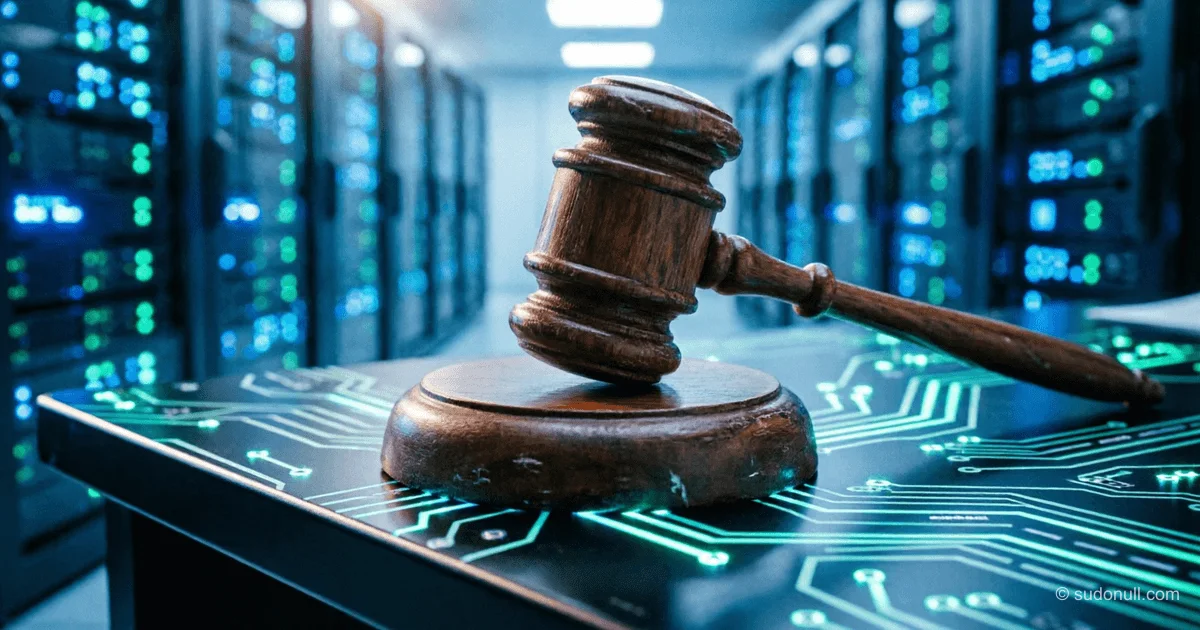
Jury Begins Deliberations on Elon Musk's Lawsuit Against OpenAI
After several days of hearings and arguments, the fate of the lawsuit has been handed to the jury. The trial has already revealed many details about OpenAI's internal workings and Musk's relationship with Sam Altman.
As an analyst observing the legal battles around AI not as a "billionaire soap opera" but as an architectural struggle for who owns the future of computing, I see in the verdict on Musk's lawsuit something far more significant than just another news headline. This is not the end of the war, but its transition from the legal arena to the market. And the way the jury reached its verdict reveals a systemic crisis in AI regulation far more than all of Musk's tweets combined.
The Core: What's Really Happening
The point is not that Musk lost. The point is on what grounds he lost, and what nuclear charge this ruling places under the entire OpenAI structure right on the eve of the largest IPO in history.
The jury deliberated for less than two hours and returned a unanimous verdict: Musk waited too long and missed the statute of limitations. Judge Yvonne Gonzalez Rogers accepted this verdict as the court's decision and dismissed the lawsuit without even considering it on the merits. She added a phrase that stings any lawyer's ears: "There is a significant amount of evidence supporting the jury's conclusion, so I was prepared to dismiss the lawsuit right on the spot."
This means the question of whether Altman "stole a charitable organization" or not was never discussed on its merits. The court closed the door on procedural grounds. For Musk, this is a fiasco, but for OpenAI, it's a time bomb. Public opinion and state regulators now have carte blanche to review OpenAI's structure without regard to the fact that "the court has already decided everything." The court decided nothing on the substance of the dispute.
Timeline and Context
Let's reconstruct the timeline, because the media mixes personal dramas and billion-dollar stakes into a single narrative.
- 2015: Musk, Altman, and Brockman create OpenAI as a non-profit organization with the mission "to create safe AI for the benefit of humanity." Musk donates $38 million at the start.
- 2017-2018: Internal struggle for control. Musk proposes merging OpenAI with Tesla or gaining full control of the company. Altman and Brockman refuse. Musk leaves the board, predicting OpenAI has "zero" chance of success.
- 2019-2024: Altman creates a commercial division, raises $13 billion from Microsoft and over $100 billion in infrastructure commitments. OpenAI becomes the world's most valuable AI startup with a valuation of $852 billion.
- 2024: Musk files a lawsuit, accusing Altman, Brockman, and Microsoft of violating the charitable trust agreement, seeking $150 billion in damages and Altman's removal.
- April-May 2026: Three-week trial in Oakland. Musk testifies, referencing a conversation with Larry Page where Page called him a "specist" for caring about humans, and repeatedly mentions "The Terminator" until the judge asks him to stop. Altman admits he did not give a definitive "yes" when asked about his complete honesty.
- May 18-19, 2026: Jury returns a verdict in two hours. Musk is in China with Trump, ignoring the judge's requirement to be present in the courtroom. Lawyers apologize to the jury.
- May 20, 2026: The verdict becomes the news of the day. Musk promises to appeal.
Who Wins and Who Loses
Winners:
- OpenAI (short-term, but with caveats). The path to a $1 trillion IPO is cleared of the most dangerous legal obstacle. The company can begin its road show in the coming months. However, the problem is that the very structure Musk tried to challenge remains in question—now at the level of state attorneys general.
- Microsoft. The $13 billion investment tied to an exclusive Azure partnership will not be torn apart by a court ruling. This is the main beneficiary—they retain control over a key AI model supplier without formal ownership.
- Musk's xAI (paradoxically). Losing in court frees Musk from the "raider" image and allows him to continue building xAI within SpaceX, appealing to the narrative: "I tried to stop the monopoly through the courts, but the system is corrupt."
Losers:
- The idea of "charitable AI." This process buried any remaining belief that a non-profit mission can coexist with raising hundreds of billions of dollars. As Bloomberg Law notes, the trial became "the first antitrust case of the AI era." The question is no longer about "mission betrayal," but whether AI leaders can be independent of the tech giants that fund them.
- Consumers and civil society. Organizations like EyesOnOpenAI are directly demanding that the California Attorney General review the approval of OpenAI's commercial structure and conduct an independent valuation of the non-profit division's assets. If this happens, the chaos over OpenAI's ownership could affect everyone who uses ChatGPT.
What the Media Isn't Saying
While journalists recount mutual insults about "selective amnesia" and "arrogance," no one analyzes the real reason the jury deliberated for only two hours. They didn't need to think.
The fact is that Judge Yvonne Gonzalez Rogers had already indicated before the verdict that she considered the lawsuit time-barred. She previously characterized Musk's claims for $134 billion in damages as "numbers pulled out of thin air." When a judge comments on a plaintiff's case in such terms during the trial, the jury receives an unmistakable signal.
The real insight here lies in Musk's behavior. Why did he even go to court, knowing the weakness of his position on the statute of limitations? The answer lies in his strategy for xAI and SpaceX. Losing in the trial court gives him the right to appeal, which will drag on for years. All the while, he can publicly call OpenAI "stolen charity" and position his Grok as "the real AI for humanity." This is a marketing war disguised as a legal one, with a budget of tens of millions of dollars on lawyers—pennies compared to the advertising effect.
Forecast: Next 30 Days and 90 Days
30 days (by June 19, 2026): Musk will file an appeal, not to win, but to freeze OpenAI's image as an "unresolved dispute" ahead of its IPO. Meanwhile, IPO underwriters (Goldman Sachs, Morgan Stanley) will step up, strongly recommending that Altman settle the dispute with Musk before going public to remove the "uncertainty factor" from the prospectus. A possible settlement price: $5-10 billion in stock or cash, which would be a pure victory for Musk.
90 days (by August 18, 2026): California Attorney General Rob Bonta will come under immense political pressure. As the NYT notes, the EyesOnOpenAI coalition is already demanding an independent valuation of OpenAI's non-profit assets. If Bonta launches an investigation, it could call into question the very architecture of "commercial division under non-profit board control." In the worst-case scenario for OpenAI, they could be forced to transfer assets worth over $100 billion to the non-profit foundation—roughly the same share Musk was demanding in his lawsuit. The irony is that by losing on procedural grounds, Musk may win on the merits without even participating in this new round of battle. OpenAI has gained a reprieve, but not immunity.
— Editorial Team








No comments yet.