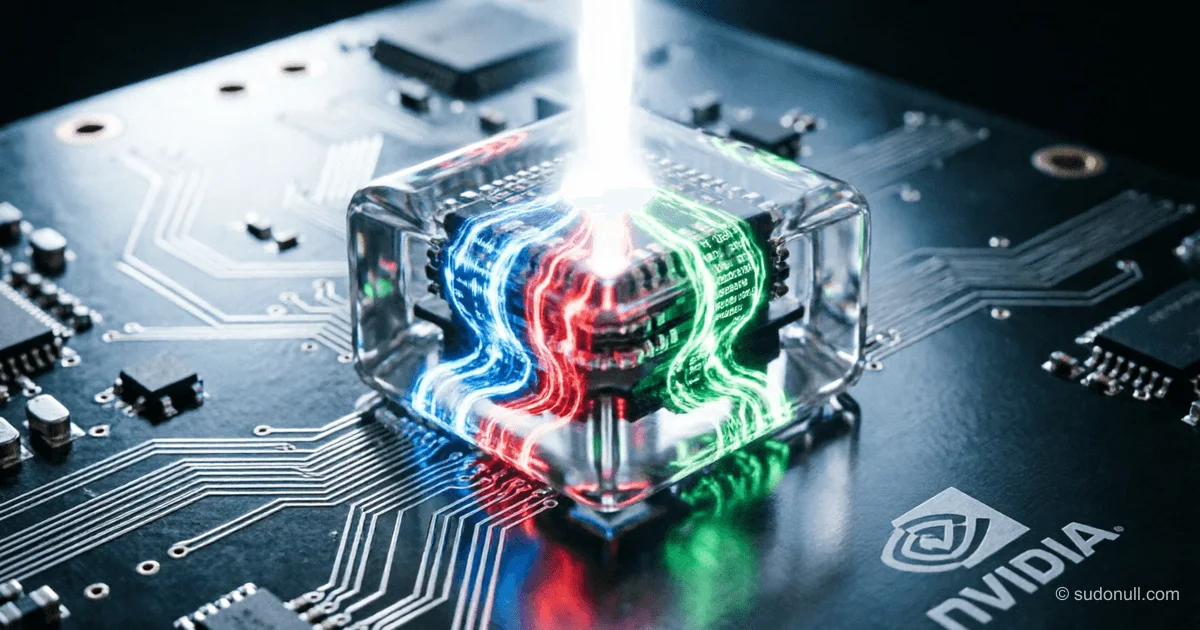
NVIDIA Introduces Multimodal Model Nemotron 3 Nano Omni with 9x Higher Efficiency
New model combines visual, audio, and text processing, enabling AI agents to work 9x more efficiently; the model is already available on multiple platforms as of April 28.
NVIDIA Nemotron 3 Nano Omni: A New Era of Multimodal AI Agents
Introduction
In the world of artificial intelligence, there is a fundamental problem: reality is multimodal, but our models are not. Humans simultaneously see, hear, read, and understand context without switching between different "engines." Traditional AI systems, however, are forced to use a combination of separate models for vision, speech, and text, leading to context fragmentation, increased latency, and higher costs.
On April 28, 2026, NVIDIA took a decisive step to bridge this gap by introducing Nemotron 3 Nano Omni—an open multimodal model that unifies video, audio, images, and text in a single architecture. The model demonstrates unprecedented efficiency: while maintaining interactivity at a fixed level, its throughput is 9x higher than alternative open solutions. This event marks the transition from the era of "fragmented agents" to the era of "unified perception," which could fundamentally change the corporate AI landscape.
Event Details and Timeline
Technical Architecture: MoE, Mamba, and Efficiency
Nemotron 3 Nano Omni is built on a 30B-A3B hybrid mixture-of-experts (MoE) architecture. This means that with 30 billion parameters, the model activates only about 3 billion per forward pass, ensuring high performance with relatively low computational costs.
Key architectural decisions include:
- Hybrid Mamba-Transformer Core: Combining Mamba layers (optimizing sequences and memory) with Transformer layers (precise reasoning) yields up to 4x improvement in memory and compute efficiency compared to pure Transformer models.
- Spatiotemporal Video Processing: The model uses 3D convolutions to capture motion between frames and Efficient Video Sampling (EVS) technology, which compresses high-density visual tokens into a compact set without overloading the context window.
- Multimodal Encoders:
- Visual: C-RADIOv4-H for high resolution and OCR accuracy
- Audio: Parakeet-TDT-0.6B-v2 for going beyond simple transcription
- Text: Central decoder based on a strong text model
Performance: Numbers and Context
According to NVIDIA, in benchmarks with a fixed interactivity threshold, the model demonstrates:
| Scenario | Advantage over Alternatives |
|----------|------------------------------|
| Video reasoning | Up to 9.2x higher system capacity |
| Multi-document reasoning | Up to 7.4x higher system capacity |
On Blackwell GPUs with NVFP4 quantization, the model achieves maximum throughput among open omnimodal models for enterprise tasks.
Accuracy is also top-notch: Nemotron 3 Nano Omni leads in document intelligence benchmarks (OCRBenchV2: 65.8, MMLongBench-Doc: 57.5), video and audio understanding (Video-MME: 72.2, WorldSense: 55.4), and speech recognition (HF Open ASR: 5.95).
Availability and Openness
The model is already available on multiple platforms: Hugging Face, OpenRouter, Amazon SageMaker JumpStart, Vultr, Crusoe Managed Inference, and over 25 partner platforms. NVIDIA has released not only the model weights but also the full dataset (approximately 127 billion multimodal tokens for encoder training and 124 million examples for post-training), as well as training recipes, including 25 RL environment configurations with over 2.3 million deployments.
Impact and Significance
For the Industry: A Paradigm Shift in AI Agent Development
Before Nemotron 3 Nano Omni, developing multimodal agents required complex orchestration: a separate model for vision, another for speech, another for text, plus logic for their interaction. This created problems of context fragmentation, high latency, and rising costs.
"Nemotron 3 Nano Omni replaces disparate model chains with unified reasoning, reducing the number of inference steps and orchestration complexity, lowering inference costs, and enhancing cross-modal contextual consistency."
The model can serve as a "perception and context sub-agent" within larger agent systems, integrating with executive and planning models such as Nemotron 3 Super and Nemotron 3 Ultra.
For Business: Real-World Deployment Cases
Major companies are already integrating the model into their products:
- H Company: CEO Gautier Claux noted that agents can now analyze full-screen screen recordings in real time—a capability previously unavailable.
- Foxconn and Palantir are among the first adopters.
- Dell, DocuSign, Infosys, Oracle are in the process of evaluating the model.
Specific application scenarios include:
- Document Intelligence: Interpreting PDFs with diagrams, tables, scanned contracts, screenshots.
- GUI Agents: Navigating computer screens with understanding of interface elements (ScreenSpot-Pro: 57.8 vs. 5.5 for previous version).
- Video and Audio Analytics: Processing meeting recordings, webinars, call centers.
- Multimodal RAG: Searching and reasoning across data of different types.
For the NVIDIA Ecosystem: A Strategic Move
Experts note that the release of Nemotron 3 Nano Omni is not just a technological novelty but a strategic step by NVIDIA to expand its influence beyond hardware. "This comes as NVIDIA's largest customers are doing everything they can to eat into the margin NVIDIA currently makes on hardware," comments David Nicholson from Futurum Group.
By providing world-class open models, NVIDIA ties developers to its stack ecosystem—from GPUs to infrastructure software—creating a "smart engineering system" whose efficiency is hard to replicate without control over all components.
Reactions from Key Players
Technology Community
The developer community has greeted the model with enthusiasm. Open access to weights, data, and recipes allows customization for specific tasks without compromising security and privacy.
Chirag Shah, professor at the University of Washington, notes: "When you make something like this open, developers quickly try it, start integrating it into their solutions, and if it works well, they want to use NVIDIA as an infrastructure partner."
Cloud Infrastructure Partners
Vultr, Crusoe, and other cloud providers have quickly deployed the model on their platforms. Vultr emphasizes that openness is key to mass adoption: "NVIDIA's open ecosystem and Vultr's composable cloud infrastructure ensure developers can achieve new levels of performance without unnecessary lock-in."
Crusoe, in turn, highlights its MemoryAlloy technology, optimized for long multimodal contexts of up to 256K tokens.
Forecast and Conclusions
Nemotron 3 Nano Omni is not just another model. It is an indicator of the maturity of multimodal AI technology. Key takeaways and predictions:
1. Standardization of Multimodal Agents
In the next 6-12 months, we can expect unified omnimodal architecture to become the standard for enterprise AI agents. Fragmented Vision-Language-Audio stacks will become a thing of the past, just as separate modems for voice and data disappeared in the smartphone era.
2. Democratization through Openness
Releasing not only weights but also data and training recipes means that an average company can adapt the model to its needs without billion-dollar R&D budgets. This will accelerate the penetration of AI agents into mid-sized businesses.
3. Hardware-Software Integration
NVIDIA demonstrates that optimization "down to the metal" provides a decisive advantage: support for NVFP4 quantization on Blackwell, optimized kernels for vLLM and TensorRT-LLM. Competitors will find it hard to catch up with this level of integration.
4. Limitations and Challenges
Professor Nicholson points out a potential issue: "I don't know if NVIDIA sees this as a strategy for hyperscalers. Probably most will deploy it within the full NVIDIA stack." This means organizations that have already invested in alternative ecosystems (AMD, Intel, custom TPUs) may not be thrilled.
Conclusions
Nemotron 3 Nano Omni is not just a model with outstanding efficiency metrics. It is an architectural blueprint for the future: unified, efficient, open, and deeply integrated with hardware. NVIDIA is not only offering a tool but also redefining the rules of the game in corporate AI.
As Gautier Claux from H Company aptly put it: "This model allows agents to analyze full-screen screen recordings in real time—a capability previously unavailable." Perhaps in a year, we will take this for granted. And that is what real technological breakthroughs look like.
— Editorial Team









No comments yet.