EU Publishes 25 Deep Tech Signals of the Future
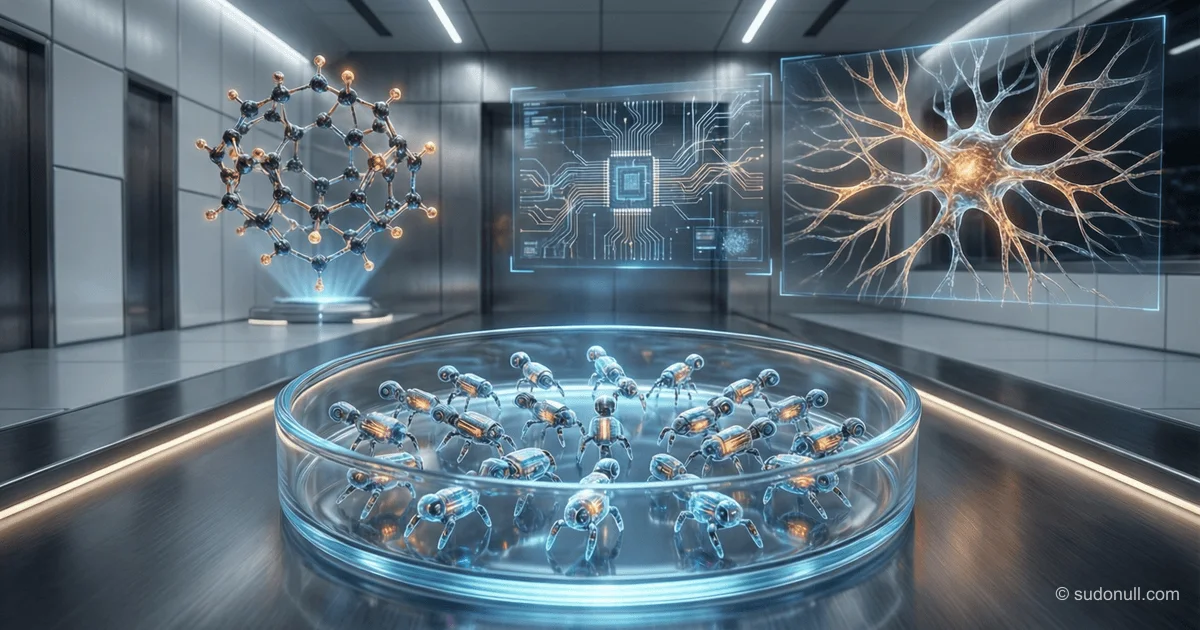
The European Innovation Council has identified key areas for development, including graphene coatings for space, quantum repeaters, bio-inspired AI, and biohybrid microrobots for therapeutic interventions at the cellular level.
From graphene to biohybrid robots: How Europe is laying the foundation for technological sovereignty
Introduction
On March 30, 2026, the European Innovation Council (EIC) published a document that may have a greater impact on the future of the Old Continent than many legislative acts. This is the EIC Tech Report 2026 — the first systematic review of 25 emerging deep tech signals, i.e., signals of nascent deep technologies at low to medium maturity levels.
Unlike traditional technology rankings, this report is based not on expert surveys or market conditions, but on an analysis of over 13,380 applications submitted to the EIC between 2021 and 2025. It includes both funded projects and high-quality proposals that did not receive grants. The goal is not to predict the future, but to "map" its contours, identifying technological trajectories that could take shape through further validation and scaling. This is not a ranking or a forecast — it is, essentially, an intelligence map of the innovation landscape.
Event Details and Timeline
The EIC Tech Report 2026, prepared with the participation of the European Commission's Joint Research Centre, is structured around three strategic domains corresponding to the STEP (Strategic Technologies for Europe Platform): digital and space technologies, clean and resource-efficient technologies, and biotechnologies and health.
The selection process was multi-stage. In the first phase, 411 potential "signals" were identified from the EIC portfolio. Then an expert panel, including EIC program managers and external experts, narrowed this list to 25 using a combined quantitative-qualitative methodology.
Key technologies included in the list:
Digital and Space Technologies:
- Two-dimensional (2D) materials for advanced memory and memristive devices
- Scalable production of MXene for industrial electromagnetic applications
- Quantum repeaters for quantum networks without trusted nodes
- Embedded Zero Trust architectures for distributed AI systems
- Bio-inspired AI for self-organizing systems
- Embodied AI for adaptive agents
- Graphene coatings and composites for space systems
- Advanced orbital servicing robotics
Clean and Resource-Efficient Technologies:
- Microbial biomining for secondary metal extraction
- Capacitive deionization for low-energy water desalination
- Electrochemical systems for destruction of persistent pollutants
- Spin-caloritronic materials for converting heat into electricity
Biotechnologies and Health:
- Biohybrid microrobots for therapeutic interventions at the cellular level
- Portable ultra-low-field MRI for distributed clinical use
- Non-invasive and minimally invasive brain interfaces
- Autonomous robotic systems for surgical processes
Impact and Significance
The significance of this document extends far beyond academic interest. It represents a fundamental shift in how Europe approaches technological development — from reactive to proactive.
For Europe and the industry: This is a "roadmap" for investment. Momchil Sabev, Director of the EIC Executive Agency, noted: "By the time new technologies become widely known through markets or public debates, many decisions shaping their trajectory have already been made." Early identification of promising directions is essential for competitiveness and sovereignty. Note that in the digital section, there are almost no consumer-oriented AI applications. Instead, the focus is on memory, materials, and system resilience — the "deep infrastructure layers" on which future systems will be built.
For the world: Competition is entering a new phase. If the US is betting on foundation models and China on scaling production, Europe is choosing the niche of "next-generation infrastructure": quantum repeaters, neuromorphic materials, graphene for space. Unlike other players, Europe is betting on autonomy — the ability to build and maintain critical capabilities without structural dependence on external players.
For society and science: Many of the 25 signals may seem far from reality. But that is the nature of deep tech. Biohybrid microrobots for cell therapy are laboratory prototypes today. But by the early 2030s, they could become the standard for cancer treatment or drug delivery. Omics technologies and computational protein design are ushering in the era of personalized medicine, where drugs are created for a specific patient's genome. The EIC Portal has already launched Advanced Innovation Challenges, where physical AI and robotics are a separate track with a budget of €31 million.
Reactions from Key Players
Reaction to the report was focused and professional. Leading innovation portals (movetheneedle, SCI) provided in-depth analysis, highlighting the shift from "software" to "hardware infrastructure." National agencies (APRE in Italy, FFG in Austria, ERA Portal) quickly disseminated the information, integrating the report's findings into their national strategies.
Within the EIC, practical steps have already been initiated. The report has become the basis for a new round of Accelerator and Advanced Innovation Challenges funding, directly linking analysis to the allocation of €1.4 billion for 2026. The action timeline is set: the first phase of the Challenge ends in February 2026, the second starts in 2027. This is the minimum time lag between "signal" and "action."
Victoria Hernández Valcárcel, a member of the EIC Board, summarized the philosophy at MWC 2026 in Barcelona: "A continent that does not innovate loses sovereignty. A continent that does not protect the resilience of its critical infrastructure loses power and autonomy."
Forecast and Conclusions
The EIC Tech Report 2026 is not just a document. It is a manifesto of Europe's technological sovereignty.
Short-term forecast (2026-2027): The report will influence funding allocation under Horizon Europe. Technologies on the list will receive priority in Pathfinder, Transition, and Accelerator. Advanced Innovation Challenges on physical AI and New Approach Methodologies (NAMs) will become testbeds for rapid validation of these signals.
Medium-term forecast (2028-2030): The most mature technologies will begin transitioning to market deployment. Of particular interest are MXene materials for electromagnetic applications (solving interference issues in 5G/6G) and portable MRI (democratizing diagnostics).
Long-term forecast (2030+): By the end of the decade, some of these signals — quantum repeaters, graphene coatings for space, biohybrid robots — could become "commonplace" technologies. Europe aims not just to catch up, but to shape the structure of the future technological landscape, setting standards and architectural principles at a stage when decisions can still be made.
The main conclusion is this: The 25 EIC signals are an attempt to win the race before it even begins. The report shows that the most important innovations occur not on the surface, but in the foundation. Europe is choosing the path of building deep infrastructure — from materials to quantum networks. The success of this strategy will be measured not by the number of unicorn startups, but by how much Europe can control critical technological links ten years from now. And this report is the first and most important step toward that control.
— Editorial Team









No comments yet.