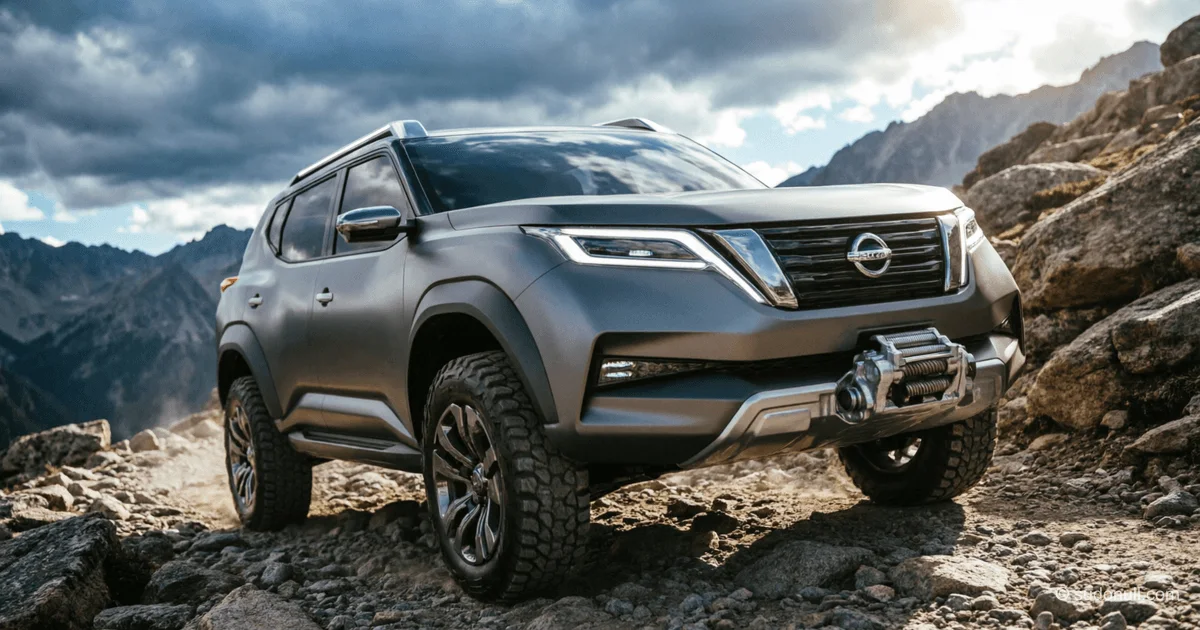
Nissan Unveils Terrano PHEV Hybrid Concepts in Beijing
Nissan has presented two new plug-in hybrid concepts: the rugged Terrano PHEV off-roader and an urban crossover with low drag coefficient, both focused on electric driving and intelligent mobility.
From a Rugged Off-Roader to a Smart Crossover: How Nissan Is Resetting Its Strategy in Beijing
Introduction
On April 24, 2026, at the Beijing International Automotive Exhibition, Nissan made a bet that could define its future for the next decade. The Japanese automaker unveiled two plug-in hybrid electric vehicle (PHEV) crossover concepts — the Terrano PHEV and the Urban SUV PHEV. But behind the striking show cars lies something more than just a model range update.
These concepts mark a turning point in Nissan's strategy: the company that was once an electric vehicle pioneer with the Leaf is now betting on hybrid technology and intelligent driving — and doing so in China, the most competitive and fast-changing automotive market in the world. The strategy has been named Mobility Intelligence for Everyday Life, and for the first time it places China on a par with the USA and Japan in terms of significance. This is not just a presentation of two vehicles — it is a signal of how Nissan intends to survive and win in the era of "smart" electrification.
Event Details and Timeline
The Beijing Auto Show, which opened on April 24, 2026, became the stage for Nissan's "double punch." Two concepts — the Terrano PHEV and the Urban SUV — demonstrate two fundamentally different approaches to electrification, united by a common philosophy of "everyday intelligence."
Terrano PHEV: the return of a legend on a frame
The new Terrano marks the comeback of a cult nameplate associated with a compact SUV in the 1990s and early 2000s. But the current concept is a completely different story. It is a full-fledged body-on-frame off-roader that will slot in size between the Patrol and the X-Trail (known as the Rogue in the USA).
Key technical details:
- Platform: Body-on-frame chassis shared with the Chinese-market Nissan Frontier Pro PHEV
- Powertrain: Plug-in hybrid with a 1.5-liter 4-cylinder gasoline engine and an electric motor
- Combined output: 320 kW / 435 hp
- Torque: 800 Nm
- Off-road package: Winches, auxiliary roof lights, underbody protection, increased ground clearance
Urban SUV PHEV: urban aerodynamics
The second concept is an urban crossover targeting a younger audience. In terms of styling, it echoes the NX8 model and emphasizes striking design and advanced technology:
- Drag coefficient: Cd = 0.248 — an impressive figure for a crossover
- Design: "Golden ratio" proportions of 0.618, a hidden beltline, a full-width "star ring" light strip, and a complete absence of exterior door handles
- Intelligent driving: A LiDAR sensor or advanced camera is mounted on the roof for autonomous driving functions
Notably, Nissan is not just showcasing attractive concepts. The company has already outlined concrete timelines: production versions of both vehicles will appear within a year. Moreover, the Terrano PHEV, unlike the Urban SUV which might remain a China-specific model, will be exported to other international markets.
Impact and Significance
For the automotive industry: Nissan is making a pragmatic yet bold move. While many Western manufacturers are pushing for a complete transition to fully electric vehicles, Nissan acknowledges reality: charging infrastructure is growing unevenly, and in many markets a plug-in hybrid is the most rational solution for the next 5-7 years. This is especially true for China, where the PHEV segment is growing faster than the fully electric one.
For the Chinese market: The arrival of such models is a response to the dominance of local giants (BYD, Geely, Changan). Nissan is playing two trump cards: heritage (the Terrano with its rich history) and technology (the Urban SUV with LiDAR and sports car-level aerodynamics for the urban segment). In addition, Nissan simultaneously showcased the N6 sedan at the same show, which is the brand's first-ever PHEV for China. This demonstrates a systemic approach.
For society: The return of the Terrano in a new guise is a response to the demand for lifestyle off-roaders that can be "green" without losing their rugged appeal. Consumers no longer want to choose between eco-friendliness and the ability to leave the pavement. The Terrano PHEV offers both, and with a serious 435 hp output — performance comparable to V8 engines of the past, but with the ability to drive on electric power in the city.
Reaction from Key Players
Nissan officials are not hiding their ambitions. A company representative stated that these concepts reflect a "new era of mobility where intelligence and electrification become everyday life."
Reaction within the professional community is positive, but with nuances:
- International media (Carscoops) note that Nissan "hit the bullseye" with the Terrano's design, calling it a serious competitor to the Toyota Land Cruiser 250 thanks to its body-on-frame construction and hybrid powertrain.
- Analysts point to Nissan's pragmatism: instead of inventing a fundamentally new platform, the company is adapting the existing body-on-frame platform from the Frontier Pro pickup (a joint venture with Dongfeng), which accelerates time-to-market and reduces costs.
- Competitors likely perceived this as a wake-up call. If Nissan can offer a body-on-frame PHEV off-roader at a competitive price before Toyota or Ford deploy their hybrid SUVs in China, the Japanese manufacturer could gain a significant advantage.
Forecast and Conclusions
The situation surrounding Nissan's premieres in Beijing allows for several key forecasts.
Short-term forecast (by the end of 2026): The premiere of production versions of the Terrano PHEV and Urban SUV is expected. Pricing will be a critical success factor in the Chinese market, which is dominated by intense price wars.
Mid-term forecast (2027-2028): The Terrano PHEV will begin its expansion into the Middle East, Australia, and possibly Latin America. This will make the model global, returning the Terrano name to the world stage.
Long-term forecast: The success of this "hybrid strategy" will determine how quickly Nissan transitions to full electrification. For now, the company is choosing a path of mild hybridization for body-on-frame SUVs — the segment that is the hardest to transition to pure electric transformation due to weight and range requirements.
The main takeaway is that the 2026 Beijing Auto Show revealed a new Nissan: more flexible, more localized for China, yet retaining global ambitions. The Terrano PHEV is not just a vehicle, it is a statement: the era of big SUVs is not over; it has simply plugged in. And Nissan may have found the perfect balance between a powerful gasoline-powered past and an electric future, creating a hybrid that is equally at home off-road and in the center of Beijing with its strict environmental regulations.
— Editorial Team










No comments yet.