Cerebras Systems Raises IPO Valuation to $4.8 Billion Amid AI Boom
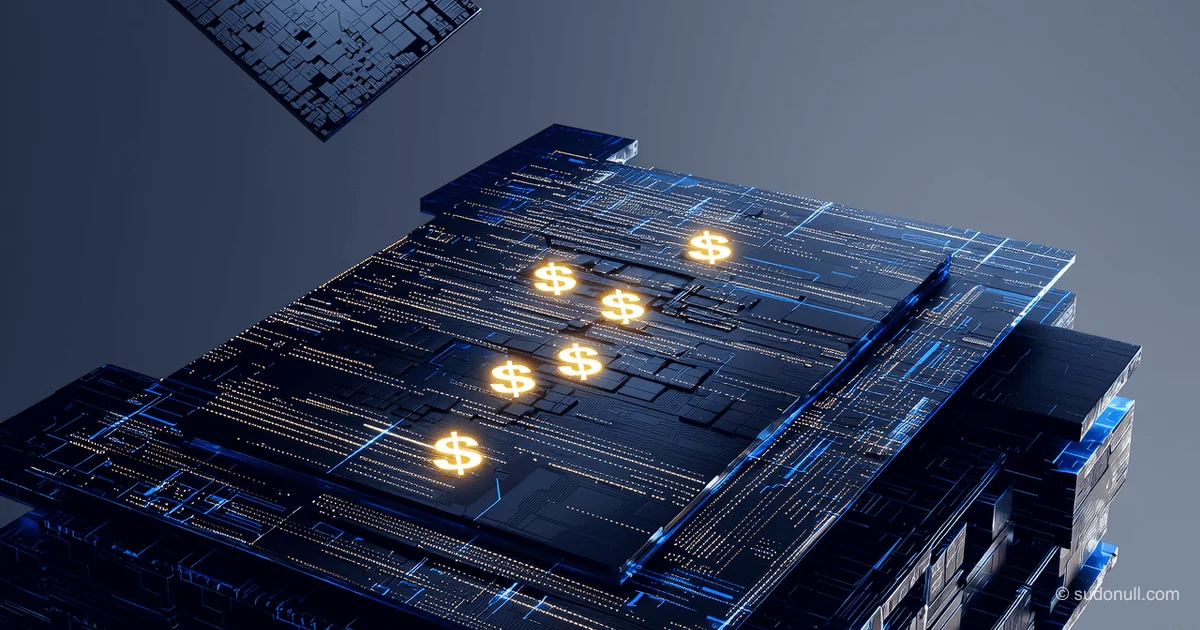
AI chip maker Cerebras has increased its share price range and offering size, expecting to raise up to $4.8 billion at a total valuation of $33 billion. Interest is fueled by a major partnership with OpenAI in computing power.
Cerebras' $4.8 Billion IPO: Betting Not on Hardware, but on Financial Engineering in a World Where Chips Are Currency
The Gist: What's Really Happening
On May 12, 2026, Cerebras Systems will go public on NASDAQ, raising not just $4.8 billion but creating a precedent for a new type of tech IPO—where the product is not a silicon wafer but the very ability to replace Nvidia. It's not that the company makes the world's largest chips. It's that its stock market debut is a test of the entire industry's maturity: can the market adequately value a hardware company, 86% of whose 2025 revenue came from two clients in the UAE, and now is rapidly shifting to one—OpenAI?
The increase in valuation from $115 to $160 per share and the expansion of the offering to 30 million shares is not just a reaction to a 20x oversubscription. It's a signal that the investment community is willing to play by new rules, where inference chips become not so much a technological as a financial instrument. Cerebras is no longer just selling hardware—it is embedded in a complex web of cross-ownership, lending, and options that connects it with OpenAI, Amazon, and, indirectly, with Nvidia and AMD.
Timeline and Context
Cerebras was founded in 2015 by Andrew Feldman—the same person whose previous company SeaMicro was sold to AMD for $334 million, and who in 2007 pleaded guilty to SEC charges of falsifying $30 million in revenue. This is not a biographical detail but a key to understanding how the company's internal financial relationships are built.
By 2024, Cerebras had already attempted an IPO but withdrew due to a CFIUS review: its dependence on G42—a UAE company closely tied to local authorities—raised national security concerns. After that IPO was shelved, the company conducted two rounds: $11 billion in a Series G in September 2025 at a valuation of $81 billion, and another $10 billion in a Series H in February 2026 at a valuation of $230 billion. In five months, the valuation nearly tripled. The leap was driven not by a technological breakthrough but by a contract with OpenAI.
January 2026: the first agreement between OpenAI and Cerebras—a three-year lease of 750 MW of computing power, with the deal value exceeding $100 billion. April 2026: the parties expanded the deal to $200 billion, plus $10 billion from OpenAI to build Cerebras data centers, plus warrants for an equity stake of up to 10%. Meanwhile, in March, AWS signed an agreement to host CS-3 in its data centers and provide access via Bedrock.
Thus, four months before the IPO, Cerebras transformed from a company with one risky client into a supplier for two of the biggest players: OpenAI and Amazon. It is this, not the technical specs of the WSE-3, that ensured a 20x oversubscription.
Who Wins and Who Loses
Winners:
OpenAI—the main beneficiary. Sam Altman gets not just a second chip supplier but leverage over Nvidia. The deal terms with Cerebras include stock warrants: the higher the IPO valuation, the more valuable OpenAI's stake. Moreover, from an accounting perspective, OpenAI can treat part of its chip costs as interest income from financing data centers, improving its own financials ahead of its planned IPO. This is not a purchase but arbitrage.
Early Cerebras investors—primarily funds that participated in the Series G and H rounds. In three months, they see nearly a doubling in value, and the IPO provides liquidity. But there's a catch: there is no lock-up period for holders of Class B shares, meaning they can dump shares from day one of trading.
Losers:
Nvidia—not so much from market share loss (which is minuscule) but from the precedent being set. If Cerebras successfully IPOs and doesn't crash in the first few months, it will pave the way for other AI chip startups to go public. Investors will see that Nvidia has not just competitors, but competitors with market capitalization. Additionally, OpenAI has officially expressed dissatisfaction with the inference speed of Nvidia GPUs for certain tasks, such as interaction between AI models and external software.
Groq—indirectly lost back in February when its negotiations with OpenAI fell through due to a $200 billion deal with Nvidia.
Retail investors who buy shares in the first days—they will have to deal with a company whose CEO has a conviction for financial fraud and whose internal control over financial reporting has been deemed ineffective by the company itself. KPMG replaced BDO in November 2025, which in itself is a red flag.
What the Media Isn't Saying
The first non-obvious insight concerns the mechanism of cross-financing AI infrastructure. What looks like a chip supply contract is actually a closed loop of capital. OpenAI pays Cerebras for chips, but simultaneously finances the construction of data centers where those chips are housed, and receives an equity stake in Cerebras. Cerebras uses the money to build infrastructure that OpenAI leases. Nvidia, in turn, finances cloud providers that lease capacity to OpenAI. AMD also participates in the chain, selling chips to Meta and OpenAI and receiving their investments.
This is not a market—it's a tangle of mutual obligations where the same $10 billion circulates three times, each time creating new capitalization. Cerebras, with a valuation of $33 billion on $5.1 billion in 2025 revenue, has a P/S ratio of about 6.5—which is still modest compared to some SaaS companies. But what matters is that out of the $246 billion in orders the company reports, the vast majority are unfulfilled commitments tied to data center construction that has only just begun. Any delay, any supply chain hiccup, and the backlog turns into a pumpkin.
The second insight: the WSE-3 technology carries a fundamental risk that the prospectuses ignore. A chip the size of an entire 300mm wafer means that one defect writes off $200,000. This is not scalable manufacturing in the traditional sense. Cerebras has to use core redundancy and defect bypass schemes, but this reduces effective yield. When moving from hundreds of chips for select clients to tens of thousands for cloud giants, the yield problem will shift from engineering to finance. And it hasn't gone away—it just hasn't manifested at current volumes.
The third insight: an IPO with 15% free float and 99% voting power held by founders is a classic setup where the stock price is loosely tied to fundamentals in the first few months. Add to that the ability for insiders to sell from day one (unlike the standard 180-day lockup), and you get a situation where the market price is determined not by business valuation but by the insider share unlock schedule.
Forecast: Next 30 Days and 90 Days
30 days (through mid-June 2026). The IPO will price at the top end or above—$160-$165 per share. In the first week of trading, a rise to $180-$190 is likely on a wave of retail investor and algorithmic fund interest. Then a correction will begin. The key moment is the first insider sales, which will become noticeable by the end of May. If Class B shares start converting en masse to Class A and selling, downward pressure on the stock will intensify. Three weeks after the IPO, shares could be worth $140-$150, i.e., below the offering price.
At the same time, regulators will become active: the SEC will request additional information about the structure of deals with OpenAI, given the CEO's criminal record. This won't halt trading but will create noise.
90 days (through mid-August 2026). A fork in the road. If Cerebras manages to launch the first phase of data centers for OpenAI on time and show real revenue from new contracts in the second quarter, the stock will stabilize in the $130-$170 range. If there are delays—which are almost inevitable given the scale of construction and the shortage of inference infrastructure specialists—a wave of disappointment will set in.
By August, it will become clear how real the threat to Nvidia is in the inference market. But the real risk is not that Cerebras will replace Nvidia (it won't), but that Nvidia itself will start aggressively discounting in the inference segment, squeezing the margins Cerebras is counting on.
Finally, by the end of summer, the market will see whether a wave of secondary offerings from other AI chip companies has begun. If SambaNova or Groq attempt an IPO, it will signal that the window for AI hardware is open. But chances are slim: SambaNova was already looking for a buyer in 2025, Intel offered $16 billion, and the deal fell through. If Cerebras stumbles, the market for AI chip IPOs will close for a year to a year and a half—and those who missed out will be left with private money that may not be enough.
The most interesting part is not the numbers, but that Cerebras, through its IPO, inadvertently creates a public benchmark for the entire industry. The success or failure of this offering will determine not only the fate of one company but also the market's appetite for alternative AI architectures for years to come.
— Editorial Team









No comments yet.