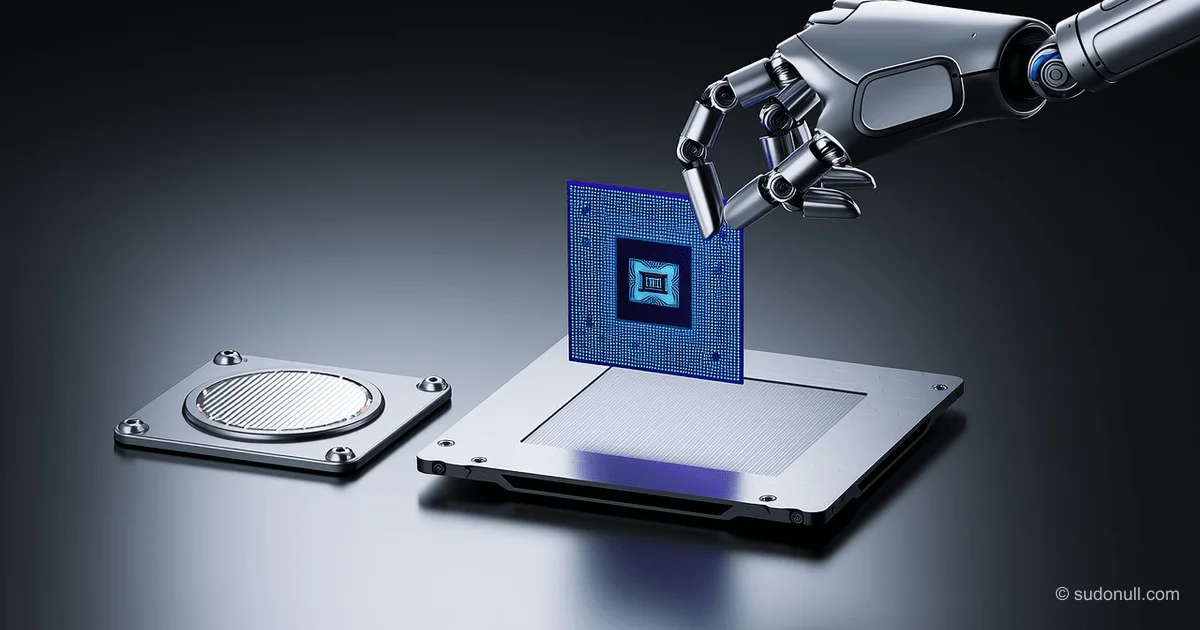
TSMC Demands Exclusivity from Partners to Maintain Leadership in CoPoS Chip Packaging
TSMC is imposing strict supply chain controls for panel-level chip packaging CoPoS. Taiwanese equipment and materials partners are required to sign non-disclosure agreements and bans on supplying competitors for several years.
CoPoS and TSMC Exclusivity: How the Taiwanese Giant Locks Down the Supply Chain to Stay Unrivaled
The Gist: What's Really Happening
TSMC is introducing unprecedented restrictions in the semiconductor industry: Taiwanese partners for equipment and materials used in CoPoS technology must sign agreements prohibiting supplies to competitors for several years. This is not just about non-disclosure agreements (NDAs) but full exclusivity—a complete blockade preventing Samsung, Intel, and other contenders in advanced packaging from accessing critical supply chain components.
This is not about protecting intellectual property. It's about building a fortress around the next generation of chip packaging. TSMC understands that the battle for 3nm and 2nm processes is gradually giving way to the battle for packaging. CoWoS has already become the bottleneck of the entire AI industry—shortages persist despite expansion plans to 140,000 wafers per month by end of 2026 and 170,000 in 2027. CoPoS is the next step, and TSMC intends to control it monopolistically.
CoPoS (Chip-on-Panel-on-Substrate) is a technology that shifts from round silicon wafers to square panels measuring 310x310 mm, increasing usable area by more than five times and reducing unit packaging costs. But the key is that it enables servicing giant AI chips sized 14+ reticle fields, which NVIDIA, Google, and AMD will have by 2028-2029 and which physically cannot fit into existing CoWoS processes. By controlling CoPoS equipment suppliers today, TSMC controls the future of all high-performance electronics.
Timeline and Context
December 2024 – January 2026: CoWoS shortages become the main brake on the AI industry. NVIDIA, AMD, Google line up. TSMC frantically expands capacity but hits the physical limit of round wafers—only 4-7 chips of the Rubin generation fit on a 12-inch substrate.
February 2026: Main equipment installation for the CoPoS pilot line in Taiwan is completed. TSMC begins testing with key partners. Chairman C.C. Wei officially confirms for the first time that the company is building a trial line, targeting mass production by 2028-2029.
April 2026: Two landmark events. On April 16, during TSMC's quarterly earnings call, Wei publicly calls CoPoS a key focus and announces that pilot line equipment installation will be completed in June. On April 22, at the technology forum in San Jose, the company reveals its roadmap: 5.5 reticle fields in 2026, 9.5 in 2027, 14 in 2028, and over 40 by 2029. The latter figures mean that without CoPoS, it will be impossible to serve chips like NVIDIA's Feynman.
Meanwhile, competitors are stepping up. Samsung is promoting its own panel technology SoP and has already secured an LPU order from NVIDIA. Intel is accelerating EMIB and has signed an agreement with Google to package the giant HumuFish chip, sized at 9 reticle fields. For the first time in years, TSMC faces a real threat of losing its monopoly on advanced packaging.
May 2026: TSMC goes on the offensive. CoPoS supply chain partners are faced with an exclusivity demand—Taiwanese equipment and materials manufacturers cannot sell critical components to competitors for several years. In effect, TSMC leverages its dominant position to lock down the ecosystem before competitors can build their own.
Winners and Losers
Winner: TSMC — the main beneficiary of the entire setup. Its monopoly on CoWoS (about 85% of the global advanced packaging market) extends into the CoPoS era. Moreover, TSMC gains leverage over clients: want a spot in line for the latest packaging? Place your chip orders with us. The combination of advanced logic and advanced packaging becomes unbreakable.
Winner: Taiwanese equipment manufacturers. The first-tier CoPoS suppliers—13 Taiwanese firms including Gudeng Precision (equipment inventory), Chroma ATE (measurement), Grand Plastic (chemical processing), and Inven Technology (warpage correction)—secure guaranteed multi-year orders from the semiconductor world's largest customer. The price of exclusivity is the inability to sell to competitors, but given TSMC's current dominance, this restriction seems manageable.
Winner: Japanese and American suppliers outside the Taiwanese ecosystem. Corning, AGC, Tokyo Electron, Applied Materials, Advantest are present in all supply chains, and TSMC cannot bind them with exclusivity. They become arms dealers selling to both sides.
Loser: Samsung. The Korean giant is betting on panel packaging SoP with memory integration, but without access to critical Taiwanese suppliers—those already fine-tuning processes for CoPoS on TSMC's pilot line—the timeline for a competitive product shifts to the right.
Loser: Intel. Betting on EMIB will require either duplicating the supply chain (expensive and time-consuming) or using other suppliers with potentially inferior performance. The Google deal is a win, but without the Taiwanese ecosystem, scaling will be painful.
Loser: TSMC's clients — NVIDIA, AMD, Apple. The lack of competition in advanced packaging means rising prices and no alternatives. NVIDIA tries to diversify by placing LPU orders with Samsung, and Google turns to Intel, but these are niche projects that cannot undermine TSMC's dominance.
Loser: The global semiconductor ecosystem. Concentration of a critical technology in the hands of one company and one country creates systemic risk. Any disruption in Taiwan—geopolitical crisis, earthquake, epidemic—would immediately paralyze the global AI industry.
What the Media Isn't Saying
Insight One: Exclusivity is not about competition but about warpage. The main technical challenge of panel packaging is not TGV (through-glass via) transitions or lithography, but warpage. When moving from round wafers to square panels of 310x310 mm, the difference in thermal expansion coefficients of silicon, copper, and compound creates mechanical stresses that grow non-linearly with size. Taiwanese company Inven Technology has created a unique solution for warpage correction, and Shanta provides balancing films with reverse stress. It is this know-how, not abstract equipment, that TSMC is locking down with exclusivity. Competitors can buy lithography equipment from ASML or etching tools from Tokyo Electron, but without Taiwanese warpage solutions, they will face massive yield losses during ramp-up.
Insight Two: 2026 is not 'preparation for production' but the moment everything is decided. TSMC completes the installation of its CoPoS pilot line in June 2026. The next 12-18 months is the window for process validation with key clients (NVIDIA, AMD, Apple). If competitors do not build their own pilot lines and start validation in the same period, by the time of mass production in 2028-2029, all design decisions will be tied to TSMC-specific processes. Switching will be impossible without a complete chip redesign. The exclusivity demand from suppliers is a way to ensure that competitors in 2026-2027 have no access to mature processes, thus missing the validation window.
Insight Three: TSMC is changing its business model—from foundry to systems company. Traditionally, the foundry business implied neutrality: TSMC manufactures chips for everyone, not competing with clients. Exclusive agreements for the CoPoS supply chain are a step toward a model where TSMC controls not only production but also the ecosystem around it. Chairman C.C. Wei has publicly stated the goal of achieving gross margins above 65% and focusing on 'high-value, high-margin products.' TSMC is consciously moving away from commodity business to platform monopoly—and supplier exclusivity is a tool for this transition.
Insight Four: The Korean ecosystem strikes back—but in the wrong direction. Suppliers to Samsung and SK Hynix—companies like AP Systems, SEMES, Hanmi Semiconductor—have begun actively pivoting toward Taiwan, seeking to enter the CoPoS supply chain. This means the Korean semiconductor cluster is losing its own advanced packaging ecosystem. TSMC is not just locking in Taiwanese suppliers; it is poaching Korean ones, delivering a double blow to Samsung's competitiveness in advanced packaging.
Forecast: Next 30 Days and 90 Days
30 days (by mid-June 2026): TSMC's CoPoS pilot line will be fully equipped as planned. During this period, Taiwanese suppliers that signed exclusivity agreements will start receiving compensation payments for forgoing work with competitors—I estimate the total volume at $300-500 million, disguised as 'advance payments for future deliveries' or 'joint R&D grants.'
I expect Intel or Samsung to make at least one attempt to legally challenge the exclusivity agreements through antitrust authorities in Taiwan or the US. Chances of success are low, but the mere filing will signal to the market the seriousness of the issue.
TSMC clients, especially NVIDIA and Apple, will begin closed-door negotiations on guarantees of non-discriminatory access to CoPoS capacity. Public positions will be loyal, but behind closed doors, demands will be made to lock in quotas and prices for years ahead.
90 days (by mid-August 2026): By the end of August, I expect the first leaks about CoPoS pilot line test results—yield rates, warpage solutions, compatibility with glass substrates (TGV). If yields exceed 80%, the market will see this as confirmation of mass production timelines in 2028. Shares of Taiwanese equipment suppliers will rise 15-25% on this news.
Simultaneously, a second wave of exclusivity will emerge—now for materials. Manufacturers of glass core substrates (Corning, AGC, SKC) will receive offers for preferential contracts with TSMC in exchange for limiting supplies to competitors. TSMC won't achieve full exclusivity with global giants, but it can secure priority access and better terms.
Competitors—Samsung and Intel—must present their own panel packaging roadmaps with concrete pilot line timelines by August. If not, the gap will be fixed at 2-3 years, and the market will stop seeing them as real competitors in advanced packaging.
Chinese companies (JCET, Tongfu Microelectronics, Huatian Technology) will accelerate development of their own panel technologies, but without access to mature warpage correction processes and glass substrates, their products will be positioned for the 'below 5 reticle fields' segment—i.e., the previous generation of AI chips. TSMC deliberately leaves them this market, focusing CoPoS on the 14+ segment where margins are highest.
The most important strategic question in the 90-day horizon: Will NVIDIA decide to create a completely independent packaging supply chain from TSMC? The company is already diversifying—LPU at Samsung, Feynman aimed at CoPoS. But if TSMC's exclusive agreements start to genuinely limit NVIDIA's access to competitors' innovations, Jensen Huang will face a choice: accept TSMC's monopoly and pay any price, or invest billions of USD in a parallel ecosystem. The answer to this question will determine the balance of power in the semiconductor industry for a decade.
— Editorial Team










No comments yet.