
Pattern Recognition and Scientific Knowledge
Recent advances in pattern recognition are impressive. It’s enough to recall the results of competitions based on ImageNet. The question immediately arises, what's next? How can we use our achievements?
Something important started when Fei-Fei launched the ImageNet project. It looks like a revolution.
On a subconscious level, I was not letting go of one small detail often mentioned in the discussion of ImageNet competitions. Namely, how accurately neural networks recognize dog breeds. There is something about it that resonates with my neural network. And finally, I also realized what many of you understood a long time ago. Now I will try to formulate what I understood.
Dog breeds are a rather narrow, well-developed and very specialized area of our knowledge. To understand the rocks, you need to see and remember a lot of specific details. You need to know a lot of information related to the breeds, for example, the history of breeds, methods of crossbreeding, the basics of genetics. We need to study a lot of books and constantly monitor new information in this area. Moreover, the appearance of the dog, if you can say, its image is crucial for this field of science. Okay, I agree, breeding can be attributed to science with a big stretch. Let’s better say - "is critical to this area of knowledge."
I recently worked on a system for recognizing cars and ships. Using off-the-shelf models that sparkled in the ImageNet competition, I did not get good results. Obviously, ImageNet had significantly fewer ship photos than dog photos.
Where can I find photos of ships? Are these photos collected in any databases or registries? Maybe they were collected, but I could not find them. Another small question sank into my neural network and kept me awake.
A couple of days ago, I again stumbled upon a popular base of images for beginners, on the base of iris flowers. Something clicked in the brain and began to fit into the model.
Classification is one of the oldest scientific methods. I immediately recall Carl Linney with his unified classification system.

The image of the object in these systems is one of the necessary and most important parts of the classification. This, in essence, is a part of knowledge, a representation of knowledge.
What image bases do scientists, engineers, and specialists need on a daily basis? Let's try to choose at random:
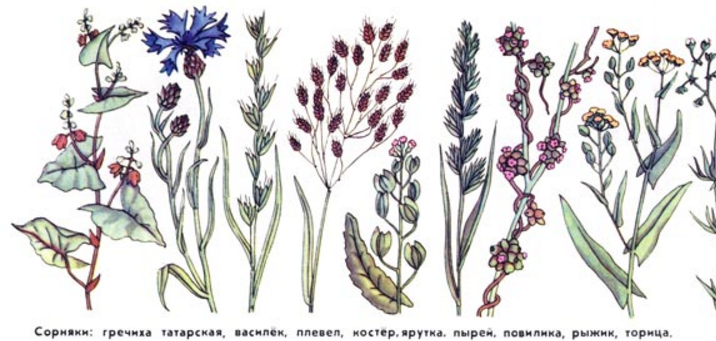

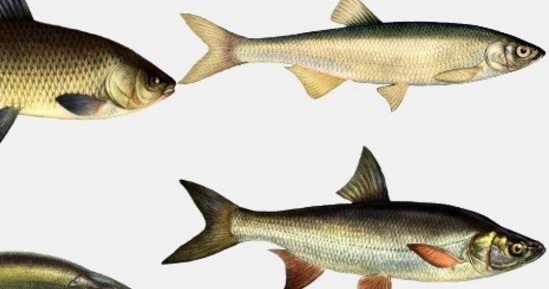


And so on and so forth. As soon as you try to dig, it turns out that literally everywhere we deal with images and literally everywhere we make decisions based on images.
Images of objects are used almost everywhere. It is clear that work on object recognition has accelerated and improved if we could use recognition systems everywhere and always , instead of manually searching for objects in a mountain of books or inviting experts.
There are images. But they are scattered across books and collections. They are not presented in a format convenient for automatic processing. And there are few of them. They are clearly not enough to train a good recognition system.
It's time to introduce you to my model. I am ashamed that for so long everyone has understood so clear things. I understand that there is nothing new in this model. But writing this text helped me formulate the problem. Therefore, I took the liberty of submitting this text to you for discussion.
Any field of science and engineering dealing with visible objects will receive obvious benefits by creating an image database (or database).
Any field of science and engineering dealing with visible objects will receive obvious advantages by creating their own image recognition systems .
It is clear that ready-made specialized recognition systems must be learned to integrate and combine.
And maybe it makes sense to make a ready-made system, a library for creating image databases. To make it convenient, for example, import images, mark them up. But maybe we can do something simpler, like Amazon Mechanical Turk ?
How would my last project be simplified if I had access not only to ImageNet models, but also to ready-made recognition models for ships, boats, kayaks, seaplanes, trucks, cars, bicycles. If all these models could be easily combined.
Generally speaking, the creation of specialized recognition systems would help formalize knowledge regarding the visible side of entities. Narrowly specialized knowledge can be distributed and used quickly, cheaply and efficiently. Expert assessments can be obtained using a smartphone with a camera.
Something important started when Fei-Fei launched the ImageNet project. It looks like a revolution.
On a subconscious level, I was not letting go of one small detail often mentioned in the discussion of ImageNet competitions. Namely, how accurately neural networks recognize dog breeds. There is something about it that resonates with my neural network. And finally, I also realized what many of you understood a long time ago. Now I will try to formulate what I understood.
Dog breeds are a rather narrow, well-developed and very specialized area of our knowledge. To understand the rocks, you need to see and remember a lot of specific details. You need to know a lot of information related to the breeds, for example, the history of breeds, methods of crossbreeding, the basics of genetics. We need to study a lot of books and constantly monitor new information in this area. Moreover, the appearance of the dog, if you can say, its image is crucial for this field of science. Okay, I agree, breeding can be attributed to science with a big stretch. Let’s better say - "is critical to this area of knowledge."
I recently worked on a system for recognizing cars and ships. Using off-the-shelf models that sparkled in the ImageNet competition, I did not get good results. Obviously, ImageNet had significantly fewer ship photos than dog photos.
Where can I find photos of ships? Are these photos collected in any databases or registries? Maybe they were collected, but I could not find them. Another small question sank into my neural network and kept me awake.
A couple of days ago, I again stumbled upon a popular base of images for beginners, on the base of iris flowers. Something clicked in the brain and began to fit into the model.
Knowledge Base and Images Available
Classification is one of the oldest scientific methods. I immediately recall Carl Linney with his unified classification system.
The image of the object in these systems is one of the necessary and most important parts of the classification. This, in essence, is a part of knowledge, a representation of knowledge.
What image bases do scientists, engineers, and specialists need on a daily basis? Let's try to choose at random:
Agronomy, plants
Medicine, bacteria
Fishing, fish
Geology, ores
Biology, insects
And so on and so forth. As soon as you try to dig, it turns out that literally everywhere we deal with images and literally everywhere we make decisions based on images.
The need for image databases
Images of objects are used almost everywhere. It is clear that work on object recognition has accelerated and improved if we could use recognition systems everywhere and always , instead of manually searching for objects in a mountain of books or inviting experts.
There are images. But they are scattered across books and collections. They are not presented in a format convenient for automatic processing. And there are few of them. They are clearly not enough to train a good recognition system.
Model
It's time to introduce you to my model. I am ashamed that for so long everyone has understood so clear things. I understand that there is nothing new in this model. But writing this text helped me formulate the problem. Therefore, I took the liberty of submitting this text to you for discussion.
Specialized Image Databases
Any field of science and engineering dealing with visible objects will receive obvious benefits by creating an image database (or database).
Specialized Image Recognition Models
Any field of science and engineering dealing with visible objects will receive obvious advantages by creating their own image recognition systems .
Combination of specialized recognition systems
It is clear that ready-made specialized recognition systems must be learned to integrate and combine.
Ready-made system for creating image databases
And maybe it makes sense to make a ready-made system, a library for creating image databases. To make it convenient, for example, import images, mark them up. But maybe we can do something simpler, like Amazon Mechanical Turk ?
Dream
How would my last project be simplified if I had access not only to ImageNet models, but also to ready-made recognition models for ships, boats, kayaks, seaplanes, trucks, cars, bicycles. If all these models could be easily combined.
Generally speaking, the creation of specialized recognition systems would help formalize knowledge regarding the visible side of entities. Narrowly specialized knowledge can be distributed and used quickly, cheaply and efficiently. Expert assessments can be obtained using a smartphone with a camera.