Russian Language in IT Interfaces: New Law Requirements from March 1, 2026
Starting March 1, 2026, Article 10.1 of the Consumer Rights Protection Law mandates that all non-advertising public information for consumers must be provided exclusively in Russian. This applies to websites, mobile apps, and SaaS product interfaces—buttons, menus, pricing plans, cookie banners, and more. Rospotrebnadzor has confirmed that online platforms are considered public spaces subject to this rule. The only exception: registered trademarks and product names like Kaspersky or JetBrains remain untranslated.
The law does not apply to B2B communications between legal entities, but SaaS services with subscriptions for individuals fall under scrutiny if their public content targets consumers.
Exceptions for Trademarks
Trade names and trademarks under Paragraph 4 of Article 10.1 of the Consumer Rights Protection Law are exempt from translation. Registration with Rospatent establishes priority from the filing date, with processing taking 10–18 months. However, protection is limited to the Nice Classification classes specified during registration.
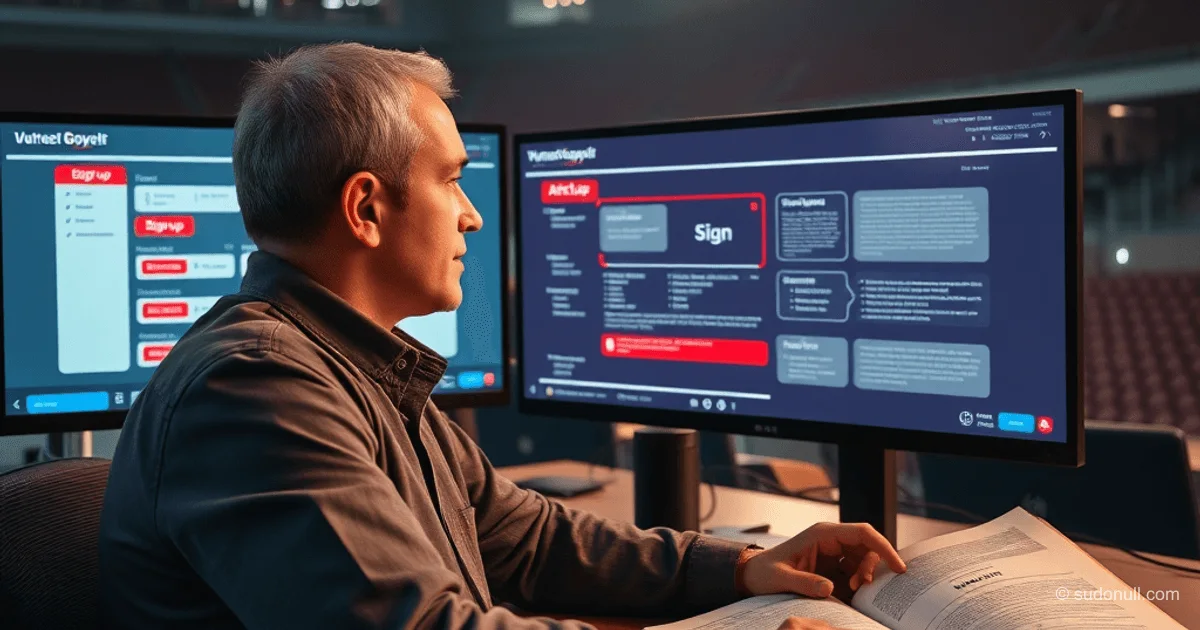
Example issue: A product with an English name as its technical specification, yet over 40 interface elements (Sign up buttons, Features menu, Enterprise pricing) require translation. User-facing text around the brand constitutes consumer information.
Check the registry: expanding product scope into new Nice Classes requires additional registration.
Boundary Between Protected and Translatable Content
Testing on a typical SaaS site reveals common violations:
- Flowtrack logo (trademark) — allowed
- "Sign up for free" button — must have a Russian equivalent
- Features menu — must be translated
- Enterprise plan pricing — must be translated
- Support in footer — must be translated
- Cookie banner "We use cookies. Accept" — must be translated
Stable loanwords from the Russian Language Institute of the RAS dictionary (ruslang.ru) may remain unchanged: digital, networking, tracker. Without dictionary confirmation, terms like dashboard, feature, update must be translated.
URL routes (/dashboard) as technical identifiers are exempt from the law, unlike page titles and headings.
Advertising vs. Information: Different Rules
Advertising content is governed by the Advertising Law and the State Language Law: English text must be duplicated in Russian with identical font, color, and size. Non-advertising content (navigation, instructions) must be in Russian only.
| Content Type | Requirements |
|--------------|------------|
| Advertisement (e.g., "Try Analytics Pro" banner) | Full Russian duplication required |
| Information (e.g., "Features: Real-time dashboard") | Russian only |
| Borderline (promo on landing pages) | Russian primary + optional English |
In integrated systems (Slack, Jira), translate your own UI text (e.g., "Open in Slack"), but leave service names as trademarks.
Risks and Penalties
Violations fall under Part 1 of Article 14.8 of the Administrative Offenses Code: fines of 5,000–10,000 rubles for organizations. If advertising is involved, fines can reach up to 500,000 rubles under Article 14.3. Inspections are triggered by complaints from any website visitor.
Reputational damage often exceeds financial penalties—news about fines for English-only interfaces harms IT brands.
Practical Steps for Compliance
- Trademark Audit: Confirm registration status and Nice Classes; file new applications if needed.
- Text Scanning: Use automated tools to detect Latin characters in buttons, menus, push notifications, error messages; follow up with manual review.
- Glossary Control: Exclude unestablished terms like dashboard.
- Content Segmentation: Ads = bilingual; info = Russian only.
- Documentation: Issue compliance orders, appoint responsible personnel, create internal guidelines.
Automate audits using scripts that scan for Cyrillic vs. Latin character usage for rapid coverage.
Key Takeaways
- Trademarks are protected, but interface text is not—translate buttons, menus, banners.
- Public websites and consumer-facing apps are covered; pure B2B without individual users is exempt.
- Fines are modest (5k–10k rubles), but reputational risk and future enforcement are significant.
- Stable loanwords (tracker, digital) from ruslang.ru can stay in English.
- Advertising must be duplicated; informational content must be in Russian only.
— Editorial Team










No comments yet.