
Cerebras Conducts One of the Largest Tech IPOs, Raises $5.55 Billion
AI chip maker Cerebras priced shares at $185 each, valuing the business at $56.4 billion, competing with Nvidia and Google. Trading is expected to begin on Nasdaq under the ticker CBRS.
Cerebras goes public: what's behind the $56 billion figures and why this is not just an IPO, but a reshuffling of the AI infrastructure market
The Gist: What's Really Happening
On May 14, 2026, Cerebras Systems set its share price at $185. This is not just the top end of a range that was revised twice in two weeks. It's a signal. The market has swallowed the "second Nvidia" story and is willing to pay a 100x premium to revenue. The numbers are impressive: $5.55 billion raised, a valuation of $56.43 billion on a fully diluted basis, and a 20x oversubscription of the order book.
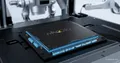
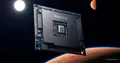
But the real story isn't in the numbers. The real story is the architectural bet the industry is making. Cerebras isn't selling a chip. It's selling the idea that training large models is a thing of the past, and the future lies in inference. And here, its WSE-3 (Wafer-Scale Engine 3) — a monstrous processor the size of an entire silicon wafer, 58 times larger than a standard GPU die — looks like a weapon specifically designed for this war. Nvidia builds its empire on GPU versatility. Cerebras builds its empire on rejecting it.
Timeline and Context: From $115 to $185 in Two Weeks
The timeline of this IPO itself is a diagnosis of market fever. On May 4, the company announced a range of $115–125 per share. That already seemed aggressive for a business with $510 million in revenue in 2025. But institutional demand was so strong that a week later, the range was raised to $150–160, and the offering size was increased from 28 million to 30 million shares. On May 13, the final chord: $185, giving a final valuation double that of the February round ($23 billion).
Behind this acceleration is not just AI hype. It's the systematic work of underwriters — Morgan Stanley, Citigroup, Barclays, and UBS. They skillfully heated up the market, emphasizing two trump cards: a $20+ billion contract with OpenAI and a partnership with AWS, where Trainium works in tandem with Cerebras chips. When the prospectus features the name of the planet's largest consumer of computing power, investors lose their skepticism.
But there's a third factor, discussed more quietly. A few weeks before the IPO, Arm and SoftBank tried to buy the company outright. The deal fell through. The fact of the attempted acquisition became an unspoken signal: "someone very smart wanted to grab this asset before it got more expensive." The market reads such signals instantly.
Who Wins and Who Loses
Formally, everyone wins. Andrew Feldman, CEO and co-founder, turned his stake into roughly $1.9 billion. Early investors got an exit with multiple growth. Underwriters got fat commissions from the $5.55 billion offering. OpenAI gains a capitalized partner capable of providing 750 MW of computing power independent of Nvidia.
But there are losers too, just not on the front pages. Nvidia doesn't lose the market tomorrow — its CUDA ecosystem remains the standard. But every dollar invested in Cerebras is a dollar not invested in expanding Jensen Huang's dominance. It's a strategic erosion, slow and still invisible. AMD and Intel in the AI accelerator segment also get a signal: the window of opportunity is narrowing while everyone watches the duel between Jensen and Feldman.
There's another less obvious beneficiary: Saudi and Emirati funds. MBZUAI, Mohamed bin Zayed University of AI in the UAE, accounted for 62% of Cerebras' revenue in 2025. This is not just a client; it's a systemically important anchor. The Cerebras IPO is also a story of how Middle Eastern capital is financing the diversification of Western semiconductor architecture.
What the Media Isn't Saying
The first blind spot is geopolitical vulnerability. Cerebras manufactures its WSE chips at TSMC facilities. The same fabs, the same logistics, the same risks of a Taiwan crisis as Nvidia. But while Nvidia can maneuver through scale and product line diversification, Cerebras is tied to one product and one architecture.
The second is the problem of customer concentration, which analysts sheepishly call "elevated risk." 62% of revenue from a single customer is not just concentration. It's dependence bordering on a captive contractor business model. If MBZUAI or OpenAI revise their contracts, Cerebras' financial model will crumble.
The third and most important non-obvious insight: this IPO is actually not about chips. It's the IPO of a cloud provider that mimics a hardware manufacturer. In the prospectus, the company clearly indicates a shift from selling systems to providing cloud services based on its chips. This means Cerebras' real competitors are not Nvidia, but Google Cloud, Microsoft Azure, and CoreWeave. And competing with them is much harder than competing with Jensen Huang. They have ecosystems, long-term enterprise contracts, and the inertia of corporate budgets.
The fourth is OpenAI. Yes, the $20 billion contract looks like manna from heaven. But OpenAI's own financial stability remains a topic of debate. The company spends billions, and its path to profitability is unclear. Cerebras has essentially tied its fate to that of the world's largest AI startup, which itself has yet to prove it can be a business rather than a scientific project with an open tap of venture funding.
Forecast: Next 30 Days and 90 Days
30 days. Shares will list on Nasdaq and will likely rise in the first few days. A 20x oversubscription ensures many institutions didn't get enough allocation and will buy more on the secondary market. A short-term spike above $200 is possible. But then sobriety will set in. Early analyst reports with ratings will be cautious — it's hard to recommend "buy" for a company with a P/S ratio near 100 when its main client is also its main strategic risk.
90 days. The key point is the first quarterly report as a public company. If revenue shows growth above expectations and management convincingly talks about new clients beyond OpenAI and MBZUAI, shares will hold above the offering price. If not, a correction will begin, and it will be painful for retail investors who bought on hype.
Strategically, this August-September 2026 will be a moment of truth for the entire AI infrastructure segment. SpaceX also plans an IPO this summer. The two largest tech offerings in the last five years will fall in the same window. The market will either confirm it's ready to finance the next phase of the AI revolution, or it will start segmenting winners and losers much more harshly than before. Cerebras is the perfect trigger for this segmentation. It's not just a company on the exchange. It's a barometer for the entire industry.
— Editorial Team






No comments yet.