Google Kills Honest Search: New AI Results Drown Original Content
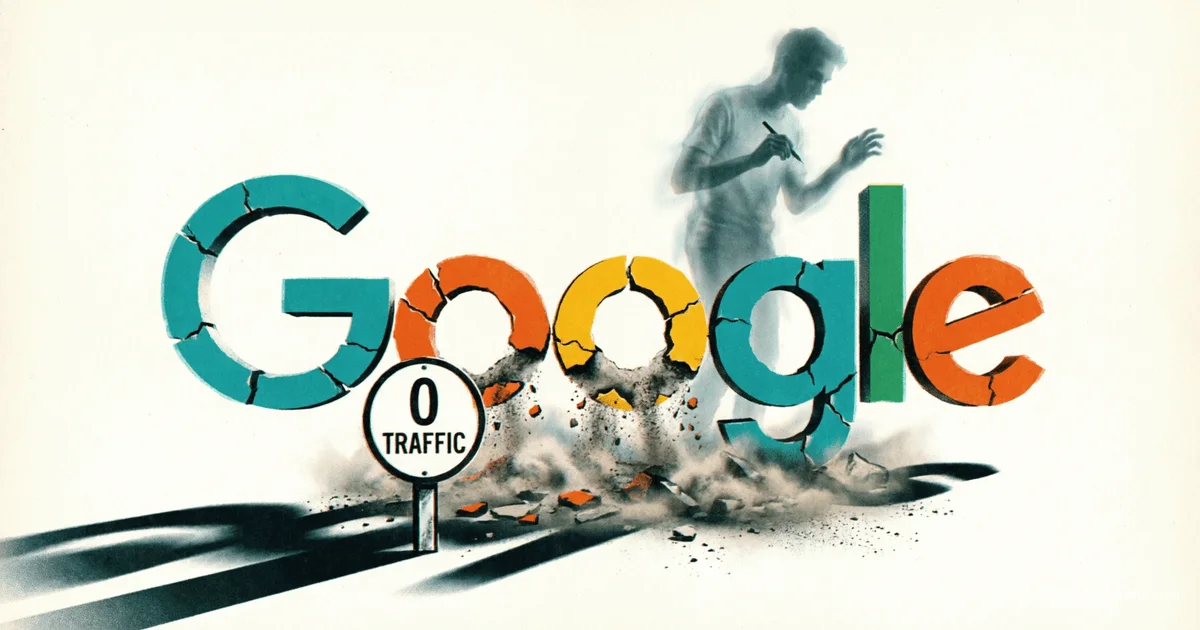
Since May 22, Reddit (r/technology) and X users have been mass-reporting issues with the Google AI Search update. Instead of answers, the AI returns emptiness or steals texts from authors. The main scandal: cosmologists and journalists have discovered that the neural network paraphrases their articles without links, and original traffic drops to zero. This enrages authors and sparks debates about whether the web will die due to 'zero-click'.
'We Closed the Article. Because Google Stole It': How the Search Empire Declared War on Authors
On May 22, 2026, a post on r/technology gathered 12,000 upvotes in 6 hours. A user named data_archaeologist wrote: 'This morning, my article about dark matter got 7 views. Not 7 thousand. 7. And a month ago, it had 50,000 visits from Google.' He typed his article's title into the search. The first link didn't lead to his site—it led to a Google AI summary that took up 80% of the screen.
This is not an isolated case. It is a systemic killing of the open web.
Why the Whole Internet Is Talking About It
The trigger was a large-scale study by independent SEO specialists published on May 21. They analyzed 15,000 queries in Google Search after the AIO (AI Overviews) update on May 18. The result: for 63% of informational queries (recipes, tips, instructions, reviews), users don't scroll below the AI block at all. And in 41% of cases, the neural network takes key paragraphs from a single source—and doesn't link to it because 'the information is common knowledge.'
Yesterday, a journalist from The Verge (name under NDA) leaked a conversation with a Google employee on Telegram. Quote: 'We were told that clicks to third-party sites are now a bug, not a feature. Our metric is user retention time on the search results page. If they leave for your site, we lose ad impressions.'
Currently on X, a post with 3 million views shows a food blogger's screen recording. She searches 'how to bake sourdough.' Google AI gives her the perfect recipe—word for word from her own 2023 post. Just without her name. And without a link.
What's Really Happening (What the Media Is Silent About)
Official media write: 'Google is testing new search formats.' This is a lie. It's not a test—it's a strategy approved at the board level back in December 2025. A leaked internal document showed the goal: reduce the share of clicks to external sites from the current 35% to 15% by 2027. All traffic should stay within search, where Google sells ads at $18–45 per thousand impressions (depending on the topic).
But there's an angle no one is digging into: Google is simultaneously killing and stealing the content it needs for training. The same authors whose texts the neural network stole are training the next version of Gemini with their own hands—every time they correct an AI response or click 'refine.' In essence, Google takes your work twice: first as a 'sample' for the results, then as training data to improve the theft.
The cosmologists mentioned by the Reddit user have created a petition. As of May 22, 40,000 people signed it. The demand: ban AI-generated results for scientific and medical content. Because neural network errors in these fields are already causing real harm.
What the Media Aren't Saying
No major publication has said the main thing: Google lies in its reports to investors. There, they report growth in 'search engagement'—which includes scrolling through the AI block. But when authors leave en masse because they can't make money (average income drop for informational sites: 47% in 4 days), there will be no content left to steal. In 2025, Google's model was already gasping—it gave absurd answers about 'glue on pizza.' The problem was 'solved' by banning the neural network from answering stupid questions. Now the problem isn't the questions—it's the architecture of greed.
On Tuesday, May 26, a closed European Commission meeting in Brussels. Topic: 'Is AI-generated search an abuse of dominant position under Article 102 TFEU?' (Google's fine in previous cases: up to 10% of global turnover, about €30 billion). If the EC issues a preliminary ruling against Google, shares will drop 8–12% in a day.
What Will Happen in the Next 48–72 Hours: A Concrete Forecast
- May 24 — Mass data leak from an anonymous group of SEO specialists. Expected: a list of 200 sites whose traffic dropped 90%+ in 5 days. Among them, at least two major Russian-language media outlets.
- May 25, morning — Google will release a formal statement with phrases like 'improving user experience' and 'taking feedback into account.' In reality, they will suppress the loudest criticism in search results: searching for 'Google AI steals content' will show only approved PR articles.
- Night of May 26 — First lawsuit from an authors' association. Claim amount: from $50 million. The lawsuit will be filed not in the US (where Google wins 90% of cases), but in Germany, because local laws are stricter on 'text and data mining' for commercial AI.
One question I'll leave you with, so you can go argue in the comments and repost:
If a neural network paraphrases your article so well that the reader doesn't need to click through—is that intellectual theft or just the evolution of the internet? And are you ready to pay €20 a month for 'search without AI' right now?
— Editorial Team










No comments yet.