Agents Awaken: LG and Samsung Fill Homes with "Thinking" Appliances
A refrigerator with Google Gemini no longer just stores food—it tracks supplies, and LG TVs now have their own "vision" to adjust the picture on the fly. Samsung aims even further, turning the home ecosystem into a proactive partner that anticipates health issues.
A Refrigerator with Gemini and a TV That Watches Your Waistline: How LG and Samsung Are Turning the Home into a Thinking Organism
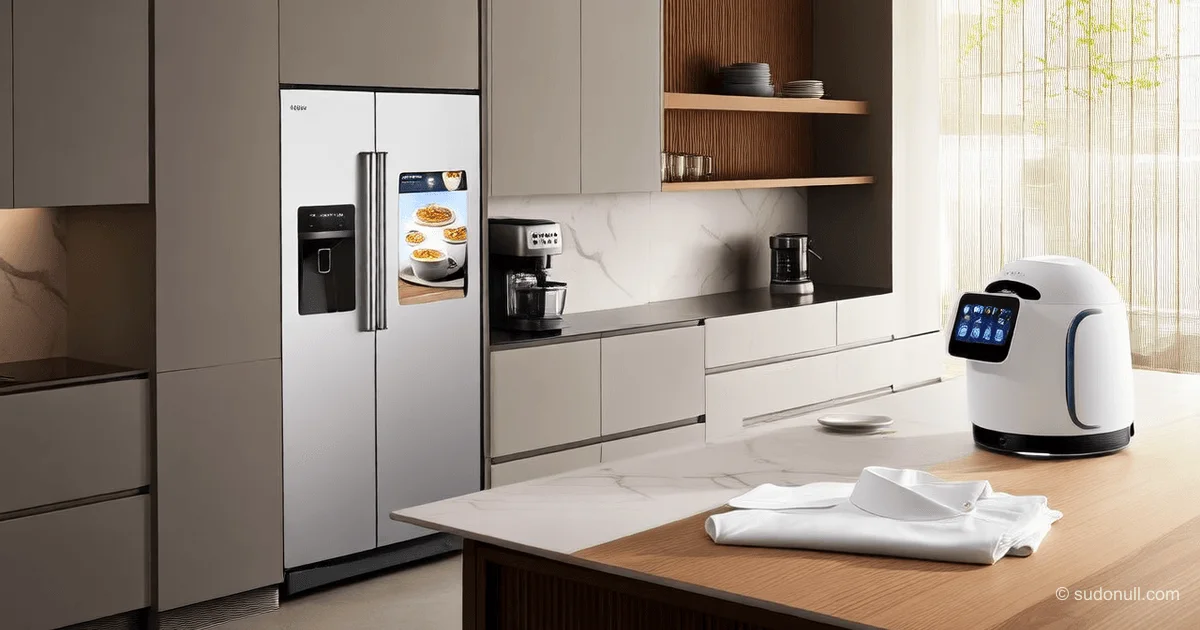
Seven years ago, Samsung unveiled the first Family Hub—and everyone laughed at a refrigerator with a screen. In January 2026 at CES in Las Vegas, the laughter stopped. The new Bespoke AI Family Hub recognizes food through its camera, orders missing ingredients, recommends recipes via the voice command "What's for Today?", and opens its door on request. Under the hood, Google Gemini powers it, making it not just a gadget but a full-fledged kitchen assistant that distinguishes family members by voice and tailors recommendations to each.
Meanwhile, LG launched an offensive under the banner "Zero Labor Home." LG Electronics CEO Cho Joo-wan took the stage with the thesis: AI is moving from "understanding and conversation" to "real action." Their agent, FURON, learns habits, manages the microclimate, and even predicts when the refrigerator door will open two hours in advance to lower the temperature proactively. The battle for the kitchen has entered a hot phase—and language models are the weapons.
A Voice That Knows You by Face: What Came to Las Vegas
Samsung bet on total personalization. The new Bespoke AI Family Hub line runs on Google Gemini and recognizes food without manual registration—the camera identifies items in real time as you place them on the shelf or take them out. The Auto Door function opens the door by voice, and Voice ID distinguishes family members, showing each their own calendar, playlist, and even health metrics.
But the real surprise is hidden in the TVs. Samsung introduced Visual AI Companion (VAC), a system that watches movies with you and suggests recipes for dishes seen on screen. A restaurant scene? The TV asks if you'd like to cook the same thing. Moreover, VAC matches recommendations with your fitness goals. Tech journalist Nick Wood put it bluntly: "Samsung claims VAC can extract recipes for dishes viewers see on TV."
LG countered with the CLOiD robot—a home android with two arms and five-fingered hands that folds laundry and puts away dishes. This is the first time the company has shown a working prototype in the consumer segment. CLOiD is based on its own AXIUM actuator and runs on the "Affectionate Intelligence" system—a pompous name for AI that reads emotions and adapts behavior.
ThinQ On: The Brain That Will Live in 10,000 Apartments
While Samsung focuses on individual devices, LG builds an ecosystem around the ThinQ On hub. This sphere with a speaker is not just a voice assistant speaker. It understands context, remembers life patterns, and controls all home appliances through natural language.
The command "Turn off the AC, start the robot vacuum, and turn on the dehumidifier in an hour" is not a demo script but a real scenario. ThinQ On executes command chains, distinguishes rooms ("turn off the light in the bedroom"), and integrates with residential complex infrastructure.
In March 2026, LG announced numbers: ThinQ On is already working in 10,000 apartments of Posco E&C's The Sharp brand. Another 300,000 households use the "Our Complex" service—it calls the elevator, checks parking, manages heating and ventilation, shows a visitor log, and books common areas. All by voice, without an app.
Noh Bum-joon, head of HS AI Home Solution development at LG, called this "an optimal spatial experience" and stated that the company is accelerating its entry into the B2B construction market. The bet is clear: developers get not just built-in appliances but a ready-made intelligent environment that residents activate by voice from the doorstep.
Samsung Weaves Health into the Ecosystem
If LG goes B2B through developers, Samsung paves the route through health. At CES 2026, the company announced that all Galaxy devices and home appliances unite into a single "AI companion for everyday life." Roh Tae-moon, president of Samsung's DX division, promised to embed AI into everything—from smartphones to washing machines.
The key bet is predictive health. The Family Hub refrigerator now generates a weekly FoodNote report: which foods you eat most often, what's running out, and what consumption patterns have formed. The system analyzes your diet and suggests recipes aligned with fitness goals. This is not a gadget; it's a dietitian with access to your grocery cart.
Samsung also announced AI Hybrid Cooling—a cooling system that adapts to usage patterns and optimizes energy consumption. Plus xenon sterilization. Plus an AI Wine Cellar with a camera that recognizes labels and tracks bottles as they are added or removed.
Whose Ecosystem Will Survive: Stakes for the End of the Decade
The Samsung vs. LG battle is not a war of refrigerators. It's a war of smart home standards.
LG builds an open ecosystem around ThinQ On with support for the Matter protocol, which unites devices from different brands. FURON, the company's generative AI agent, integrates with appliances from Samsung, Bosch, and other manufacturers. The bet is on compatibility and B2B integration with developers.
Samsung locks users into its own world: SmartThings, Bixby, Galaxy, Family Hub. 400 million devices annually create a gravitational field that's hard to escape. But the entry fee is brand loyalty. If your refrigerator, phone, watch, and TV all speak the same language, switching to a competitor's ecosystem becomes a digital divorce with asset division.
From a user perspective, 2026 is a turning point. Voice control is no longer a novelty. A refrigerator that orders milk on its own, a TV that knows your cholesterol, and a robot that folds T-shirts are no longer concepts. They are products with specific delivery dates and prices.
The main question is privacy. For the refrigerator to know what you eat and the TV to know what you watch, they need continuous data access. LG and Samsung promise on-device processing and encryption. But when your vacuum, oven, and washing machine transmit data to the cloud, the attack surface grows exponentially. Regulators are silent for now. But that silence likely won't last long—especially in Europe, where GDPR is already sniffing around IoT.
By 2030, the line between a developer product and a consumer gadget will disappear. You will choose an apartment not by square footage but by whose AI brain runs it—Samsung, LG, or someone else. And yes, by then, the refrigerator will have completely stopped being just a refrigerator.
— Editorial Team










No comments yet.