
Microsoft Unveils Project Solara — OS-Free Devices Powered by Qualcomm and MediaTek Chips
As part of the 'era of agentic AI,' the company showcased prototypes of a wearable badge and a desktop assistant, controlled directly by AI agents through the cloud, without traditional apps or an operating system.
Headline: Inside Scoop: Microsoft's Project Solara. It's Not Just 'OS-Free Devices' — It's the End of the Windows and Apps Era
When Satya Nadella walked on stage at the Build conference on June 2, 2026, wearing a small badge around his neck and holding a desktop 'tablet,' he wasn't just announcing new gadgets. He was announcing the end of the world we've lived in for the past 40 years — the world of apps, operating systems, and 'installing software.'
Project Solara isn't about hardware. It's about the death of the screen as the primary interface. And the biggest insight that 99% of journalists missed is this: Solara is not based on Windows, but on Android (via MDEP — Microsoft Device Ecosystem Platform) . Microsoft, the company that made trillions on Windows, is building its future on Google's open source code. This isn't just a partnership. It's a capitulation to reality: for an 'agent-first' world, Windows is too heavyweight.
[The Core]: What's Really Happening
The official narrative is both beautiful and terrifying. Microsoft claims we are entering the era of 'agentic AI' (Agent-first). This means you no longer open apps (Excel, Teams, Photoshop). You simply speak a task, and an AI agent (Copilot, Researcher, Facilitator, Priority Agent, or any third-party one) solves it for you.
The media writes about 'no OS' and 'reference designs' from Qualcomm and MediaTek. But the essence runs deeper. This is an existential defense of Microsoft's business.
What's happening now? The entire development world is moving to the cloud and the browser. Local Windows installations are dying. The laptop is turning into a 'window' to the cloud (Windows 365). If Microsoft does nothing, their role will be reduced to making 'empty boxes' with monitors. So they created Solara — a physical 'gateway' to their cloud AI services.
The essence of the deal: Microsoft no longer sells you an operating system. They sell you a subscription to intelligence, physically embodied in a cheap badge with a microphone and camera. A $50 badge (cost price) secures an Azure Copilot contract for $30 per employee per month. A brilliant business model: the hardware is just the 'key' to the money machine.
Why Android? Because there are virtually no ARM drivers for Windows. Qualcomm and MediaTek have been optimizing their chips for Android for 10 years. Microsoft took AOSP (Android Open Source Project), layered its Intune and Entra ID security on top, called it MDEP, and got a ready-made infrastructure 'out of the box.' Why reinvent the wheel when you can take someone else's and paint it corporate gray?
Timeline and Context
This deal has been brewing for years, with roots in past failures.
December 2019: Microsoft kills Windows Phone. Reason: lack of apps. They learned the lesson: never again try to build an ecosystem from scratch alone.
May 2024: Microsoft introduces the 'Windows Copilot Runtime' concept. But it's an attempt to glue AI onto an old OS. It doesn't work.
April 2025: Chinese startups like Xiaomi and Honor launch smart rings and badges with AI. The 'wearable AI' market starts to boom.
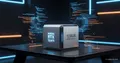
June 2026 (Build 2026): Microsoft shows Solara. They have two prototypes: Desk Concept (desktop stand on MediaTek) and Badge Concept (wearable badge on Qualcomm with 5G, camera, and fingerprint sensor).
Wait. Why Qualcomm and MediaTek specifically? Because Intel and AMD slept on energy efficiency. A device that hangs around your neck can't heat up like a laptop. It needs chips from the 'mobile' world, where TDP (thermal design power) is measured in watts, not tens of watts. Intel lost this race before it even started.
A key contextual element is Just-in-Time UI (interface generated on the fly). This technology boggles developers' minds. Before, you designed a button for iPhone and for iPad. Now, the agent itself decides how to display information on the small badge screen, the medium desk stand screen, or the large monitor via Windows 365. Microsoft tells developers: 'You no longer need to think about interface design. AI will do it all.' This sounds like paradise for the user, but a nightmare for the designer.
Who Wins and Who Loses
Winner #1: Qualcomm and MediaTek. They received Microsoft's 'blessing.' This isn't just a chip supply contract for badges. It's a certification of their architecture as the 'standard for agentic AI.' Now any manufacturer of smart glasses or badges will come to them. MediaTek stock (2454.TW) rose 7% the day after the announcement.
Winner #2: Microsoft Azure. Every badge means constant voice and video streaming to the cloud. That's load that enterprises pay for. Solara is a 'Trojan horse' for Azure. Agents live in the cloud. The more badges, the higher the consumption.
Winner #3: CVS Health, Best Buy, Target, Levi's. These companies will be the first to get free access to the technology (as part of a pilot program). They can optimize cashier and nurse workflows without paying for R&D. That's a huge competitive advantage for 6-12 months.
Loser #1: Apple. This is the biggest and least obvious loser. Apple Watch still tries to be a 'computer on the wrist' with a bunch of apps. Microsoft says: 'Throw away the apps. Just talk into the badge.' Apple loses the narrative. They have no agent strategy that doesn't depend on Siri (and Siri, as we know, is hopelessly behind). If the market embraces Solara, Apple Watch will become just an expensive fitness tracker.
Loser #2: Google. The irony. Microsoft uses Android to destroy Google's business model. Enterprise users switch to Solara (MDEP), which has no Google services (no Play Store, no Gmail, only Microsoft 365). Google faces a split in the Android ecosystem: 'consumer Android' (with Google services) and 'enterprise MDEP' (with Microsoft services).
Loser #3: Mobile app developers. Their profession is dying. If Just-in-Time UI becomes a reality, why write a native program? Just describe a task for the agent. The job market for iOS/Android developers will collapse within 3-5 years. The first to be hit are developers of simple utilities (calculators, notes, weather). Complex games and video editors hold on for now, but they too are at risk.
Unexpected Loser: Amazon. Alexa was a pioneer in voice assistants, but Amazon couldn't turn it into an 'agent.' The Echo Show lacks calendar and email (only Microsoft and Google have that). Microsoft embedded Copilot directly into the device's OS. Amazon is left with a smart speaker that can't do complex work for you.
What the Media Isn't Saying
First and foremost: 'No OS' is a lie. It's Android, and that's a security problem.
Microsoft calls Solara 'OS-free devices' because the user doesn't see a desktop. But technically, it's a stripped-down Android. This means Solara inherits all Android vulnerabilities (and there are hundreds — remember Stagefright, BlueBorne, etc.). Microsoft adds Intune and Entra ID on top, but the kernel remains Google's. If hackers find an exploit in the Linux kernel (on which Android is based), they gain control over all Solara badges in a hospital. Imagine 10,000 badges start recording doctors' conversations and sending them to attackers. Microsoft is silent about this.
Second silence: privacy. The badge is always listening. It waits for commands. In the office, that's 'convenient.' At home, it's 'spyware.' Microsoft claims data is encrypted and goes only to Azure. But what guarantee is there that Azure isn't 'accidentally' listening? In Europe, that's a direct path to GDPR fines. CVS Health (pharmacy, patient medical data) signed up for the pilot. Are they crazy? Or do they know something we don't? Possibly Microsoft promised a physical microphone 'kill switch' (hardware kill switch), but that wasn't shown in demo videos.
Third insight: lack of ecosystem. Solara has no apps. But app developers have no incentive to switch to agents. It's a chicken-and-egg problem. Microsoft's solution: they simply ban apps. You can't install Spotify or Uber on Solara. This is a deliberate limitation. They hope agents can call these services' APIs without a UI. But Uber won't give Microsoft free API access. Revenue-sharing negotiations will begin. That will take years.
Fourth and most terrifying insight for Microsoft: competition with its own Windows.
If Solara becomes successful, why would people need Windows? After all, the agent on the badge can control Windows 365 through the cloud. The user sees a 'thin client' (monitor + keyboard), while the brain is in the cloud. The Windows team at Microsoft will fight for survival. Already, a cold war is brewing inside the company: 'Windows Division' vs. 'Cloud + AI Division.' Project Solara is a weapon of mass destruction aimed at the backs of their own colleagues. Satya Nadella is betting on the cloud. If Solara takes off, Windows will become obsolete legacy within 5-7 years.
Forecast: Next 30 Days and 90 Days
Next 30 days (through early July 2026).
A wave of criticism from security experts will begin. Articles like 'Solara — Microsoft's Spy Android' will appear. Microsoft stock (MSFT) may correct 1-2% short-term amid FUD (Fear, Uncertainty, Doubt).
However, within the corporate sector, a frenzy will start. Target and Best Buy will publicly confirm their pilots. This will drive demand for Qualcomm stock (QCOM). Expect a 3-5% rise within 30 days on news of 'Microsoft's breakthrough in wearable AI.'
Next 90 days (September 2026).
Microsoft will release the Solara SDK (Software Development Kit) for developers. It will allow any company to create their own agent for Solara. But the market will react skeptically — developers don't know how to monetize agents. There's no 'buy app' model. Only an Azure subscription. Small startups will be afraid to invest.
China will respond instantly. Xiaomi and Huawei will announce their 'smart badges' based on HarmonyOS with built-in agents based on DeepSeek or their own LLMs. The price will be $99 vs. a potential $199 for Microsoft. Chinese devices won't have access to Microsoft 365, but that doesn't matter for the Chinese market. The world will split into two zones: 'Microsoft agents' and 'China agents.'
Main takeaway on June 5, 2026: At the Build conference, we witnessed the 'Strelkovitsky moment' for the digital industry. Microsoft officially declared apps dead. The 'Touch' era (iPhone, 2007) has given way to the 'Talk' era (Solara, 2026). It's as frightening and exciting as the invention of the browser. And the funniest part — this new world runs on batteries and an old Linux kernel. And Satya Nadella wears a badge around his neck that records his every step. Welcome to the future. It won't shut up.
— Editorial Team








No comments yet.