OQC Raises $350M in Europe's Largest Round to Expand Quantum Systems
British startup OQC closed a Series C round of £260 million ($350 million), the largest private investment in quantum computing in Europe. The company plans to expand its systems in the US, Japan, and Spain, targeting the financial and defense sectors.
Inside: OQC Wins $350M. It's Not Just a Deal, It's a Map of the New 'Cold War' in Quantum
If you open TechCrunch or Bloomberg, you'll see the standard story: 'British startup OQC raised $350M in a Series C round, becoming the most valuable quantum project in Europe.' A nice number, grand words about 'British quantum coming of age' from CEO Gerald Mullally.
But let's be honest. This isn't a story about money. It's a story about how the era of 'toy qubits' ended and a fierce race to deploy physical infrastructure in data centers began. And this race has winners, losers, and one very non-obvious insight that press releases are silent about.
[The Core]: What's Really Happening
The quantum computing market has undergone a phase transition. For the last 5 years, everyone competed on the number of qubits in frozen labs. Google and IBM played 'who has more,' the Chinese churned out photonic chips. That was scientific prototyping. The OQC deal is a signal that investors no longer pay for quantum volume records. They pay for deployment.
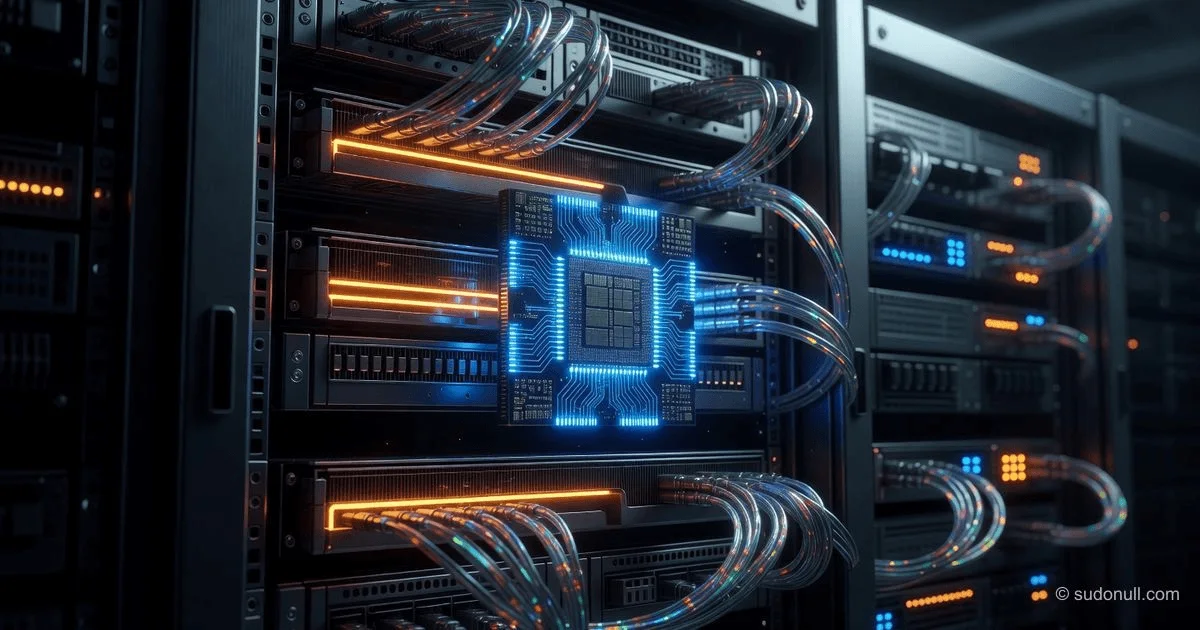
OQC got the money not because they have some incredible physics (though their Coaxxon architecture with vertical control is indeed elegant). They got the money because they already have contracts with Mastercard for fraud detection (yes, quantum already beats classical RNNs in specific tasks) and with QinetiQ for defense. Investors didn't buy a quantum computer; they bought a quantum service that plugs into a data center rack next to NVIDIA DGX.
The media writes 'expansion in the US, Japan, Spain.' In insider slang, this means: OQC is quietly signing deals with Five Eyes governments and their partners. Spain here isn't about beaches, but about the European defense cluster. Japan is about Toshiba and SoftBank, who fear falling behind in the race. The US is, of course, the Pentagon and hedge funds in Manhattan.
What's the point? We've stopped guessing 'will a quantum computer work.' We've started dividing the world into quantum-safe and quantum-vulnerable zones. And OQC is now planting its 'quantum flags' precisely at the points where the future of global security and finance is decided.
Timeline and Context
To understand the scale, look at the macro trend of the last 72 hours. While we discussed OQC, two events happened in parallel: French Quobly closed €115M with support from STMicroelectronics, and the German government confirmed a €3B course for quantum with the goal of a 100-qubit machine.
Previously, Europe lagged behind the US in deep tech venture capital. PitchBook data from June 2026 shows a turning point: in one year, €872M of quantum investments flowed into Europe — already two-thirds of the total for all of 2025. The OQC round is the tip of this iceberg.
But there's a chronological nuance here. Look at OQC's previous rounds. Before this, they had about $150M total. That was enough for prototypes and first installations in London and Tokyo. The current $350M is money for scaling failure. The engineering truth: quantum computers are very fragile right now. A Series C of this size means OQC is confident it has solved the coherence time problem and is ready to churn out not prototypes, but enterprise hardware.
Context: exactly one year ago (2025), everyone was looking at American giants. Now, Europe, through the caliber of OQC and Quobly, shows it doesn't want to be a raw material base for IBM or Google. Europe is building its own 'quantum Schengen' — from Spain to Finland (IQM), where equipment is certified to local security standards. This is a key point explaining why British Business Bank participated in the deal — it's not just an investor, it's a political shield against American acquisition.
Who Wins and Who Loses
Winner #1: Bullhound Capital. They brokered this deal. But their success is secondary. The main winner is Chevron Technology Ventures. Yes, the oil giant. They were already investors. Why is Chevron a genius? Because quantum simulations of molecules are the Holy Grail for creating new batteries, fuels, and catalysts. Chevron invested in OQC 2 years before it became mainstream. Now that OQC is valued at several billion (after this round, valuation definitely exceeded $1.5B), Chevron sits in the front row.
Winner #2: Nvidia. You think they have silicon? No, they have an ecosystem. OQC is building 'Quantum-AI Data Centers' where a quantum coprocessor works in tandem with HPC and AI. In such a setup, the controlling classic is Nvidia. Every sold OQC quantum computer drives sales of dozens of GPUs for hybrid algorithms.
Loser #1: Chinese projects like Origin Quantum. They face difficulties. While OQC integrates with Mastercard and Western banks, Chinese quantum (e.g., Origin Wukong) is locked in the domestic market. Western investors will now only invest in 'safe' jurisdictions. OQC uses this as a trump card: 'Our quantums have no backdoors from Beijing.'
Loser #2: 'Pure' software quantum startups. Money has gone into 'hardware-as-a-service.' If you don't have a physical chip in a data center, at this stage of the race you've become uninteresting. The strategy 'we'll write software for any hardware' failed because hardware is still too raw and diverse. Now vertical integration wins.
What the Media Isn't Saying
The main insight I don't see in any press release is the specific 'Dimon' architecture and preparation for PQC (Post-Quantum Cryptography).
Officially, OQC sells speed. Unofficially: the entire deal is tied to the panic around 'SNDL' (Store Now, Decrypt Later). Intelligence agencies worldwide know: a quantum computer capable of breaking RSA will appear in 5-7 years. But that doesn't mean adversaries aren't recording all your encrypted traffic right now.
Note: OQC's board includes Sir Jeremy Fleming, former director of GCHQ (British intelligence). The media writes about 'defense sector' but doesn't elaborate. The essence is that the $350M investment will go not just to boxes, but to creating a global network of quantum-secured communication channels (QKD) and testbeds for breaking cryptography. OQC is a weapons factory in the encryption world.
The second silence is about competition with Microsoft. Both companies are betting on cloud integration. Microsoft is building its own quantum computer (Majorana 2, which is 1000 times more reliable), but it's still in the lab. OQC says: 'I already have hardware in New York.' And that hardware works via API. This round is a response to Microsoft: 'You build theory; we, OQC, sell practice.'
The third omission: talent shortage. In London and Oxford, high-level experimental physicists are few. OQC announced scaling to 4 countries. This means they'll start 'headhunting' at CERN, IBM Zurich, and even competitors like Rigetti. In the next 30 days, we'll see a series of high-profile moves of top engineers, directly impacting the stocks of public quantum companies.
Forecast: Next 30 Days and 90 Days
Next 30 days:
Expect official announcements from Amazon Web Services (AWS). OQC is already available via the cloud, but after this round, they must sign an exclusive for some region (likely Europe). Also watch for IBM's reaction. In an attempt to seize the initiative, IBM will announce new commercial contracts in London's financial sector. Forecast: Volatility in D-Wave (QBTS) and Rigetti (RGTI) stocks on NASDAQ will increase. Traders will see the European threat and start taking profits in American counterparts.
Next 90 days:
A reassessment of 'quantum nationalism' will occur. After OQC's money hit the accounts, Japan (SBI Holdings, already in the round) and Spain (COFIDES) will activate their national quantum programs. News will emerge about the creation of a 'Quantum NATO' — an alliance for standardizing quantum communications between the US, UK, Japan, and Israel (oh yes, QuamCore from Israel is also in the game).
Additionally, OQC will announce a specific product for biotech. Currently, they talk about finance and defense. But protein simulation for drugs is the most expensive niche. In 90 days, we'll see a partnership with Big Pharma (Pfizer or Roche) to launch a hybrid quantum-classical molecular simulator, which will tank the stocks of old supercomputer companies.
The main takeaway from this deal: we bought a ticket to a world where quantum power becomes a commodity, like electricity. And Oxford beat Silicon Valley on this field. While investors were distracted by AI chatter, the British quietly installed their quantum cannons at the world's main digital crossroads.
— Editorial Team






No comments yet.