Rare Solar Event GLE 77 Recorded by MEPhI Detectors
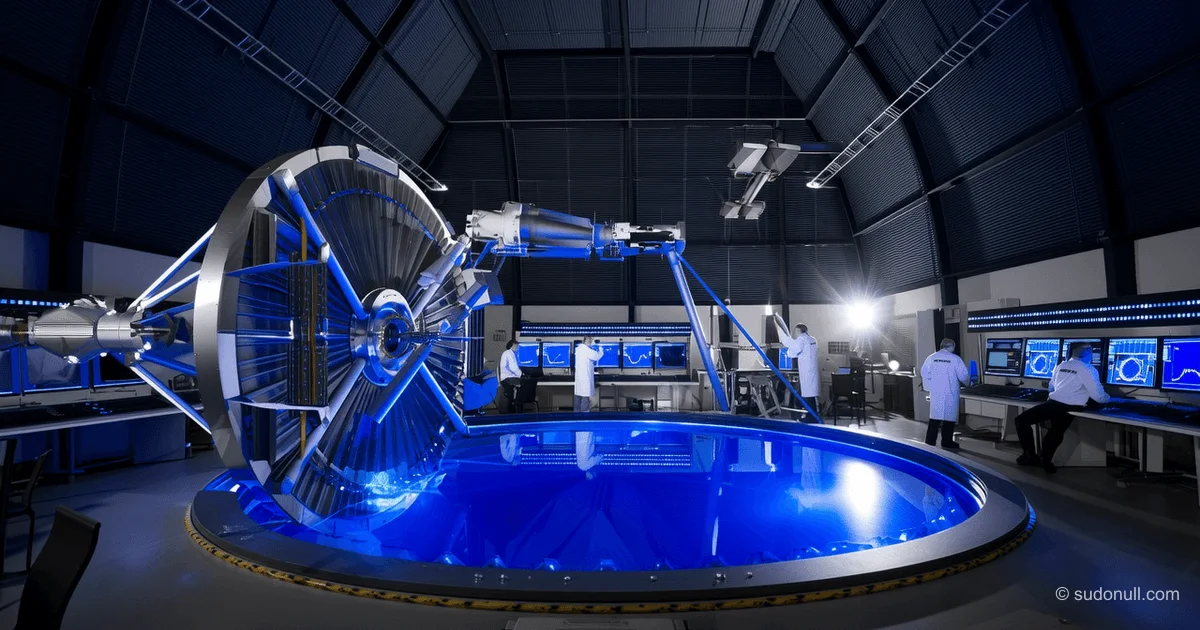
The NEVOD experimental complex at MEPhI has recorded a GLE 77 cosmic radiation burst for the first time. This is the first instance in history where such a phenomenon has been detected by instruments designed for fundamental rather than applied research.
Behind the registration of GLE 77 on the NEVOD detectors at MEPhI is not just a successful experiment, but an event capable of changing the rules of the game in the multi-billion dollar space safety market. While news feeds are filled with headlines about a "first-ever recorded burst," I see how a Moscow laboratory, without firing a single shot, is entering territory that the US and Europe considered their monopoly.
The Essence: What Is Really Happening
In November 2025, the detectors of the NEVOD complex captured GLE 77—a ground-level enhancement of cosmic ray flux caused by an X5.1 class solar flare. Formally, this is a story about fundamental science: installations built to study atmospheric showers unexpectedly proved to be an ideal tool for recording solar events. The neutron count increase on PRIZMA-36 was 20%, on URAN—24%, which almost perfectly matched the readings of the standard neutron monitor at the Moscow station.
But the point is not the percentages. The point is that this result is a bid to create a full-fledged national space weather monitoring system. The GLE 77 event was recorded by two independent installations, totaling 108 neutron detectors. This means that MEPhI has a working technology for extracting the neutron signal from background noise—thanks to a specialized scintillator that produces flashes of different durations for neutrons and charged particles. The detector electronics can filter out background interference and isolate interactions caused specifically by neutrons. This is a key technical barrier that many Western groups could not overcome.
Timeline and Context
The timeline of the event is known to the minute. The GOES satellite recorded the start of the flare at 09:49 UT, with the peak at 10:04 UT. By 10:10 UT, ground-based instruments began registering a response. The intensity increase at the MEPhI installations began almost synchronously, with maximum values reached about an hour and a half after the start. Meanwhile, in Antarctica, at the SOPO station, instruments showed background levels exceeding 100%. Such a geographic distribution of particles provides unique data on the structure of the solar ejection.
Several factors create the context here. First, GLE events are rare. Suffice it to say that the previous large-scale GLE was analyzed using data from 2006, when the MEPhI muon hodoscope recorded an event on December 13. Second, simultaneously with MEPhI, the GLE 77 event was studied by Indian researchers from the Physical Research Laboratory, who published their results in the journal Space Weather. They used ground-based gamma detectors in the Arctic and Antarctic and recorded GLE simultaneously in both polar regions for the first time. However, the Indian group worked specifically on applied monitoring installations, while MEPhI used a fundamental instrument. That is the main intrigue.
Who Wins and Who Loses
MEPhI as a scientific organization wins. The registration of GLE 77 is a ticket to the club of global space weather centers. A paper in the Astrophysical Journal provides academic legitimacy, and the technical demonstration of capabilities opens the door to applied contracts. The estimated cost of a full-fledged monitoring system based on NEVOD technology could be $50–80 million, and part of these funds will almost certainly be requested from the state budget.
Roscosmos and related structures win. The emergence of a national tool for monitoring solar activity removes dependence on NOAA and ESA data. This is critically important for human spaceflight programs: the crew in orbit must receive radiation hazard warnings from their own ground-based services, not from a potential adversary.
European and American operators of neutron monitor networks lose. The global neutron monitor network has been distributed for decades but controlled by Western institutions. The emergence of a completely independent node with comparable or better sensitivity erodes this monopoly. If MEPhI's technology is scaled, other countries may purchase Russian detectors instead of Western counterparts.
Insurance companies and satellite operators lose. The paradox is that improved monitoring initially increases costs: when accurate data on the frequency and intensity of GLE events becomes available, insurance rates for satellites are recalculated upward. The space risk insurance market, worth about $500 million per year, may experience a shock from the reassessment of probabilities.
What the Media Are Not Saying
Insider: GLE 77 is a test of dual-use technology, and the military knows it.
No one writes about this directly, but an installation capable of distinguishing neutrons from charged particles and recording a short-term burst against the background of a constant cosmic ray flux is essentially a ready-made element of a nuclear event detection system. A neutron burst arises not only from a solar flare but also from a nuclear explosion. The signal separation technology developed on PRIZMA and URAN is exactly what is needed for monitoring compliance with nuclear test ban treaties. And the formal pretext—"studying space weather"—allows this technology to be developed without regard to international inspections.
The second point that is being hushed up is the cost. The creation and maintenance of the NEVOD complex costs an amount comparable to the annual budget of a small university. However, if this cost is recalculated in terms of "price per recorded particle," the Russian installation turns out to be several times more efficient than Western counterparts. This economic argument will be decisive when negotiations on detector supplies abroad begin.
Forecast: The Next 30 Days and 90 Days
Next 30 days. We will see at least two events. First, the publication of additional data from MEPhI with a detailed analysis of the GLE 77 particle spectrum. Most likely, emphasis will be placed on the "dual nature" of the event, where the increase was recorded simultaneously by two different installations. Second, the appearance of comparative studies from the Indian group, comparing the capabilities of gamma detectors and MEPhI's neutron technology. The scientific community will begin to discuss which method is more promising for creating a global warning system.
Next 90 days. By August 2026, I expect two key turning points. The first is commercialization. MEPhI will likely announce plans to create a network of detectors across Russia and offer the technology to foreign partners. The estimated cost of one node of such a network is $2–4 million. The second turning point is military. If the NEVOD complex indeed has the capabilities I mentioned above, we may see a sharp reduction in public activity around this topic and a shift of research to a closed mode. Watch the tone of publications: if details start to disappear, it means the technology is moving into practical application. And that is a completely different story, where science gives way to national security.
— Editorial Team










No comments yet.