Chinese Xynova Unveils Robotic Hand with 'Reflexes' and 23 Degrees of Freedom
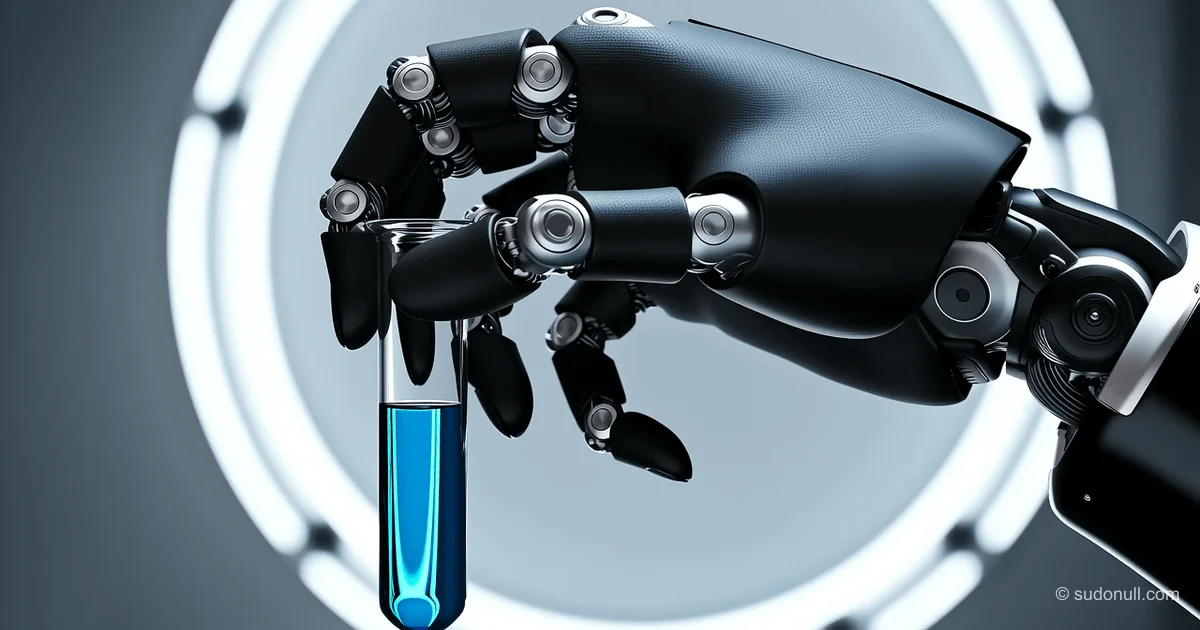
A new robotic manipulator that mimics the human hand has been developed. The device has 23 degrees of freedom and can perform reflexive movements, approaching the functionality of a human hand.
The Xynova Flex 2 is not just another piece of hardware from China. It's a moment when abstract talk about a 'machine uprising' takes on a tangible, anatomically precise form for $14 million. As someone who tracks robotics supply chains, I see not an engineering breakthrough here, but a cold, calculated business strike at the weakest link of the humanoid industry: the end-effector, which until yesterday was frankly pathetic.
The Core: It's Not a War for Brains, but for the 'Last Centimeter'
While the general public is mesmerized by AI learning to write poetry and code, a much more brutal and quiet war is raging inside the industry. It's a battle for the 'last centimeter' (in Xynova's terminology) or the 'last mile' between digital intelligence and the physical world. A robot's brain (Nvidia, OpenAI, DeepMind) can be as brilliant as it wants, but if the 'hand' can't pick up a fragile test tube, tie a knot, or carefully insert a chip into a connector, such an android is worthless.
With its 23 degrees of freedom (down from 25 in the Flex 1) and a claimed full-closure time of 0.5 seconds (twice as fast as its predecessor's 0.6 seconds), the Xynova Flex 2 is not just an improved version. It's a manifesto. The company deliberately sacrifices two degrees of freedom for speed and reliability, signaling that the race for numbers in spec sheets is over. The race for integration into real production has begun. That's why the news hammers on 'reflexes': it's not that the robot has become faster to react; it's that Xynova's engineers have embedded algorithms into the controller that render non-adaptive gripping hopelessly outdated.
Timeline and Context: From Lab Toy to Shovel for a Gold Rush
To understand the significance, rewind just one year. In 2025, the market for humanoid robot components was a swamp: hundreds of startups churned out prototypes with 12–17 degrees of freedom that fell apart after 20,000–30,000 cycles.
Xynova's breakthrough didn't happen today. As early as 2026, it became known that the company had received orders for 10,000 (ten thousand!) highly dexterous hands from leading robot manufacturers, including entities affiliated with Xiaomi and CETC. This is a key insight that most media miss. A firm order for 10,000 units means that major players (likely Xiaomi CyberOne or someone on the level of BYD) have already chosen this platform as the standard for their future lines.
In parallel, Xynova is building a 5,000-square-meter factory with a planned capacity of 10,000 dexterous hands and 200,000 micro-electronic cylinders per year. Launch is scheduled for Q2 2026. The fact that we are seeing the Flex 2 now indicates that the factory lines have been debugged and are ready to ship commercial products with minimal defect rates.
Who Wins and Who Loses
Winners: Micro-electronic cylinder manufacturers. Xynova correctly bet on vertical integration, but the explosive growth to 200,000 cylinders per year will put pressure on raw material suppliers (special magnets, precision bearings). Companies trading in these raw materials will reap super-profits.
Winner: Xiaomi. As a strategic investor that increased its stake in the latest round, Xiaomi gets exclusive or priority access to the most critical component for its future robot. This gives them a 6–9 month advantage over those who will be queuing for these hands.
Losers: Xynova's competitors. For example, the fairly established company Yinshi Robotics, whose products in 2023 cost 50,000 yuan (about $7,000) per unit. Thanks to scaling, Xynova will drop the price of the Flex 2 below its competitors' production costs. This is classic investment-driven dumping to capture market share.
Losers: Manufacturers of 'dumb' grippers. Traditional industrial grippers for simple pick-and-place operations will become a niche product for frankly poor lines. All automation requiring manipulation of non-standard objects will shift to anthropomorphic solutions.
What the Media Isn't Saying: A Non-Obvious Insight
Insight: The target for the Xynova Flex 2 is not the factory, but your home. And that's a problem.
All media are now writing about industrial IoT and logistics. But look at the specs: peak load up to 12 kg, continuous load 4 kg. Why would a conveyor assembly line need such a powerful, fast, and reflexive hand capable of 1.5 million cycles? That's overkill for tightening nuts.
The true goal, whispered in the corridors, is service robots for nursing homes and cleaning. Robots spend 80% of their computing power dealing with domestic chaos (crumpled clothes, fragile dishes, slippery soap). The Flex 2, with its slip sensors and reflexes, offloads this problem from the central processor to the periphery. Investors are pouring $14+ million not into a factory tool, but into creating a mechanism that can safely wipe a bedridden patient without breaking bones, and at the cost of a budget smartphone. That's where the $96.7 billion market by 2032 lies.
The second point is connector standardization. Xynova is pouring huge resources into 'micro-electronic cylinders.' Essentially, they are creating the USB connector of the robotics world. If their cylinder becomes the de facto standard, they will control the robot repair and upgrade market just as Apple controls the iPhone component market.
Forecast: Next 30 Days and 90 Days
Next 30 days.
We will see videos from independent bloggers (possibly leaks from Chinese forums) where the Flex 2 is stress-tested to failure. The planned retail price will likely be announced around $2,000–$2,500 per unit (based on data showing prices dropping from $5,000 to $2,000 among competitors and mass production availability). This will cause panic among Western startups. Expect some American competitor (e.g., Shadow Robot) to announce an emergency funding round, as customers start switching en masse to Chinese supply. Shares of precision drive manufacturers in Europe (such as Faulhaber) will dip in the short term.
Next 90 days.
The 'Texas chainsaw massacre' of supply chains will begin. Xynova will ramp up the factory to full capacity. The first batch of 10,000 hands will go to strategic partners. Everyone else (including the good folks in the US and EU working on their own humanoids) will be in a 3–6 month queue. A shortage will emerge, sparking a black market for robotics components.
Moreover, I expect political factors to kick in. By the end of summer 2026, the first legislative initiatives in the EU will appear to ban the use of Chinese manipulators with 'reflexes' in critical infrastructure under the pretext of espionage (microphones in the fingers?). This will be technically absurd but geopolitically inevitable. Xynova, with Xiaomi's backing, will simply start supplying the hands as part of a 'white box' that the client calibrates themselves to bypass sanctions. The game is just beginning, and the stakes are the right to physically touch our world.
— Editorial Team










No comments yet.