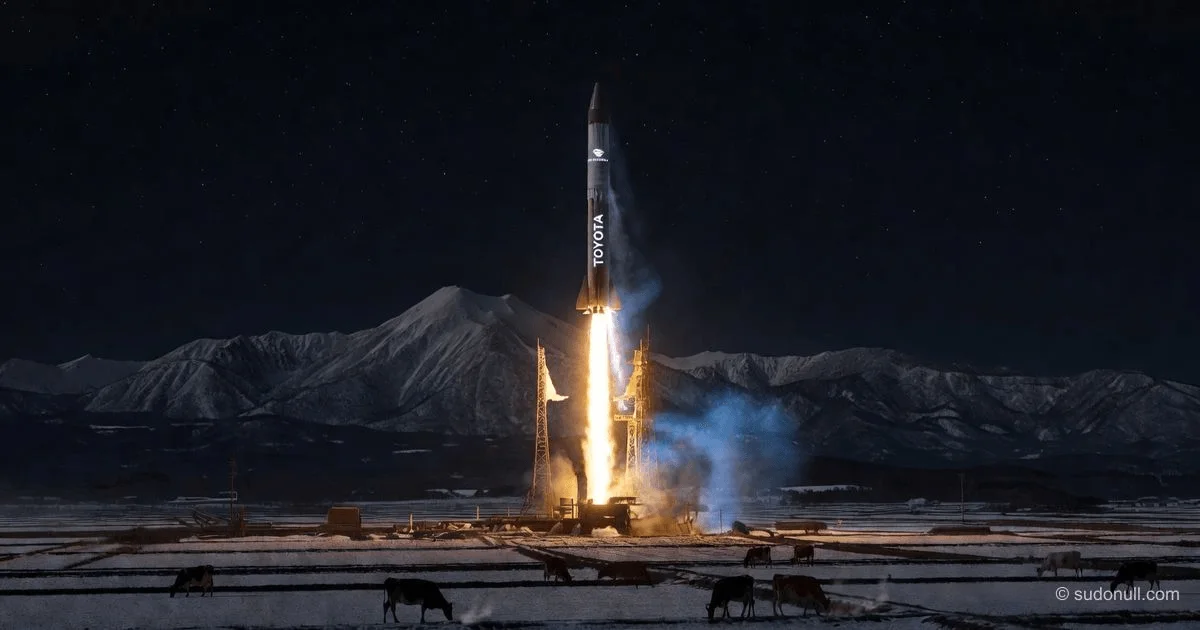
Japanese Startup Interstellar Technologies Launches Satellite with Methane-Fueled Zero Rocket
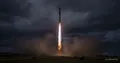
Japanese company Interstellar Technologies has successfully launched its methane-powered Zero rocket, delivering a satellite into orbit.
Methane breakthrough from Hokkaido: Why Interstellar Technologies' success scares Rocket Lab and delights Toyota
The Real Story: What's Actually Happening
If you think the successful launch of the Zero rocket by Japanese startup Interstellar Technologies is just another story about "yet another private spaceport," you're deeply mistaken. The real essence of what's happening is the end of the era of cheap US and Chinese dominance in small launches and the birth of a new regional superpower in the form of Japan, which is betting not on military technology but on bioeconomy and the automotive industrial complex. Zero is not just a methane rocket. It's a rocket powered by biomethane produced from cow manure on Hokkaido farms.
Western market players, including Rocket Lab with their Electron and Virgin Orbit, are now frantically recalculating margins. Because Interstellar claims a launch cost of under 800 million yen (about $5.2 million) in mass production. This price makes putting CubeSat-class satellites into orbit economically viable for universities and startups, not just defense corporations.
Note the vertical integration. Unlike Western startups that spend years searching for turbo pump contractors, Interstellar simply went to Toyota. The automotive giant didn't just provide money ($44 million early on and participation in the Series F round) but actually took on manufacturing engines and fuel systems at its own factories. Zero is assembled from the same parts as cars. This gives a tremendous advantage in assembly speed and cost, unmatched by any private startup in Silicon Valley.
Timeline and Context
Officially, Interstellar Technologies has existed since 2013, but the real story began on the wastelands of Hokkaido. The company struggled for a long time with suborbital launches of Momo, where only three out of seven attempts were successful. The key moment came in 2024-2025 when the government, through the SBIR (Small Business Innovation Research) program, poured nearly $53 million into the startup. The Japanese government realized the disaster: their H3 rocket was failing, the Epsilon S was exploding on test stands, and private competitors like Space One were also crashing.
In response, a plan was adopted: to create an "Asian Kourou" in Hokkaido. The HOSPO spaceport received priority status, and Interstellar became its anchor tenant. In 2025, they raised a record Series F round of $130 million with participation from Sumitomo Mitsui Banking Corporation, SBI Group, and most importantly, Woven by Toyota (Toyota's mobility division).
Now we are seeing the result of this three-year race. The Zero launch, originally planned for 2020 and repeatedly delayed, has finally taken place. This is the world's first orbital launch of a biomethane rocket. But the most interesting part is that the payload is not test dummies. Interstellar already has five commercial clients from the US, Singapore, South Korea, and Japan for this launch. This is a unique case where the first flight of a rocket is paid for by external customers, indicating an extraordinary level of trust from the insurance market.
Who Wins and Who Loses
Toyota wins. This is not just sponsorship; it's an entry into a new industry. Toyota has long understood that the future of internal combustion engines is uncertain, but their expertise in casting, heat-resistant alloys, and hydraulics perfectly aligns with rocket engines. Supplying fuel pumps for Zero is just the beginning. Toyota gains access to space contracts and the opportunity to "retrain" its factories in Hokkaido, where demand for traditional ICEs is already declining. They win business diversification.
Japan wins geopolitically. Today, over 95% of small satellites in Southeast Asia are launched by Chinese or Indian rockets. Now the region has a "neutral" provider, loyal to the US and Japan but geographically close to customers. Interstellar has already signed contracts with Korea's DALRO Aerospace and Singapore's Ocullospace. This is a direct blow to China's monopoly on commercial launches in Asia.
Rocket Lab loses. Their Electron is still considered the gold standard for small satellites ($7.5 million per launch). Zero offers a price 30% lower, and methane is cheaper and cleaner than RP-1 kerosene. Yes, Rocket Lab has the advantage of experience (hundreds of successful launches vs. one for Interstellar), but price decides everything. Once Zero enters mass production, Western startups will have to sharply reduce margins.
Russian and Chinese commercial operators (like Galactic Energy) lose. Until now, they competed through low labor costs. But the Japanese factor destroys this parity. Japanese quality plus Japanese salaries (high, but efficiency is higher) combined with a methane engine that is simpler and cheaper to maintain make Zero an extremely dangerous competitor in international tenders.
What the Media Isn't Saying
The main non-obvious insight, completely ignored in global headlines, concerns the fuel. Zero runs on liquefied biomethane (LBM), obtained from livestock waste. This is not just a "green" gimmick. It solves the logistical problem of the spaceport. Traditional methane (LNG) must be transported to Hokkaido by tankers from the mainland, which is expensive. Interstellar has farms nearby. They produce the gas locally.
But the most interesting part is hidden in the energy density numbers. Biomethane contains isotopic markers that distinguish it from fossil gas. This allows the Japanese government to subsidize launches as "green energy," receiving tax breaks and grants for reducing methane emissions into the atmosphere (cows in Hokkaido are a serious source of greenhouse gases). Interstellar essentially closes two national projects at once: livestock waste disposal and the space program.
The second omission is the reusability issue. The official specifications for Zero state "reusability not planned." While SpaceX, China, and even Europeans are fighting for stage landings, the Japanese are taking a different path. They are betting on the cheapness of a disposable launcher through cheap fuel and Toyota's assembly line production. If the launch cost drops to $5 million, why recover a stage if a new one costs $2 million? This challenges Elon Musk's dogma. The Japanese believe that fully reusable systems are economically unviable for the small satellite segment (up to 1 ton). And they have every chance to prove it mathematically.
Another aspect: national security. Interstellar received an 8 billion yen grant (about $53 million) from Japan's Ministry of Defense and Science under the third phase of SBIR. The media presents this as a commercial success. In reality, it is the militarization of space under the guise of ecology. The ability to rapidly deploy a satellite constellation in a conflict scenario—the main customer here is the Japan Self-Defense Forces. Biomethane allows them to have a strategic fuel reserve independent of LNG imports.
Forecast: Next 30 Days and 90 Days
Next 30 days (June 2026). We will see a flurry of analytical reports from consulting agencies like BryceTech and Euroconsult. Most Western investors will begin cautiously eyeing the Japanese market. The key now is confirmation of stability. If in the coming month Interstellar announces a second commercial contract or the launch of a second Zero with a payload, the stocks of their competitors (Astra Space, Rocket Lab) on exchanges will drop by 5-7%. Also expect an official visit by JAXA representatives to Toyota's factories in Hokkaido—they will start negotiations to replace outdated solid-fuel boosters with methane analogs for government missions.
Next 90 days (August-September 2026). Two key events will occur. First, Interstellar will announce a Series G round or an IPO via SPAC. The company has already raised a total of 44.6 billion yen (~$300 million) and is in the late pre-IPO stage. Second, active testing of "Deca" will begin—a heavy rocket that is not yet widely discussed but is expected to compete with the Falcon 9 by the 2030s. Likely, blueprints for an 8-10 ton payload rocket based on the same methane technology will be made public.
By September, Beijing's reaction will become clear. Chinese state media are already calling the Japanese program an "environmental smokescreen for militarization." Expect accelerated announcements of Chinese biomethane rocket analogs from startups like LandSpace or iSpace to avoid losing the Southeast Asian market. The methane engine race is just beginning, and Interstellar has just fired the first shot heard around the world.
Bottom line: don't watch the rocket; watch the cows of Hokkaido. That's where the key to lowering the cost of access to space lies. And don't forget Toyota—they just showed how the auto industry is killing two industries at once: oil and aerospace.
— Editorial Team






No comments yet.