
Investors Brace for Record-Breaking SpaceX IPO This Week
SpaceX's highly anticipated IPO is expected on Thursday, June 11, marking a key market event. The massive offering size, along with upcoming IPOs from Anthropic and OpenAI, raises concerns about an oversupply of shares and a shortage of buyers.
SpaceX IPO: Analyzing the 'Perfect Storm' That Will Reshape the Market
The Bottom Line: What's Really Happening
The official narrative, echoed by Bloomberg and Reuters, sounds triumphant: SpaceX is going public on June 11–12, 2026, aiming to raise $75 billion at a valuation of $1.77 trillion. This would be the largest public offering in history, more than double the record set by Saudi Aramco in 2019 ($29.4 billion). The ticker is SPCX, listed on Nasdaq. Impressive, ambitious, historic.
But beneath the surface, something far more troubling and cynical is unfolding. This isn't just an IPO. It's a 'perfect storm' where three destructive forces collide: astronomical overvaluation of the asset, a technical market correction that began just last week, and a structural liquidity deficit among institutional investors. SpaceX is hitting the market at the exact moment when the Nasdaq just suffered a 4.2% drop and the semiconductor index plunged 10.3%. It's like launching a rocket during a hurricane—technically possible, but the odds of disaster are extreme.
The crux is that the deal is structured to protect Elon Musk and early investors, not to create value for public shareholders. Musk will retain 84.4% of voting rights after the IPO through Class B shares with 10 votes each. Meanwhile, 78% of the offered shares are already 'booked' by institutions, and the free float will be a mere 4.2% of total shares. This is not a public company in the classic sense. It's a private empire selling a tiny sliver of itself at an exorbitant price, leveraging the hype around Elon Musk and artificial scarcity.
And here's the main paradox: SpaceX is losing money. In 2025, its net loss was $4.94 billion on revenue of $18.7 billion. In Q1 2026, the loss reached $4.3 billion. The company is valued at 92 times annual revenue (P/S = 92)—more expensive than Palantir, the priciest stock in the S&P 500. And this despite Morningstar estimating SpaceX's fair value at just $780 billion—56% below the IPO price. Investors aren't buying earnings or even revenue. They're buying a story. And stories tend to end when the money runs out.
Timeline and Context
On June 3, 2026, SpaceX filed the final version of its S-1/A with the SEC, officially announcing IPO terms: 555.6 million shares at $135 each, valuation of $1.77 trillion, pricing date June 11, trading begins June 12. This was the culmination of a process that lasted several months. In February 2026, SpaceX acquired Musk's xAI for shares, raising its internal valuation to $1.25 trillion. In May, the company executed a 5-for-1 stock split to prepare for the public offering.
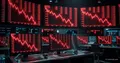
But then the unexpected happened. On June 5, 2026—a week before the IPO—the market crashed. The Nasdaq-100 fell 4.8%, the PHLX Semiconductor Index dropped 10.3%, Nvidia lost 6.2%, and Marvell nearly 17%. The trigger was a 'hot' jobs report that raised the probability of a Fed rate hike to 60-70% by year-end. Tech stocks, which had rallied for nine consecutive weeks, suddenly became too expensive in a world where the cost of money stopped falling.
This created a unique dilemma for SpaceX. On one hand, the company had already announced the price ($135) and couldn't change it without losing face. On the other hand, the market it was entering had become significantly colder than a week earlier. Wall Street wondered: 'If Nvidia, generating tens of billions in profit, falls 6% in a day, what will happen to SpaceX, a loss-making company with a P/S of 92?'
Nevertheless, the underwriters (Goldman Sachs, Morgan Stanley, Bank of America, Citi, JPMorgan) claim that demand exceeds supply. 78% of the offering has already been allocated to anchor investors. Moreover, Nasdaq and FTSE Russell changed their rules to include SpaceX in their indices after just 15 and 5 trading days, respectively. This guarantees a passive inflow of money from ETFs that track these indices—hundreds of billions of dollars 'forced' to buy SPCX, regardless of price.
But there's a nuance that goes unmentioned: S&P Dow Jones Indices did not change its rules. SpaceX won't be quickly added to the S&P 500. This means the most conservative money (pension funds, insurance companies) won't come yet. The primary demand comes from hedge funds, speculators, and FOMO retail investors—a highly volatile clientele.
Who Wins and Who Loses
Biggest Winner — Elon Musk. After the IPO, his net worth will rise to approximately $988 billion, making him nearly a trillionaire. Considering a possible first-day surge (CNBC's Jim Cramer predicts a market cap of $5 trillion, implying a +180% first-day gain), Musk could cross the $1 trillion personal wealth mark by the afternoon of June 12. He retains 84.4% voting power, and his own stake is locked up for 366 days. He gets $75 billion in fresh cash (or up to $86 billion with the greenshoe) for his ambitious projects, including AI infrastructure and orbital data centers.
Second Winner — Early SpaceX investors and employees with options. They can finally monetize their stakes after nearly two decades of waiting. For venture funds that invested early (Founders Fund, Draper Fisher Jurvetson), this will be one of the most profitable investments in venture capital history. Some have been waiting since 2008.
Third Winner — Goldman Sachs and the consortium of 18 underwriting banks. Their fee from the $75 billion offering is estimated at $300-400 million—a record single payout for an investment bank. Moreover, participating in such an IPO is a powerful marketing asset: 'We organized the largest IPO in history.'
Biggest Loser — Retail investors who try to buy SpaceX in the first days. If you're not an anchor investor with access to the $135 offering, you'll be buying at the open. And Jim Cramer has already warned: the price could soar to a $5 trillion market cap—roughly $380 per share. Then, when the lock-up period expires (first 180 days), additional shares will flood the market, and the price could crash. Historically, 60% of IPOs show negative returns after three years. And the top 10 largest IPOs in history underperformed the S&P 500 by 120 percentage points.
Second Loser — Nvidia, Amazon, and Microsoft. This sounds odd, but the explanation is simple: institutional investors have a record-low cash level—just 3.9% of portfolios. To buy $75 billion worth of SpaceX, they need to sell something else. And what's easiest to sell? The most liquid and overheated stocks: Nvidia, Amazon, Microsoft. Thus, the SpaceX IPO could trigger additional pressure on tech giants already suffering from the correction. This is a 'cannibalization' effect: the largest IPO devours capital from the most successful stocks.
Third Loser — OpenAI and Anthropic. Their IPOs are scheduled for the coming months. SpaceX sets the tone. If SPCX collapses after the first week of trading, appetite for AI IPOs could sharply decline. Conversely, if SpaceX skyrockets to $5 trillion, expectations for OpenAI and Anthropic become completely unrealistic. They'll be trapped: either go public at a $1 trillion+ valuation and face accusations of a bubble, or go public cheaper and admit they're inferior to SpaceX. Investors hate that.
What the Media Isn't Saying
Now for the inside scoop—what isn't written in press releases but is whispered on trading floors.
First — Is SpaceX's 'AI Business' a Fiction? In the prospectus, SpaceX talks about 'orbital AI computing' and has signed a contract with Anthropic for $1.25 billion per month to provide AI computing power. Sounds impressive. But the contract can be terminated by either party with 90 days' notice. It's not a long-term contract. It's a 'letter of intent' with a PR twist. And the promise of data centers in space is a technology that doesn't even exist on paper. You're not buying SpaceX for Starlink or Falcon. You're buying it for the 'promise' of AI infrastructure that doesn't exist. High concept, zero product.
Second — The Fixed Price Is a Trap. SpaceX chose an unusual strategy for the US: a fixed price of $135 without the typical range and book-building. Why? Because they fear that marketing would reveal lower actual demand. If they had announced a range of $120-150 and then lowered it to $110-130, it would be embarrassing. A fixed price allows them to pretend everything is on track. But it also means the price doesn't reflect real demand. It's command-and-control pricing in a market economy.
Third — The Index Trap. Yes, Nasdaq and FTSE Russell will accelerate SpaceX's inclusion. But this is a double-edged sword. Once SpaceX enters the indices, passive funds (ETFs tracking indices) will be forced to buy it. But they will also be forced to sell it if it leaves the index (unlikely soon) or during rebalancing. The main danger is distortion. SpaceX will become one of the largest companies in the indices but with a tiny free float. This means even small insider sales after the lock-up could cause a disproportionately large drop in the index. One stone, two waves.
Fourth — The Pre-IPO SPV Market Is a Mess. While institutions get shares at $135, retail investors are being fleeced through SPV (Special Purpose Vehicle) structures. You're offered a 'share in SpaceX' for $1,000, but in reality, you're buying a three-tier pyramid of SPVs, where each layer charges a 2% management fee and 20% performance fee. By the time the money reaches actual SpaceX (if it ever does), your profit is gone. And if the company doesn't recognize your SPV (Anthropic publicly bans some SPVs), your rights are zero. It's the Wild West, flourishing before every high-profile IPO.
Fifth — SpaceX's Real Valuation by DCF. Morningstar, one of the few independent research houses, conducted a discounted cash flow analysis and arrived at a fair value of $780 billion—56% below $1.77 trillion. Even with a premium for a 'must-own asset,' the gap is enormous. SpaceX would need to deliver flawless results for 5-7 years to justify the current price. Meanwhile, in 2026 and 2027, the company will burn another $1,200 billion in cash, and by 2030, $3,500 billion. That's negative free cash flow for nearly a decade. In a world of rising rates, that's deadly.
Forecast: Next 30 Days and 90 Days
Next 30 Days (June to mid-July 2026):
The key date is June 12, the first day of trading. My forecast: the opening will be insane. The price will surge 50-100% in the first hours due to the tiny free float (only 4.2% of shares outstanding) and FOMO. Cramer is right about the frenzy, but $5 trillion is an extreme, speculative scenario. A realistic first-day peak is $250-300 per share (market cap $3.0-3.9 trillion). Then, within the first two weeks, profit-taking will begin. Those who got shares at $135 will start selling. By the end of June, the price will likely stabilize around $180-200.
Within 30 days, OpenAI and Anthropic will come under immense pressure. They will either have to accelerate their S-1 filings or publicly explain the delay. If SpaceX has a 'pop' on the first day, they'll want to go public faster. If SpaceX crashes, they'll stall. Most likely, Anthropic, which already filed a confidential S-1 on June 1, will announce an IPO date within 30 days, trying to ride the wave of interest.
Next 90 Days (July to September 2026):
The key point is the 90th day after the IPO (around mid-September). By then, SpaceX's first quarterly reports as a public company will be out. They will show whether losses ($4.3 billion in Q1) have been reduced or increased. If losses remain high and revenue grows slower than expected (2026 forecast: $38 billion), the market will start asking uncomfortable questions. Shares could fall 30-40% from peak levels.
Also during these 90 days, the 'cannibalization' effect will unfold. We'll see if money has flowed from Nvidia, Amazon, and Microsoft into SpaceX. If so, the S&P 500 could enter a full correction (10%+ drop from highs). If not, it means the market found new money, and the AI bubble story is postponed.
Another factor: the lock-up expires after 180 days, i.e., December 2026, which is beyond the 90-day horizon. But as early as September, talk will begin about insiders preparing for sales. This will create an 'overhang effect'—investors will be afraid to buy in anticipation of mass sales in December.
And crucially: if the Fed actually raises rates in September or November (currently 60-70% probability), SpaceX shares, priced for infinite growth, will crash the hardest. High rates kill DCF models. And SpaceX's DCF model is pure fantasy.
SpaceX's record IPO is the greatest test of market madness since the Dot-com bubble. If it succeeds, we'll see a wave of AI offerings that will flood the market with capital. If it fails, it could be the 'turning point' after which euphoria turns to panic. On June 12, we'll find out whether we're living in a new economy or just a very beautiful bubble.
— Editorial Team








No comments yet.